Whitepaper
Published: August 06, 2026
Building Trust at Scale: Strategies for Data Center Sustainability
How sustainable thermal management, water-smart cooling, and transparent community engagement can help data centers scale responsibly in the AI era.

Andrew Jenkins
Systems Product Manager
Quick Facts
- Industry
- Data Centers
- Topics
- Sustainability • Energy, Environmental and Sustainability • Sustainability & Resiliency
Content, support and contributions to this article provided by Trane Technologies Center for Energy Efficiency & Sustainability (CEES).
- Introduction
- The Sustainability Imperative for Data Centers
- Foundational Considerations for Sustainable Data Center Design
- Optimizing Sustainability Across the Lifecycle in Data Center Design
- Thermal Management: A Key Driver of Environmental Performance
- Future Innovations Reshaping Thermal Management
- Addressing Community Concerns Through Better Design: Noise Mitigation
- Addressing Community Concerns Through Better Design: Water Use
- Energy Use and Impact on Local Bills
- Debunking Common Myths With Care and Transparency
- Conclusion
- View more related content
Global data center capacity is expected to double between 2026 and 2030, driven by explosive growth in AI workloads and the increasing digitization of every industry1. While this expansion enables innovation and economic development, it also intensifies concerns around energy and natural resource consumption, water use, embodied carbon, noise, and the resulting impacts on communities and local infrastructure. Citizens and policymakers are increasingly engaged, and community opposition has already delayed or halted tens of billions of dollars in projects2. In this environment, sustainability is no longer optional—it is foundational to successful design, permitting, long‑term operation, and community trust and acceptance.
To meet rising performance and sustainability expectations, data center owners and operators need a holistic thermal strategy that addresses both operational and embodied environmental impact. High-efficiency thermal management systems—including advanced air-cooled and water-cooled chillers, free cooling, dry coolers, low-GWP refrigerants, integrated controls and optimization strategies, and increasingly, liquid cooling and hybrid cooling architectures—are essential to helping reduce Power Usage Effectiveness (PUE) and Water Usage Effectiveness (WUE), lower overall water consumption, and cut emissions. As compute densities continue to climb and the market shifts toward liquid-cooled environments, these integrated solutions can help operators support higher-performance workloads with less energy-intensive cooling.
Complementary approaches such as renewable energy procurement, site‑specific cooling selection, whole‑building lifecycle assessments, and modular, scalable thermal architectures further help enhance sustainability performance. Modern data center noise mitigation strategies, predictive acoustic modeling, and transparent engagement early in the process with utilities and community partners help address concerns about sound, water use, and grid impacts. Innovations such as liquid cooling, two-phase cooling, advanced controls and optimization strategies, AI-enabled optimization, heat reuse, and modular thermal systems will help shape the next generation of low-carbon, community-aligned data center infrastructure.
Introduction
Nearly 100 GW of new data centers will be added between 2026 and 2030, doubling global capacity, with AI representing an estimated half of all workloads by 20301. This build-out of critical infrastructure has been termed an “industrial revolution” in its own right and will enable the next era of global development3.
Growth at such a pace and scale does not come without concern. The energy and resources required to build and operate these data centers have been and will be considerable. The DOE reports that data centers are expected to consume up to 12% of total US electricity by 20284. Data center-related water consumption in the U.S. is likely to increase by 170 percent by 20305. Not all water consumption is attributed to cooling system usage. This projected increase reflects a range of factors across design, construction, operations, and infrastructure. These concerns have driven many elected officials, citizens and grassroots organizations to push back against data center development in their communities. More than $64 billion in projects were delayed or canceled between May 2024 and March 2025 due to organized opposition6.
In light of these headwinds, it’s more important than ever that data centers take sustainability impact into consideration during design, development, and operation. This will help drive more successful community engagement and a more resilient future for all.
The Sustainability Imperative for Data Centers
Pressures Shaping Sustainable Data Center Design
Amidst the data center infrastructure boom, many of the largest hyperscaler and colocation providers are integrating sustainability into data center design and operation. This imperative is driven by voluntary sustainability commitments, emerging regulations, and community expectations.
Most large hyperscale data center owner-operators (Microsoft, Google, Meta, and Amazon) have corporate sustainability programs with voluntary carbon and water footprint reduction goals7. The data center boom is making adherence to these programs more challenging—but also more important—as organizations design data centers for optimal energy and water footprints while also advancing circularity through more efficient resource use, longer equipment life, and more sustainable system design.
Other developers have corporate sustainability goals of their own, but more often integrate sustainability due to pressure from leasing customers, be they hyperscalers or other organizations with their own sustainability commitments. Data center developers can enhance the competitiveness and overall value of their product offering when sustainability is core to facility design and operation.
Beyond voluntary sustainability goals, there has recently been ongoing legislation to address power requirements and the assignment of associated costs8. Early collaboration between the local community, utility provider, and the data center design groups will help provide the most maximized design for both the final data center build and the utility.
Regulations are emerging at the local, state, and federal levels due to concerns from local communities and anticipated infrastructure constraints. Similar to recent EU regulations setting data center efficiency requirements9, in 2025, there were more than 200 bills introduced across all 50 states in the U.S. aimed at regulating in-state data centers, and more than 40 of those bills were enacted into law8.
Many of these proposals focus on energy use, grid reliability, and water use. Texas, for example, recently enacted requirements that large energy users (including data centers) be capable of shedding load during grid emergencies. And a new Minnesota law requires data centers to report estimated water usage and anticipated sources8.
Lastly, integration of sustainability into data center design can help to enhance an operator’s reputation and resulting license to operate, especially when it comes to local communities. Demonstrating that good-faith efforts are being made to use power and water responsibly can help prevent community pushback to data center permitting and development.
Foundational Considerations for Sustainable Data Center Design
Environmental impacts from data center operation can be split into two categories: operational environmental impacts and embodied impacts. As the name suggests, operational environmental impacts result from the day-to-day operation of the data center – all the energy and water necessary for computing loads and the supporting infrastructure like cooling. In contrast, embodied impacts result from the manufacturing of the data center itself, all the equipment and infrastructure it contains, and any regular component replacement.
Data Center Operational Sustainability
A data center’s operational efficiency can be measured by 2 key metrics: power usage effectiveness (PUE) and water usage effectiveness (WUE). These metrics represent the ratio between the power or water used to operate the data center’s computing equipment and the power or water needed for other uses, such as cooling, power distribution, lighting, and any other non-computing loads.
In 2007, the average data center PUE was 2.5, meaning that for every watt used to power a server, 1.5 watts were used for other building uses, such as keeping the lights on10. Today, PUEs are in the 1.55 range; best-in-class data centers will have PUE even closer to 1. Reducing PUE via cooling system efficiency, thoughtful hardware design and placement, and advanced building controls is the first step towards maximizing data center operational environmental impacts. These considerations are best implemented early in design but can be pursued via upgrades for operational centers.
In tandem with PUE optimization, sourcing renewable energy to power the data center is another impactful strategy to help reduce operational environmental impacts. This can be achieved by building new renewable generation infrastructure onsite if conditions are suitable or procuring renewable energy offsite through power purchase agreements (PPAs). Either method will significantly help reduce the carbon emissions associated with data center operation, as the average grid in the U.S. still relies mostly on fossil fuels for power generation.
Historically, cooling systems were among the largest drivers of water use in data centers, while humidity control, fire suppression, and facility maintenance also contributed to overall consumption, though to a lesser extent. Although misconceptions persist, many modern data center designs now use minimal water.
Evaluating and interpreting data center water use requires nuance and context:
- Do the figures represent water withdrawal (the total amount of water taken from a source, regardless of how much is returned to that same source) or consumption (withdrawal less any water returned to the source)?
- Does the data include upstream water use for electricity generation – so-called “embodied water,” which can be comparable, if not larger, than the water used on-site at the data center11?
- Which water sources are tapped to provide water? Is it all potable municipal water, or is reclaimed, non-potable water utilized?
Not all water withdrawn for data center use is consumed. In many parts of the cooling system, water is recirculated in closed loops. Only water evaporated for cooling needs, such as in a cooling tower, counts towards net water consumption by the data center.
PUE and WUE should not be viewed in isolation, as the two are interdependent. Cooling systems that use more water are typically more energy efficient; in contrast, cooling systems that rely on air cooling significantly reduce water needs, but at the cost of energy efficiency12. In addition, many modern data center architectures no longer deploy cooling towers, which evaporate and thus consume water, along with water-cooled systems. Instead, they rely on dry coolers, which allow the data center to maintain the efficiency of a water-cooled system and lessen the concern of significant water consumption.
An interesting, “hidden” area of water use for a data center is the water embedded in the generation of electricity to power the data center. The USGS has estimated that 41% of total freshwater withdrawals in the nation were for thermoelectric power generation; NREL estimates that for every kWh of thermoelectric electricity produced, roughly half a gallon of water is consumed13. As such, maximizing the energy efficiency of a data center also maximizes its total water footprint.
The best approach for water use sustainability in a data center is to consider the climate conditions, water availability, and grid mix at a given site, and then select the ideal cooling system and technology to minimize both the energy and water footprint now and into the future. At sites where water is plentiful, or non-potable sources are available that will not put stress on local potable water supplies, selecting a higher water use cooling system to help reduce energy demand may be the most sustainable choice. By contrast, in water-stressed locations, implementing dry cooling technology may be best to sacrifice a fraction of energy efficiency to help reduce water consumption.
Cooling equipment sustainability also depends on refrigerants and heat-transfer fluids. If leaks occur, these substances can have a significant climate impact. Low-GWP options, including fluids with a global warming potential (GWP) near 1, are available today, and condition monitoring plus preventive maintenance can help reduce leak risk.
Data Center Embodied Carbon Footprint
Embodied carbon in a data center represents an estimated ~40% of the total lifetime carbon footprint14. This percentage will be higher or lower depending on whether the data center operates on renewable energy (higher % from embodied carbon) and therefore has a lower operational footprint, or the average fossil fuel-powered grid (lower % from embodied carbon) with a higher operational footprint. As such, sustainable data center design cannot focus solely on operational impacts and must also consider embodied carbon.
The first step towards embodied carbon reduction is accurate measurement. Whole building lifecycle assessments (LCAs) calculate the carbon footprint of the entire facility or campus and allow operators to focus on “hotspots” where most of the carbon emissions occur. Equipment and material suppliers can provide environmental product declarations (EPDs) to help make the whole building LCA as accurate and complete as possible.
Previous studies have shown that most embodied carbon during upfront construction and due to regular equipment replacements in a data center comes from IT equipment (servers), facility core and shell, power systems, and cooling systems14.
Decarbonization strategies for these materials and equipment should focus on the following:
- Choose partners that demonstrate strong sustainability transparency and a clear focus on reducing emissions across materials, OEM supply chains, and manufacturing operations.
- Utilize monitoring and controls to optimize real-time operations and implement predictive maintenance to help ensure continued efficiency every day.
- Prioritize suppliers and equipment manufacturers that use lower-carbon technologies whenever available and use Environmental Product Declarations (EPDs) to compare carbon footprints across products within the same category.
- Extend the life of existing equipment through manufacturer-provided lifecycle services and upgrades to reduce embodied carbon, replacing systems only, when necessary, since longer replacement cycles mean lower carbon impact.
- Promote equipment and material circularity by refurbishing, remanufacturing, or reusing components before sending them to end of life.
Initiatives such as the iMasons Climate Accord have working groups focused on decarbonizing the materials and equipment that go into data centers to drive meaningful reductions in embodied carbon.
Optimizing Sustainability Across the Lifecycle in Data Center Design
Implementing the following strategies will help to optimize operational and embodied carbon, while balancing the water needs of a data center:
- Help drive down PUE by selecting energy-efficient cooling systems
- Match cooling technology to unique site needs based on local climate, grid carbon footprint, and water availability.
- Build or source renewable energy to power the data center.
- Help reduce embodied carbon by maximizing site utilization and compute power, promoting circular solutions, evaluating material and equipment carbon footprints, and selecting the lowest carbon options.
- Evaluate operational and embodied carbon trade-offs – a slight increase in embodied carbon for a more robust cooling system or facility core and shell may pay dividends in operational carbon efficiencies and impact reductions down the line.
- Utilize monitoring and controls to optimize real-time operations and implement predictive maintenance to help ensure continued efficiency every day.
Thermal Management: A Key Driver of Environmental Performance
Sustainable Data Center Solutions Available Today
Helping achieve more sustainable cooling in today’s data centers—especially energy-intensive AI factories—starts with high-efficiency thermal management design.
As high-density chips and liquid cooling solutions become more widely adopted, the opportunity to improve efficiency increases. Improved thermal management not only helps support performance at scale but also helps reduce energy use, lower emissions, and helps advance overall environmental goals.
Modern air‑cooled and water‑cooled chiller technologies provide scalable, low‑impact solutions that align with phased data center development, helping operators avoid overdesigning while maintaining efficiency. High‑efficiency air‑cooled chillers offer an attractive, compact option and often include integrated free cooling capabilities to reduce operating energy intensity. For larger AI factory deployments, water‑cooled chillers can help deliver even greater efficiency and a smaller cooling footprint.
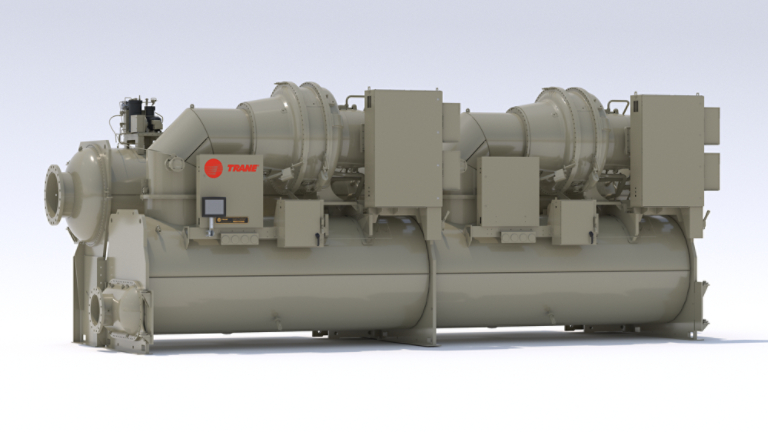
Trane CenTraVac(R) Duplex Water-Cooled Chiller, Model CDHH
These systems commonly incorporate waterside economizers that enable both full free cooling at favorable ambient conditions and hybrid cooling during milder conditions—letting high‑efficiency dry coolers carry part of the load while mechanical cooling supports the remainder.
As cooling demands grow and sustainability targets tighten, minimizing water consumption is increasingly critical. Most modern data center cooling system designs for AI factories now use little to no water, in sharp contrast with legacy evaporative systems15. Air‑cooled chillers, for example, use ambient air to cool the refrigerant condenser or heat exchanger, allowing effective heat rejection without relying on water. These packaged systems often include an integrated waterside economizer that uses a closed‑loop water‑and‑glycol solution to capture free cooling during suitable weather conditions.
Beyond rejecting heat to dry coolers or air-cooled condenser coils, operators can also capture this “waste heat” as a valuable resource for nearby processes15. Applications such as district heating, greenhouse agriculture, and various industrial processes, including food production, can leverage this heat at useful temperatures. Sixpipe (dual condenser) configurations further help expand these opportunities, allowing direct heat reuse without the additional complexity of separate heat exchangers and piping. When implemented, these solutions can more than double overall system efficiency by simultaneously serving cooling and heating loads16.
Finally, sustainability also includes consideration for the acoustic impact of thermal management systems on surrounding communities. As data centers evolve from computer room air conditioners to chiller‑ and dry‑cooler‑driven architectures—and as equipment density increases—outdoor sound has become a more prominent design factor requiring mitigation.
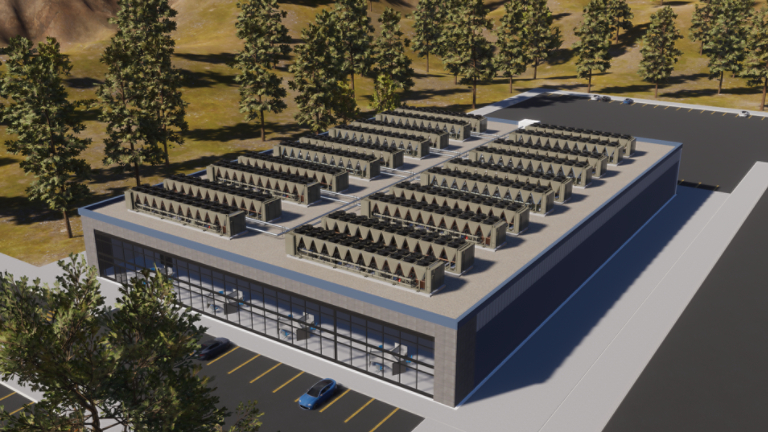
To be good neighbors, designers must understand local noise regulations, the primary sound sources within thermal management systems, and the range of available sound‑attenuation strategies. A variety of chiller‑specific treatments, including compressor and piping wraps, can help reduce the noise generated within the refrigeration circuit. Discharge silencers or ground‑supported baffles help mitigate airflow and condenser fan noise, while intake louvers and silencers help address noise at the air inlet. In some cases, sound barrier walls or fully custom acoustic enclosures may be required to meet community expectations. Together, these strategies ensure a comprehensive thermal and acoustic plan that helps support both performance and neighborhood compatibility.
Future Innovations Reshaping Thermal Management
As compute density accelerates and AI workloads push the limits of today’s infrastructure, thermal management systems must evolve to maintain reliability, efficiency, and scalability. A key part of this evolution is partnering closely with silicon providers to better understand chip profiles and optimal operating temperatures, then aligning system designs and cooling technologies accordingly to deliver the most efficient cooling possible.
Historically, traditional rack densities under 10 kW allowed data centers to rely on lower‑complexity, air‑cooled server environments. Cloud compute applications could be adequately supported by split systems such as Computer Room Air Conditioners (CRACs) or Computer Room Air Handlers (CRAHs) paired with hydronic heat‑rejection loops.
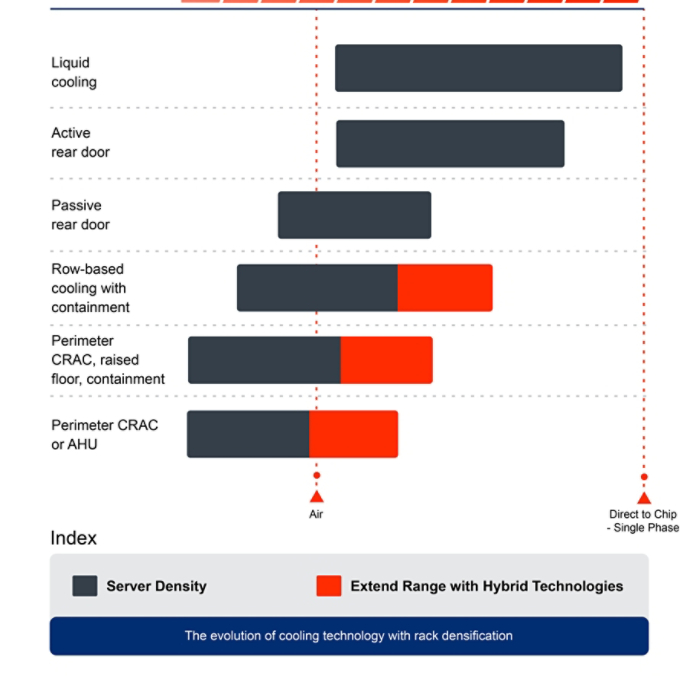
As rack densities grew into the 10–50 kW range, larger perimeter‑based air‑cooling systems connected to chiller‑based facility loops became the industry standard. The rapid emergence of AI factories and Graphics Processing Unit (GPU) systems exceeding 200 kW per rack made it clear that split system air cooling alone could no longer meet performance or efficiency requirements for those applications. This shift is driving the widespread adoption of liquid cooling. Water‑glycol solutions remove heat more effectively than air, and modern cold‑plate designs enable precise thermal management at the chip surface, reducing hot‑spot risks and enabling higher compute output17.
These cooling approaches rely on a multilayer thermal ecosystem engineered for redundancy and lower cooling power usage (PUE). Heat captured at the cold plate is transferred into a Technical Cooling System loop and circulated through Cooling Distribution Units (CDUs), which have grown in both size and capacity and are now commonly deployed at the row level or within mechanical galleries. CDUs, in turn, are supplied by the Facility Water System—an orchestrated combination of chillers, pumps, thermal storage, and potentially dry coolers—designed to support continuous and reliable cooling capacity for mission critical IT loads.
Looking ahead, continued increases in GPU server power and performance will drive thermal loads to levels that exceed the capabilities of single‑phase liquid cooling. Much like the industry’s earlier transition from air to liquid cooling, the next wave of innovation points to two‑phase cooling solutions—either advanced direct‑to‑chip evaporative designs or full‑system immersion cooling. These technologies harness the efficiency of phase change to help rapidly remove heat and could help reduce overall cooling energy consumption once standards for large‑scale deployment mature.
Utilizing autonomous control and monitoring of cooling systems with AI will become essential to helping minimize thermal management system power use and helping maintain reliability throughout the lifecycle of the AI factory. AI can also be leveraged earlier in the process by modeling different thermal architectures, helping teams evaluate tradeoffs, balancing site constraints with customer outcomes, and validating proposed system designs for compliance. Identifying microclimate effects to help reduce power consumption, maximizing unloading and staging of the thermal management system, and actively monitoring cooling system components to help reduce downtime are a few ways AI can maximize system efficiency.
To support rapid growth in compute capacity, modular thermal systems are emerging as a foundational design principle. Modular, factory‑commissioned units allow for predictable, repeatable deployment with reduced on-site work and lower installation risk. As compute demands scale, these pre‑engineered building blocks integrate seamlessly into project schedules, enabling capacity to expand efficiently while maintaining uniform quality and reliability across deployments.
Together, these innovations—advanced liquid and two‑phase cooling, AI‑driven optimization, and scalable modular design—are reshaping the future of thermal management. They form the foundation for the next generation of high‑density, energy‑efficient AI infrastructure.
Addressing Community Concerns Through Better Design: Noise Mitigation
As data centers continue to expand to meet rising digital demands, communities are increasingly attentive to the noise impacts of these facilities. Noisy neighbors can impact quality of life and home valuation.
Thoughtful acoustic design is no longer an afterthought. It is a core component of responsible development. By understanding noise sources, integrating mitigation strategies into early planning, and using predictive modeling to validate performance before construction, designers can build data centers that operate efficiently while respecting the surrounding community.

Sources of Noise in Cooling Systems
A data center hosts a wide range of equipment, and many of these systems contribute to the overall acoustic profile of the site. Outdoors, the primary sound sources typically include thermal management systems such as chillers and heat-rejection equipment, as well as electrical generators, power distribution equipment, and other ancillary systems. Indoors, noise is generated by IT hardware along with thermal management equipment like air handlers, chillers, coolant distribution units, pumps, and supporting mechanical systems.
These sound sources do not operate uniformly. A chiller may run continuously at some sites but only intermittently at others. Dry coolers often cycle and modulate throughout the day, creating a dynamic acoustic environment. Because these operational patterns directly affect sound output, a detailed understanding of each source and its behavior is essential when conducting acoustic modeling, assessing potential impacts, or demonstrating compliance with local noise ordinances. This insight becomes especially important during pre-construction planning, when communities and regulators expect clear evidence that a new facility will meet noise limits once in operation.
Site Planning, Barriers, and Low-Noise Equipment Design
Helping mitigate noise effectively requires an integrated, multidisciplinary approach. No single strategy, whether equipment selection, mechanical design, or site layout, can deliver maximized performance on its own. Instead, acoustic considerations must be woven into the design process from the earliest stages.
This holistic approach involves identifying and modeling all sound sources, assessing how noise propagates across the site and into the surrounding environment, and evaluating a range of mitigation options. These may include sound barriers, equipment enclosures, operational controls, or the selection of low-noise or advanced thermal management technologies. Importantly, these solutions must balance multiple priorities, including thermal performance, energy efficiency, reliability, and cost. By aligning acoustical engineering with broader mechanical and architectural design strategies, project teams can proactively address community concerns while helping the data center remain capable, efficient, and resilient.
How Predictive Modeling Ensures Compliance Before Construction
Predictive modeling plays a critical role in helping verify compliance before a shovel ever hits the ground. Since data center chillers often operate at warmer conditions, their compressors, condensers, and refrigeration circuits may produce sound levels that differ from laboratory-rated values. Accounting for these real-world operating conditions early in design allows project teams to obtain more accurate sound data using manufacturer tools and performance models.
Working with manufacturers that conduct advanced laboratory testing and predictive acoustic analysis further helps build confidence in modeled results. This collaboration helps validate whether proposed mitigation strategies—such as equipment selection, barriers, or layout changes—are likely to meet local noise regulations. With many jurisdictions now requiring ambient sound measurements before and after construction, and with some tightening standards in response to increased data center development, predictive modeling can help reduce the risk of costly redesigns or post-construction corrective work.
Addressing Community Concerns Through Better Design: Water Use
Modern data center cooling systems consume far less water than many assume, largely because industry has shifted away from legacy evaporative designs15. Today’s AI-focused facilities increasingly adopt solutions that use little to no water, recognizing that high site densities make evaporative systems impractical in many regions. Air-cooled chillers, for example, reject heat using ambient air rather than water and often integrate waterside economizers that employ a closed-loop water and glycol mixture to capture free cooling without evaporation. Although water-cooled chillers are often associated with cooling towers, modern thermal management strategies can pair them with closed-loop dry coolers, avoiding cooling towers and helping enable effective heat rejection without evaporative loss. This helps preserve the advantages of water-cooled systems—higher capacity, improved efficiency, and a smaller footprint—while helping to reduce water consumption.
High-efficiency and targeted evaporative adiabatic cooling further help enhance the performance of air-cooled condensers or closed-loop dry coolers by improving approach temperatures at the condenser coil. Air-cooled equipment depends on the temperature difference between the refrigerant and the incoming dry-bulb air. By applying adiabatic cooling, a small amount of water evaporates into the inlet airstream, lowering the effective dry-bulb temperature. As conditions move closer to the wet-bulb temperature, heat-transfer capacity increases significantly. Because these benefits are needed only during the hottest hours or in challenging climates, adiabatic systems can be applied selectively, helping reduce overall water use.
From a mechanical cooling standpoint, these strategies also support peak shaving by increasing heat-rejection capacity during the hottest parts of the day. Cooler entering air temperatures reduce chiller lift and compressor power consumption, enabling more efficient system operation. This can help lead to sustainability gains through the use of fewer units, reduced loading on existing equipment, and lower compressor and fan energy at extreme ambient temperatures. Together, these solutions can provide a high-performance, energy-efficient approach to managing peak cooling demands.
Transparent engagement with local utilities and community partners complements these technical strategies by helping build trust and supporting responsible resource management. Sharing data, operational expectations, and community impacts helps stakeholders understand how data centers interact with infrastructure and environmental resources.
Communication efforts like those between Microsoft and the Milwaukee 7 Regional Partnership (MMAC) demonstrate how information sharing enables informed community decision-making. These collaborations provide utilities, economic development organizations, and local leaders with clearer insights into water use, grid demand, and long-term sustainability considerations.
By working closely with utilities and regional partners, organizations can align operations with community expectations, help advance shared sustainability goals, and help strengthen the resilience of local infrastructure.
Energy Use and Impact on Local Bills
Because electrical utility rates are set by local providers, any major increase in demand often raises questions about cost impacts, grid reliability, and long‑term sustainability. Helping to maintain a positive perception requires proactive collaboration—both with the community and with the utility. By engaging early, collaborating transparently, and aligning on responsible energy use strategies, organizations can help ensure that large electrical loads are viewed not as a burden, but as an opportunity to strengthen local infrastructure, support economic growth, and build trust with stakeholders.
Despite common misconceptions about how data centers affect the electrical grid, these facilities, in the long run, are often ideal utility customers. Their power usage can be highly consistent and predictable, helping to allow utilities to plan generation and distribution18.
Because data centers generally operate with high and relatively constant year-round electricity demand, they can provide utilities with a predictable load profile that supports long-term infrastructure planning. However, their effects on overall grid stability depend on local system conditions, transmission capacity, and demand growth19.
While data centers do require significant electrical capacity, the perception that they inherently strain or destabilize the grid is overstated. Their bulk, continuous load profile enables utilities to size and manage resources more efficiently, and many modern data centers further reduce impact through efficiency investments, on‑site generation, and grid‑friendly technologies.
Close alignment with utilities also helps to unlock strong opportunities for coordinated load management, improved efficiency, and active participation in demand response20. Clear, ongoing communication also helps operators better understand capacity limits, tariff structures, and real-time grid conditions, enabling more proactive and strategic energy planning.
Thermal energy storage can further support resilience by providing short-duration cooling—typically from a few minutes up to roughly 30 minutes—to bridge temporary disruptions or rapid changes in load. In data center applications, this can help maintain temperature control during failure scenarios, such as the transition period after a power loss while chillers restart on backup generation, or during sudden shifts in cooling demand that outpace chiller response. When paired with advanced controls, these strategies can improve system responsiveness, reduce operational risk, lower energy intensity, smooth load profiles, and support broader grid stability efforts. When combined with advanced controls, these strategies can create effective pathways to help lower energy intensity, smooth load profiles, and support broader grid‑stability efforts.
Many data centers are also adopting “bring your own power” strategies that incorporate on‑site renewable generation. Approaches such as solar, fuel cells, and other distributed resources help reduce dependence on the grid, help support resiliency, and help offset a meaningful portion of total electrical load21. Storage systems play an important complementary role, helping to enable peak shaving and flexible load management. In regions such as ERCOT‑served areas of Texas, new development requirements increasingly call for on‑site generation as part of the effort to help maintain grid stability22. As a result, integrated renewable and supporting energy resources are becoming standard design elements, offering improved reliability, more predictable energy costs, and reduced environmental impact.
Efficient thermal system design is equally critical for maximizing the compute potential of modern data centers and AI factories. Enhanced heat removal strategies and reduced mechanical cooling demand help lower both peak power requirements and annual cooling energy use, freeing additional capacity for IT loads and helping increase total compute output. Incorporating thermal storage helps strengthen this performance by shifting cooling production away from peak periods, smoothing load profiles, and helping improve operational resiliency. These thermal solutions extend beyond compute environments as well, effectively cooling supporting infrastructure such as on‑site battery energy storage systems to help create a unified and efficient thermal platform across the digital ecosystem.
Ultimately, smarter thermal systems help reduce energy use, support resiliency, and help maximize usable compute capacity across the entire facility.
Debunking Common Myths With Care and Transparency
Myth: “Data centers always cause major increases in energy bills.”
Reality: Bills depend on grid design and utility cost structure.
A data center’s impact on the grid and local energy costs is highly dependent on grid design, existing grid infrastructure, and utility cost structure8. In some cases, the power to run a data center already exists within that local grid, and minimal changes need to be made to accommodate the site. In other cases, new infrastructure may need to be built to support the power needed.
It is important to note that in either case, there is a possibility of costs changing to support the site. There have been instances in which large data center loads have helped reduce local energy costs for other customers23. Other instances have had developers pay for the grid expansion and/or fund the additional local personnel required to support the expanded grid.
There are some cases where energy costs may increase, and, in those instances, a large focus is placed on site efficiency to help minimize the impact on usage. If an increase in the local energy cost is anticipated, the involvement of local officials is very common to assure that every step is taken to ensure no excess power is used. In some cases, the data center can give back to the community in the form of heat recovery or other methods24.
Myth: “Data centers waste enormous amounts of water.”
Reality: Water use varies widely with cooling technology.
Historically, traditional water-cooled systems utilized cooling towers, which used water as the main source of heat rejection. Modern systems reduce or even potentially eliminate water use15. Even the previously mentioned water-cooled chillers can be designed to reduce the utilization of water by closing the water loop and using dry coolers as the heat rejection method.
Myth: “Noise from data centers harms surrounding properties.”
Reality: Design and modeling can help reduce impacts to potentially imperceptible levels.
Thermal design directly contributes to acoustic management. While data centers are very large and typically utilize a variety of outdoor components that can increase noise levels, thoughtful design and modeling of data center cooling systems can help reduce sound impacts to potentially imperceptible levels.
There are many modern acoustic management methods to help assist both compressors and fans to minimize sound in the surrounding area. Most acoustic mitigation is optional, so it is very important that noise level regulations and mitigation requirements are discussed early in the design process.
Conclusion
As the world moves deeper into the AI era, the pressure on data centers to prioritize sustainability will continue to intensify. Owner/operators developing facilities that succeed will be those that view sustainability not as a constraint, but as a strategic enabler—one that helps improve efficiency, strengthens community relationships, helps reduce regulatory risk, and helps maximize long‑term operational resilience.
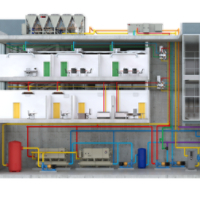
Data centers can’t do it alone. Aligning with strategic and consultative manufacturers that view thermal management at the system level will be critical for success. Trane brings unmatched expertise in understanding the cooling system as a whole—from roof to chip—helping provide real-time, actionable data to empower operators as well as the comprehensive perspective needed to support and service projects at every stage.
By integrating energy‑efficient and low‑water thermal technologies, maximizing embodied carbon, embracing advanced controls, and collaborating proactively with utilities and community stakeholders, operators can build data centers that meet rising compute demands while helping minimize environmental impact.
Ultimately, the path forward requires a balanced, lifecycle‑based approach that prioritizes transparency, responsible natural resource use, and adaptability. As thermal demands climb and regulatory landscapes evolve, forward-looking data center strategies must go beyond cooling technology alone. By combining modular cooling systems, liquid and two-phase cooling adoption, and effective heat reuse with advanced controls, connected system intelligence, and AI-driven optimization, data centers can improve efficiency, adapt in real time to changing conditions, and remain both high-performing and socially responsible. The result is a more resilient digital infrastructure capable of supporting global innovation while helping safeguard the communities and environments in which they operate.
- 2026 Market Outlook for Global Data Centers | JLL Research
- Community Opposition Emerges as New Gatekeeper for AI Data Center Expansion | Data Center Frontier
- A New Era of Data Center Development Is Like a Second Industrial Revolution - Inside Climate News
- DOE Releases New Report Evaluating Increase in Electricity Demand from Data Centers | Department of Energy
- The data center balance: How US states can navigate the opportunities and challenges I McKinsey & Company
- 7 Ways Data Centers Affect US Communities | World Resources Institute
- Microsoft Sustainability Report; Google Environmental Reports; Meta Sustainability Reporting; Amazon Sustainability Reports
- State Regulation of Data Centers: Emerging Trends and Potential Legal Complexities
- Energy performance of data centres - Energy - European Commission
- How to Make Data Centers More Sustainable – Tips and Best Practices | Park Place Technologies
- Data Centers and Water Consumption | Article | EESI
- Evaporative towers vs. dry coolers: which one to choose to optimize energy efficiency | W-tech, Evaporative Technology Cooler.
- Consumptive Water Use for U.S. Power Production
- Quantifying Data Center Scope 3 GHG Emissions to Prioritize Reduction Efforts
- ASHRAE Journal - June 2026ASHRAE Journal - June 2026 [32 - 33]
- https://www.trane.com/content/dam/Trane/Commercial/global/markets/data-centers/Trane-ReferenceDesign-1GW-Duplex.pdf
- 2025-03-18_OCP_HeatReuse_WP-ReferenceDesigns_v0.1
- Powering Intelligence: Analyzing Artificial Intelligence and Data Center Energy Consumption
- Data Center Load Growth in Context | Powering Intelligence 2026
- How Geothermal Can Support Data Center Growth I US Department of Energy
- On-site Power Generation Technologies Reshaping the Future of Data Centers I Compass
- Texas advances major grid rules for data centers I E&E News
- Data Centers Start to Drive Residential Electricity Bills Down I Real Clear Energy
- Data Center Waste Heat Recovery (March 2026)
To learn more about our cooling innovations or to consult with Trane for more sustainable data centers, visit Trane.com/DataCenters or contact your Trane Account Manager.
Disclaimer: This is for informational purposes only. Trane believes the facts and suggestions presented here to be accurate. However, final design and application decisions are your responsibility and will affect actual financial and energy efficiency results. Trane disclaims any responsibility for actions taken on the material presented.
All trademarks referenced in this document are the trademarks of their respective owners.