What Is a Hydronic Heating System?
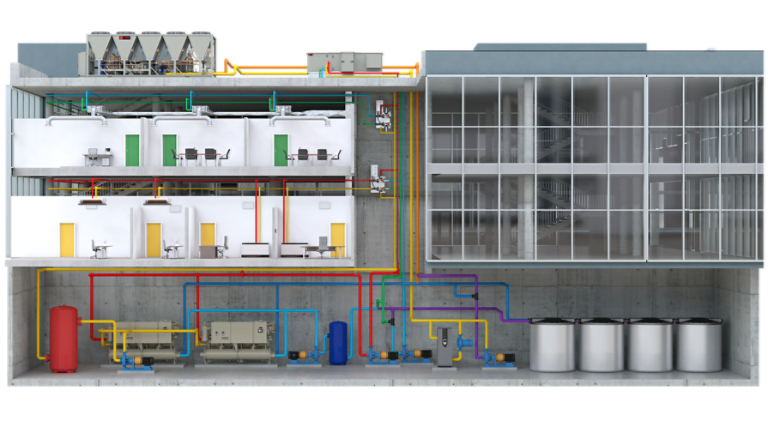
In commercial HVAC, a hydronic heating system uses water or a water-based fluid as the medium to transfer heat throughout a building. Instead of conditioning and distributing heated air across long distances from a central furnace or heat pump through ductwork, hydronic heating systems circulate heated water through a network of pipes to deliver heat to terminal equipment, like fan coils, variable air volume (VAV) boxes or air handlers, to maintain indoor comfort.
While historical and traditional hydronic heating typically relied on fossil-fuel-burning boilers to generate hot water, today’s commercial facilities are increasingly transitioning to electrified solutions. Modern systems utilize a hydronic heat pump (often referred to as a heat pump chiller or chiller-heater) to supply both heating and cooling utilizing the refrigeration cycle, shifting commercial buildings away from fuel-based equipment.
How Do Hydronic Heating Systems Work?
The basic process can be broken down into three steps:
- Heat transfer: An electrified heating source, such as a hydronic heat pump, transfers heat to the fluid. By capturing ambient heat from the outside air or the ground, or by reclaiming waste heat from other zones in the building, a heat pump chiller warms the water.
- Distribution: A network of commercial pumps moves the heated fluid through closed loop pipes to various zones across the facility.
- Heat delivery and return: Once it reaches those zones, the heat transfers from the fluid into the ambient space using terminal equipment, such as an air handler, VAV box, or fan coil. The cooled water then returns to the heat pump to be reheated and recirculated.
Types of Hydronic Heating Systems
When exploring types of hydronic heating systems, the primary differentiator in commercial applications is the heat pump technology and system configurations. Common heat pump chiller configurations include:
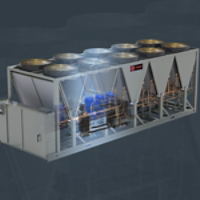
- Air-to-water heat pump systems: These systems extract heat from the outside air and transfer it to the hydronic loop. They can help achieve cost-effective, energy-efficient thermal management.
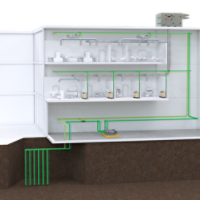
- Water-to-water heat pump systems: Often integrated into central geothermal configurations, these units extract heat from a geothermal loop or another heat source, such as the building’s cooling load.
- Cascade heat pump systems: For older buildings requiring higher-temperature water, a cascade arrangement uses a primary heat pump and a secondary water-to-water heat pump to consistently deliver boiler-like hot water temperatures. These comprehensive systems can be three times more energy efficient than traditional boilers.
- Storage-source heat pump systems: These systems combine heat pumps with thermal energy storage, such as a thermal battery. They reclaim and store excess building heat, deploying it later when heating demand peaks.
Advantages of Hydronic Heating with Heat Pumps
Facility managers might choose a hydronic heat pump for a variety of operational and sustainability benefits. According to a 2024 study of 259 commercial buildings, hydronic systems can operate for approximately 81% of the year, underscoring their importance in daily facility operations. Updating to an electrified hydronic infrastructure can help with:
- Energy efficiency: Because heat pumps transfer heat rather than generating it from combustion, they operate with exceptional efficiency compared to fossil-fuel-based systems.
- Decarbonization goals: By utilizing electricity rather than fossil fuels, commercial facilities can help reduce their site's carbon emissions.
- Retrofit flexibility: Innovations like the Trane® Hydronic Branch Conductor allow building owners to repurpose existing water piping for both heating and cooling distribution. This means facilities can update a legacy system with modern hydronic heat pumps while keeping structural modifications and installation costs to a minimum.
- Precise zoning: Hydronic heating allows for precise temperature control across different spaces, meaning a facility manager can adapt heating and cooling loads zone-by-zone multiple times a day.