What is an AI factory?
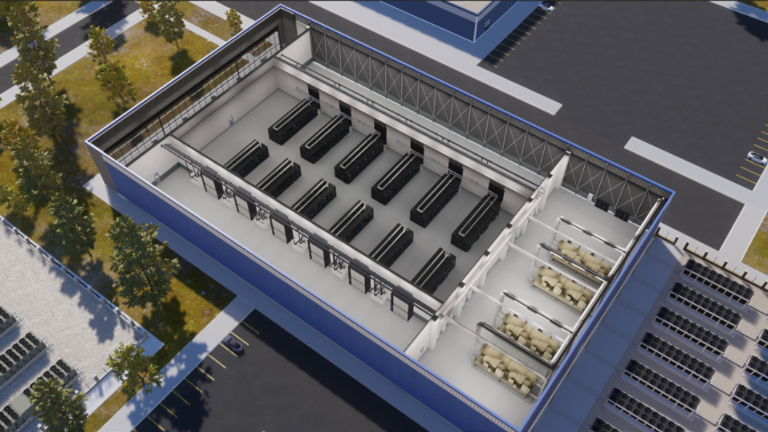
An AI factory is a data center or computing environment purpose-built to train, fine-tune, and run AI models at scale, typically optimized for high-density compute, fast networking, large power demand, and advanced cooling.
The Importance of AI Factories
Traditional data centers have historically been designed to handle lower-density server racks that support standard business software and cloud services. However, modern artificial intelligence (AI) workloads, such as training large language models (LLMs) and running complex generative AI applications, require vast amounts of compute power. This transition shifts the hardware focus toward graphics processing units (GPUs) and specialized AI accelerators.
Unlike standard IT equipment, these high-density processors generate significantly higher thermal loads. AI factories are purpose-built to address these intense processing and power demands. Because high-density chips can experience performance degradation or hardware damage if they overheat, proper thermal management is essential. Operating these facilities effectively relies on maintaining precise environmental controls, making specialized, high-capacity cooling infrastructure a critical component of any AI factory deployment.
The Scale of Demand Is Growing Rapidly
AI factories are becoming some of the most energy-intensive facilities in the world, and their growth is accelerating. Electricity demand from data centers increased by 17% in 2025, with AI-focused data centers climbing even faster, outpacing a 3% growth in global electricity demand.
Looking ahead, global electricity consumption for data centers is projected to double to reach around 945 TWh by 2030, growing at around 15% per year, which is more than four times faster than the growth of total electricity consumption from all other sectors.
AI compute is driving much of that growth. Electricity consumption in accelerated servers, which is mainly driven by AI adoption, is projected to grow by 30% annually.
Power and Cooling Are Inseparable
Every token processed in an AI factory depends on compute power, and every watt of that power ultimately becomes heat that must be removed. As token volumes rise and models grow more demanding, rack densities increase, making thermal management a core constraint on AI infrastructure.
As the digital economy grows, cooling is becoming one of the most important levers available for improving AI factory energy efficiency.
Trane Can Help Optimize Power Demand and Advanced Cooling
As power availability becomes a primary constraint for AI factory expansion, organizations must manage their energy consumption carefully. Trane can help optimize thermal management systems to lower energy use, protect uptime, and support scalability through several key strategies:
- A system-level design approach: Instead of optimizing a single piece of equipment, Trane takes a holistic, system-level approach to design. By reducing peak cooling power, this strategy can free up more of a facility’s available utility capacity for critical computing needs.
- Validated reference designs: To help accelerate project deployment and reduce design risk, Trane provides pre-engineered blueprints. For example, the Trane® Continuum Rubin DSX Reference Designs, can help improve overall system design efficiency by up to 10% while balancing performance and sustainability goals.
- Advanced liquid cooling solutions: When heat loads exceed the limits of traditional air cooling, liquid cooling can provide a highly effective alternative. Trane provides Coolant Distribution Units (CDUs), such as the CDU 2.X and the GigaModular™ CDU, which are designed to help operators deploy and scale direct-to-chip (D2C) liquid cooling seamlessly.
- High-efficiency chiller systems: Trane data center chillers are engineered to manage demanding heat-rejection applications. These systems are designed to deliver reliable cooling and lower Power Usage Effectiveness (PUE), helping operators control operational costs.