What Is a Packaged Unit in HVAC?
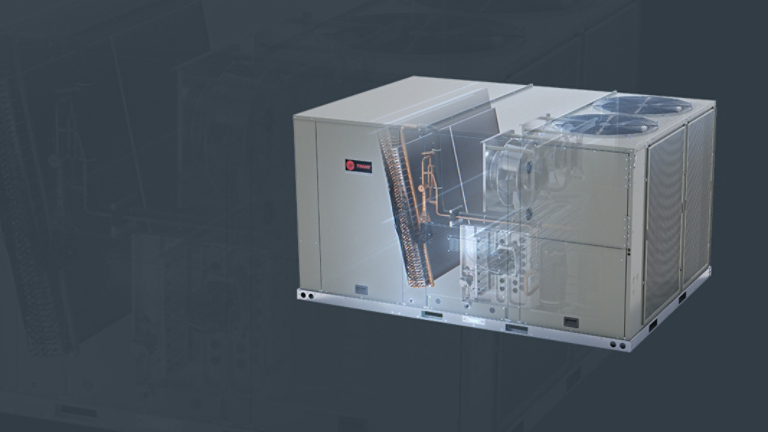
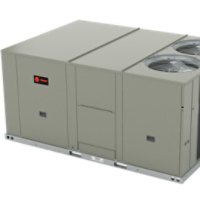
A packaged unit, often referred to as a packaged HVAC system or a packaged rooftop HVAC system, is an all-in-one heating and cooling solution where all the primary system components are housed within a single, weather-resistant outdoor cabinet. Unlike a split system, which divides the equipment between an indoor air handler and an outdoor condenser, a packaged HVAC system contains everything necessary to condition and circulate air.
Commercial packaged units are most commonly installed directly on the roof, but they can also be installed on a ground-level concrete slab. Conditioned air is distributed into the building’s ductwork through a single, secure opening in the roof or exterior wall.
Components of a Packaged Unit
A packaged unit contains all the standard components found in a traditional HVAC setup:
- Compressor: The part of the cooling system that pressurizes and circulates the refrigerant.
- Condenser coil: Releases the heat absorbed from inside the building to the outside air.
- Evaporator coil: Absorbs heat and removes moisture from the warm indoor air.
- Air handler/blower fan: Pulls indoor air into the system, passes it across the coils, and pushes the newly conditioned air back through the ductwork.
- Heating element: Depending on the unit's configuration, this will be a natural gas heat exchanger, electric heat strips, or a heat pump reversing valve.
Types of Packaged Units
Packaged systems are configured in several distinct ways to meet the specific climate and energy needs of a facility:
- Packaged air conditioners: Provide dedicated electric cooling, but they can be outfitted with electric heat strips to provide limited warmth in regions with milder winters.
- Heat pump packaged units: Use advanced reverse-cycle technology to provide highly efficient all-electric cooling and heating year-round.
- Packaged gas/electric units: Also known as gas packs, these systems combine electric air conditioning for the summer with a powerful natural gas furnace for the winter, making them ideal for colder climates.
- Packaged dual-fuel (hybrid) systems: Contain both an electric heat pump and a gas furnace. The system intelligently switches between the energy-efficient heat pump during mild weather and gas heating during extreme cold.
- Commercial rooftop units (RTUs): The industry standard for commercial buildings. Trane offers a robust portfolio of packaged RTUs specifically engineered for commercial spaces, including the Impack™, Precedent®, Foundation®, Voyager® 3, and IntelliPak® systems.
Benefits of Installing a Packaged HVAC System
From energy efficiency to noise reduction, installing a packaged unit provides several benefits:
- Energy efficiency: Commercial packaged units leverage state-of-the-art technology, such as variable-speed fans, inverter compressors, and energy-recovery ventilation, to deliver outstanding Energy Efficiency Ratios (EER/IEER) and lower operational costs.
- Maximized indoor space: Because all mechanical components are housed outside, facility managers do not need to sacrifice valuable indoor square footage or utility closet space for air handlers or furnaces.
- Simplified installation: Packaged units are assembled, internally wired, and rigorously tested at the factory. This single-cabinet design makes on-site installation significantly faster and less invasive than piping and wiring a split system.
- Streamlined maintenance: HVAC technicians can access the entire system from a single outdoor location. This minimizes indoor foot traffic and avoids disrupting building occupants or business operations during routine maintenance or repairs.
- Scalability and control: Commercial packaged systems can easily be integrated into building automation systems (BAS). They offer precise zoning control and can accommodate everything from small retail spaces to sprawling industrial complexes.
- Improved indoor environmental quality (IEQ): When all the components of the system are outside, noise levels inside are reduced, improving acoustics and occupant comfort.