Glossary
Water-to-Water Heat Pump
Learn what a water-to-water heat pump does, how it works, and the benefits of installing one.
Quick Facts
Selecting a language changes the language and content on the Trane site.
ComfortSite Login
Trane ComfortSite is an extranet site designed to save you time. With your secure login, you can:
Trane Cloud
Trane Connect is now Trane Cloud—your secure, digital foundation for remotely monitoring and managing building systems, while bringing together insights, applications, and future innovations in one unified experience.

Latin America
Europe
Asia Pacific
Glossary
Learn what a water-to-water heat pump does, how it works, and the benefits of installing one.
Quick Facts
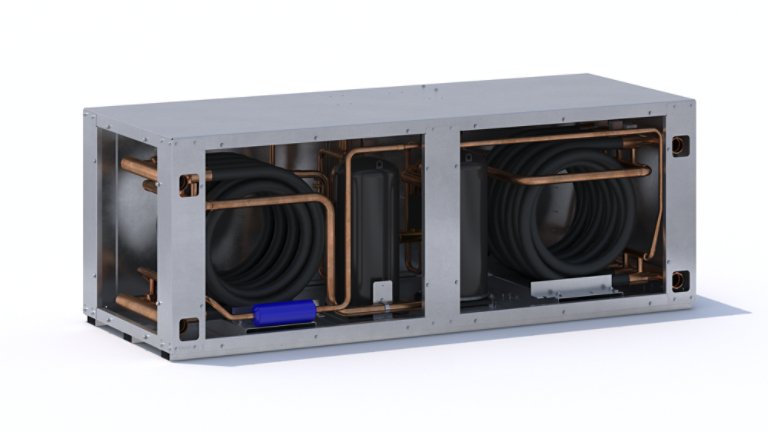
A water-to-water heat pump, also known as a heat recovery unit, is a commercial HVAC unit that transfers heat between two fluid sources (commonly water), and it may include a reversing valve to change the roles of the heat exchanger.
Several sources may be used to supply the water, including the ground (geothermal systems), cooling towers, rivers, lakes, and even industrial process water.
The unit uses water instead of air to move heat through a building. A water-to-water heat pump can provide cold or warm water.
In a water-to-water heat pump, heating is a byproduct of the cooling load and can be used to warm a different zone, making it an energy-efficient system. For example, in a building with a data center and offices, the heat from the data center could be moved through the system to warm the offices.
Other sources of heat can include:
In addition to being a highly efficient means of heating and cooling, water-to-water heat pumps can
Water-to-water technology is suited to reduce the environmental impact of schools, hotels, offices, hospitals and multi-unit residences by replacing fossil fuel boilers with high-performance heat pump technology.
To learn more about water-to-water heat pumps and the transition away from boiler systems, reach out to your local Trane representative.
Resources & Insights
Axiom™ Water-to-Water Water Source Heat Pumps