[00:00:00]
Charlie Jelen: Welcome to Cool Air Hot Takes. This is a podcast about anything and everything from the world of HVAC, energy, and the built environment. I'm Charlie Gelan.
Dan Gentry: And I'm Dan Gentry.
Charlie Jelen: Every couple of weeks, we get together and bring you the latest news in HVAC, a few hot takes, and expert interviews with industry leaders.
This week, we're joined by Adrian Hildebrand, who spent 22 years keeping a nuclear submarine's reactor cool before making the jump to running global data center infrastructure at Eaton. We're going to be talking all about how you go from submarines to servers, the new modular system Eaton, Trane, and NVIDIA are putting together, and why data centers keep getting heat from communities over water and power use, and what the industry's actually gonna do about it.
Dan Gentry: We also have, of course, the latest handpicked HVAC headlines for you, and wrapping it up with the stat of the day. But first, some hot takes.
Charlie Jelen: yes, hot takes.
Dan Gentry: my hot take, going [00:01:00] back to the well again. It's very timely. I've lost the battle with my hot water heater. So the hot take is you gotta just know when to throw in the towel and, uh, call the professionals.
Charlie Jelen: Oh.
Dan Gentry: get home at
Charlie Jelen: when to fold Know when to fold them,
Dan Gentry: No one to fold them? No one to fold them, you know. I get home, go take a shower, and it's like, hmm, it wasn't quite hot, but the kids were already sleeping, and, uh, I think Amber had showered like a while ago. I'm like, "Eh, that's kinda weird." And I go downstairs and it's tripped.
I'm like, "Oh, son of a gun." So flip it and, you know, trips again, so I call my buddy Josh. "Okay, Josh, we lost another element, buddy."
Charlie Jelen: getting... You're really wearing out the, that Josh card.
Dan Gentry: am. I am. And uh, he's like, "Well, you know, that thing's 15 years old. What are you gonna do?" So we got a new water heater, so I'm very excited.
Charlie Jelen: There you go. Did you upsize? Did you go bigger?
Dan Gentry: You know, I didn't. I'm very disappointed. Um, I wanted to. So like I got this all, new water heater all in. It was like 1,400 bucks. It was a- 50 gallon maybe. Um, [00:02:00] so I asked for the next size up. It's like 75 or 80 gallons, and it gets like twice as expensive.
Charlie Jelen: Okay.
Dan Gentry: I was like, "Oh."
I was thinking if it was like marginal, be like, "Yeah, sure." But it was like, whatever, 2,700 bucks instead of 1,400 bucks, and I was like, "You know what? we have enough hot water like 98% of the time,"
Charlie Jelen: wait. Just wait. Piper's gonna be taking, like, hour-and-a-half showers
Dan Gentry: as I said that, you know, as I said that, I was waiting for you to say that. We have some teenagers, and, uh, have to put in like a booster-
Charlie Jelen: in, like, a booster. Oh, yeah.
Dan Gentry: yeah ... instant hot water
Charlie Jelen: we're already there. We're, uh, we've got, we've got a 50 gallon too, and when, when it's, like, shower night, I know, like, the Gentrys, for the listener out there, the Gentrys are every night shower
Dan Gentry: night shower night. Jellins are not. That's okay.
Charlie Jelen: are not. Jalens are not, no. I am. I shower at least once a day sometimes, multiple times a day, but the rest of my family is very intermittent. It's, uh, maybe every two, three days.
Probably more like every three [00:03:00] days.
Dan Gentry: I love this.
Charlie Jelen: But on those nights when it's shower night or bath night, whatever they're doing, it's, uh, if I need to take a shower at the end of the night, we're out of hot water.
Dan Gentry: Yep. You know,
Charlie Jelen: the next hot water I go, I'm going large.
Dan Gentry: I hope I don't have a ton of regrets, but I probably will.
Charlie Jelen: Well, I can't, I can't wait for the continued updates on your hot water heater setup.
Dan Gentry: a saga, man. It's Lord of the Rings over here.
Charlie Jelen: All right. My hot take, I'm going totally personal here 'cause, uh, top of mind right now, I hate the dentist. I'm an anti-dentite, if you guys-
Dan Gentry: Anti-dentite ...
Charlie Jelen: seinfeld fans-
Dan Gentry: Ooh. Yeah
Charlie Jelen: fan, seinfeld fans out there. I've had very good luck with teeth and dentists in the past, but for whatever reason, I've, uh, must've been a traumatic experience when I was a kid or something.
Dan Gentry: Oh.
Charlie Jelen: Uh, I've just never liked going to the dentist, and now I have a little... it's not a pain, but there's a little something going on one of my- Sensitivity maybe? Little sensitivity, yeah. And so it could be nothing, but I set an appointment on Monday, and I'm already not [00:04:00] looking forward to it.
Dan Gentry: do you use Sensodyne?
Charlie Jelen: Do I use Sensodyne? Use Sensodyne? No.
Dan Gentry: I would recommend trying Sensodyne.
Charlie Jelen: Okay.
Dan Gentry: Lo- I love the dentist, I've had very good luck, but I love the dentist. Like, I look forward to going and like, "Clean me up, baby." Oh.
Charlie Jelen: Oh, yeah. Ugh.
Dan Gentry: But, uh, you should try some Sensodyne.
Charlie Jelen: I mean, I do like having clean teeth, don't get me wrong, and I like the feeling afterwards. Like-
Dan Gentry: like the process.
Charlie Jelen: I just don't like the process. The scratching teeth and
Dan Gentry: Ooh, I love part. Oh. I could go for a d- good old tooth scratch right now.
Charlie Jelen: Yeah ... all right, we gotta move on. Up next, HVAC headlines.
HVAC HEADLINES
Charlie Jelen: All right, listener. It's 4:12 in Oklahoma City. Here's your headlines.
Headline number one: cyber attacker targets refrigeration plant.
Dan Gentry: Hmm.
Charlie Jelen: And this one is from Coolingpost with a tagline, or n- what's it called with the city?Dateline, right? Dateline Israel.
Dan Gentry: Okay.
Charlie Jelen: Is that how that goes?
Dan Gentry: I don't actually know, [00:05:00] but I'll go with it. All right.
Charlie Jelen: This one's from Israel. I'm gonna read a little bit here 'cause this was a long article, and it was pretty detailed, but, uh, very interesting. Iran has been blamed for a cyber attack on the refrigeration system of an Israeli food processor, which reprogrammed the controllers and destroyed the compressors.
Dan Gentry: Whoa.
Charlie Jelen: That's a crazy headline.
According to a cybersecurity from Profero, an Iranian state-directed persona, Cyber Iznad Front, deployed remote access software disguised as a Microsoft update, which by the way, I've seen. I've had-
Dan Gentry: Oh, really?
Charlie Jelen: Click here to install your- latest Microsoft update. So seen that one.
Dan Gentry: Tricky sons of guns.
Charlie Jelen: Uh, on an unnamed company's network. Refrigeration engineers were called to the food production plant in May when the temperatures were seen to be rising in the cold rooms and the freezers. Uh, expecting a mechanical failure, the engineers found that the controllers that run the plant's industrial refrigeration plant had been reprogrammed.
Both the set points and the safety [00:06:00] limits were wrong, and the motorized valves had been switched to a manual and pinned open. Then the attacker did the thing that turned a configuration change into physical destruction. The motorized valves that hold the gas pressure in the gas cooler and the receiver were switched to manual mode and pinned permanently open.
As a result, the system's relief valves opened and vented CO2 to the atmosphere, and three compressors were
Dan Gentry: Oh my gosh.
Charlie Jelen: Yeah. Crazy. No malware ran on the controllers. All the attackers needed was set points, valve modes, and an understanding of the thermodynamics. The destruction was said to have been carried out in the native language of the equipment and then locked out, changing the central controller's credentials.
It was designed to make sure the only people who could undo it could not get in while it happened.
Dan Gentry: Okay. That's pretty wild. That's, a good headline.
Charlie Jelen: That is headline. Yeah. That's what I thought too. you know, you gotta have good cybersecurity out there.
Dan Gentry: So it's not even a, like a virus they put on. They just were able to get in and change set points.
Charlie Jelen: Yeah exactly.
they must have sent out an [00:07:00] email or something like that that was, like, to the company.
Dan Gentry: And somebody clicked on it.
Charlie Jelen: And somebody clicked on it. to get accessto the network, and then once they were on the network, they could get into the BMS system, and they could start to change set points and all that stuff and-
Dan Gentry: That's kinda crazy. I would think about like data centers for this 'cause they're like, "Hey, we don't want any in and out communication."
So it's like, well, that's what's gonna happen. Eh, it, it can happen.
Charlie Jelen: you could
Dan Gentry: Do some damage ... Yeah.
Charlie Jelen: instead of making 70-degree water, you made 90-degree water or whatever it was, turn off all the chillers. You would only really need to s- one, one set point.
Yeah. And it shut the whole data center down.
Dan Gentry: Well, hope no hackers are listening to this.
Charlie Jelen: data centers have really good, uh, security
Dan Gentry: Security
Charlie Jelen: All right, headline number two, speaking of data centers: Data centers are being damaged by AI's volatile power demand. This one's from Bloomberg, author Noreen Malik.
So I'm gonna read a couple of the bullets here. Rapid swings in AI data centers' power demands are straining [00:08:00] vital equipment, causing batteries, generators, and cooling systems to malfunction or wear out far sooner than expected. AI data centers put particular strain on their power supply when they are training new models, with power usage spiking as much as 50% above design capacity. problems with reliability have the potential to destabilize the wider power grid with AI data centers able to cause subsynchronous oscillations in the power flow which can damage equipment connected to other parts of the network.
So this was a problem that got brought up a bunch uh I'd say like year and a half ago when AI learning data centers first came online or were first starting to get built It was like what's the load profile gonna look like And then we're gonna design against it It like unknown Like well maybe they'll turn on and off within a second It was like What You're gonna turn on a gigawatt of data center and then off in a in a second
Dan Gentry: Yeah
Charlie Jelen: And so it was Well we don't really know uh how it's gonna go So we're gonna deploy a learning model and maybe it runs all out [00:09:00] for five minutes Maybe it runs all out for five days Um maybe it turns on and it turns off And so it was like really unpredictable loads and so you're trying to design around that was really hard on the front end of it But I think as an industry we've gotten a lot better on how to design for this I know on like next generation chips coming from Nvidia this is one of the things that's top of mind being able to ramp up and slowly ramp down so you're not having these big oscillations Uh and then on the thermal side like what we deploy is we do a lot of thermal storage
Dan Gentry: Yep
Charlie Jelen: So we'll either do a onetoone or like for an entire bank of chillers we'll have large tanks of water that get stored to deploy as needed for some of these big spikes
Dan Gentry: Um my question there They said power usage spiking as much as 50 above design
Charlie Jelen: Yeah that one caught my eye too I don't know where that came from I don't know how you get 50 above what is rated for the data center
Dan Gentry: Okay [00:10:00] So that was a good question
Charlie Jelen: Yeah
Dan Gentry: No cause I was like interesting I don't know like how do you design for something outside of design
Charlie Jelen: It's a good question Like if you have you know 500 megawatts of power coming in how do you get to a gigawatt of power coming in I I don't of power coming in
Dan Gentry: I don't know That's my question
Charlie Jelen: think it would be metered somehow through the electrical stuff
Dan Gentry: So all the spiky loads are hard on equipment
Charlie Jelen: I think it's harder on electrical equipment Like on mechanical equipment it's obviously hard but mechanical equipment on on the thermal side doesn't respond that fast
Dan Gentry: Right
Charlie Jelen: So y you might cycle equipment which isn't good for compressors to turn them on turn them off turn them on turn them off. But if the load changes from 100 to 50 in 30 seconds the chiller doesn't have a chance to respond in 30 seconds
Dan Gentry: Yep
Charlie Jelen: Nor is it gonna see that Like it takes a little while for that load at the server to get all
Dan Gentry: make it through that whole circuit.
Charlie Jelen: Yeah[00:11:00]
Dan Gentry: Okay. Oh, good headlines.
Yeah, you like those?
I like that.
Charlie Jelen: All right, listener. Next up, interview with Adrian Hildebrand
AD BREAK I
Charlie Jelen: Whoa, Danny boy, you look, uh, unusually excited today. What's going on?
Dan Gentry: Oh boy, Trace Early Access just launched, and it's bringing a whole new approach to load design and central plant energy modeling.
Charlie Jelen: Hmm. Careful. Last time someone promised a better workflow, I ended up with six extra meetings.
Dan Gentry: so that's pretty good.
Well, this is better. Trace is cloud-based and intuitive to use,plus Revit integration is coming soon to help architects and engineers collaborate more naturally in the same environment.
Charlie Jelen: So less back and forth between platforms?
Dan Gentry: That's the goal, and it also includes a built-in psychometric tool.
Charlie Jelen: Whoa, my psych chart hanging on the wall just became vintage decor.
Dan Gentry: Now you're getting it
Charlie Jelen: All right. Where do I sign up?
Dan Gentry: Visit trane.com/trace or connect with your Trane account manager today. Make sure you subscribe for [00:12:00] updates so you never miss when new features drop
INTERVIEW
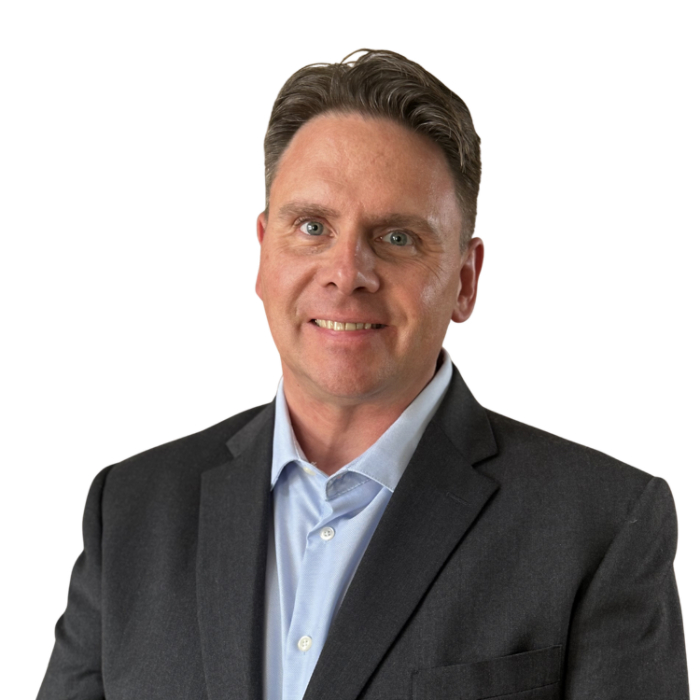
Dan Gentry: This week's guest spent 22 years as a nuclear electrician's mate on submarines. Before retiring from the Navy, he discovered that keeping a nuclear reactor cool and keeping a data center cool aren't all that different.
Charlie Jelen: He's now a principal technical program manager at Eaton, where he's helping lead a joint reference design with Trane and NVIDIA for modular data center infrastructure, which is essentially building the cooling and power systems in a factory and bolting together in the field. It's the kind of engineering that's allowing the construction to keep up with the current AI boom.
Welcome to Cool air Hot Takes. Adrian Hildebrand, how you doing?
Adrian Hilderbrand: I'm doing wonderful.
Adrian's Hot Take
Charlie Jelen: I wanna get into submarine, nuclear submarine electrician's mate. I think there's probably some great stories there in the transition into the, the current space you're in with data centers. Uh, but before we do that, name of the show is Cool Air Hot Takes. We ask all our guests that come [00:13:00] on bring a hot take, whether it's from your professional life, your personal life, anything in between.
What did you bring for us today?
Adrian Hilderbrand: So, uh, hot take would be that the future of, uh, both data center and, uh, I think community power is, uh, small modular reactors. I think we're gonna be seeing that come a very long way. Um, right now up in the Idaho National Laboratory, there's been some great strides made with the Department of Energy, uh, lighting off small modular reactor testing.
we just had our first viable small modular reactor actually, uh, go critical. And now we're gonna be seeing, hopefully within the next two to three years, powering first our data centers and, uh, other industrial sites, and then eventually into the smaller communities that need power.
You know, nuclear power is the cleanest energy there is. It's, uh, sustainable. It lasts forever. You can farm uranium from the ocean. The amount of uranium it takes to power that'sequivalent to, like, eight tons of, uh, coal is amazing.
it's the highest yield and everything else. So it's, uh, [00:14:00] that's the future, I think.
Charlie Jelen: Yeah.
Dan Gentry: I love it. Big nuke guy.
Charlie Jelen: Yeah, my, my co-host here is a big nuke guy. I, I am too, but not, you know, you're...
Dan Gentry: Hey, it's the future.
Charlie Jelen: I'm all for it. And, you know, you come from a very, you know, unique background on the nuclear side, being on a sub, working on, on that component of it. And to hear, you know, somebody that's been in that close proximity to nuclear power saying that it's the most reliable, the safest form of energy that we have out there, that's gotta mean something for the listener out there.
and I totally agree.
Dan Gentry: Yeah, you're willing to assail and sleep next to a reactor. I mean, you must have some faith.
Charlie Jelen: and I know, listener, you can't see Adrian on the podcast here. he only has three
arms and 15 toes, but it's,
Adrian Hilderbrand: But all my teeth, but all of
my
Adrian's Background in the Navy
Charlie Jelen: But all it's, his teeth, exactly. Is seen, All right. let's, talk about how you started. how did you get into the Navy? Thank you for your service, by the way. give us some of the highlights, some of the lowlights, and then how you got, uh, out of that and [00:15:00] into your current role at Eden.
Adrian Hilderbrand: So, uh, the classic,nuke story, at least for nuke sailors, of the older variety. We, uh, try our hand at college first. Did a three and a half years at University of Maryland College Park and realized I was on the Tommy Boy plan. Um, so, uh,
uh, seriously, I was probably like at least three years away from a degree in general studies.
so after, uh, three and a half years decided I was gonna join the Navy, um, third generation. so I, uh, went down and signed up, uh, took a test and, in the '90s, computer science was all the rage. Uh, so that was, that and computer engineering were my background that I was majoring in.
I wanted to work on jets like my dad, and then I, uh, took the ASVAB and they're like, "Have you ever heard about nuclear power?
then that, uh, worked its way into being a 22-year career, um, aboard five different submarines and get a chance to teach nuclear power and all those things.
went through the pipeline. It's a 18-month school, from A school to power school and then on to prototype where they teach you how to actually functionally operate a nuclear [00:16:00] reactor. Um, I was at the, uh, Knolls Atomic Power Labs, uh, site up in, uh, upstate New York,
ended up
on the USS Alaska.
Then, uh, went back and taught nuclear power in upstate New York, uh, at the SHG prototype, where, I trained the future operators of the Navy.
We basically certify them, give them their, their nuclear operator license, and I was the key in charge of, uh, training the officers how to run the plant and the combat casualties and everything. And then, uh, that's also where I picked up, uh, chief petty officer,
got to go to Japan, Australia, Korea, and then spent a lot of time at depths in places I can't talk about. Um, that was always fun. And then, uh,
Charlie Jelen: Okay. Okay
Adrian Hilderbrand: then I went and I actually ran a simulator for nuclear reactor operations here in Bangor, Washington at the, uh, submarine base at the Trident training facility where I kept the, curriculum up and, uh, trained our actual operators on the fleet.
And, uh, helped them combat casualties where we could actually run casualties simulated and, uh, keep them up to date. And then,
I retired Navy style, uh, at, after 22 years at the, uh, spry age [00:17:00] of 44. while I was going through that transition though, um, I had some friends that had already gotten out of the Navy.A few of them were with Facebook, uh, had a couple of friends with Google and, uh, they were talking about how it's not that different.
you keep the lights on and you keep things cool and, you have switchboards, you have breakers, you have air handlers, you know, different things.
so I just basically treated it like another qualification and,
ended up with Amazon, And so there I had three facilities that I operated with, uh, our, uh, engineering operations technicians where we powered the racks, delivered the racks, you know,
you put everything in a safe condition and figure out what's wrong, and then you, you troubleshoot from there.
So, um, yeah, did that and then, uh, found out about a opportunity to be part of the team that plans and designs the future of data center infrastructure. And jumped on board, and I'll tell people that, yes, I did all that other stuff, but this is probably the most exciting job I've had so far in my, uh, in my career.
Dan Gentry: And I have to say, drawing a straight line between running, operating a submarine and a data center, that was very impressive. That [00:18:00] seemed very, seemed very seamless.
Adrian Hilderbrand: No, thanks.
Charlie Jelen: good. That was very nice. Uh, I had
Dan Gentry: That was, that was very nice. Um, I have one question somewhat un- unrelated. Did you have a favorite submarine that you were on?
Adrian Hilderbrand: Uh, the USS Michigan. Yep, that was my favorite tour. Have you guys ever seen that movie Act of Valor, where the Navy SEALs... when they have that scene where they're in the Indian Ocean and they, walk up the back of the submarine, uh, that was one of our sister ships.
so basically we converted a ballistic missile submarine to a guided missile submarine that was able to support, uh, all sorts of operations and, uh, did a lot of cool things that I never did on a, on a ballistic missile submarine or a boomer as they call them.
Dan Gentry: That's awesome.
Charlie Jelen: That's really cool.
Dan Gentry: Thank you.
Eaton's Company Background
Charlie Jelen: All right. So talk to us about Eaton. for the listener out there that doesn't know who Eaton is, give us a little bit of background of the company as a whole, and then let's talk about what you're working on and what we're doing together on this reference design.
Adrian Hilderbrand: so Eaton Corporation is a global, uh, industrial partner. We're known for, your substation infrastructure, they actually [00:19:00] supply circuit breakers to the US Navy. Uh, they bought cutler-Hammer years ago, and that's the circuit breaker provider for the US Navy, um, and other military functions. so they've been slowly broadening, we have, uh, recently acquired, uh, Boyd Thermal. We've also acquired, uh, a couple companies where we got solid-state transformers, so we're getting into solid-state formation, digital, uh, infrastructure, and, uh, now proceeding into direct current, uh, infrastructure for supporting the new future of data centers. but we have facilities all over the world.
and we'll be able to, uh, support your local utility provider.
we're able to provide, everything that you need to be able to function and supply power to stuff and, uh, trying now with our partnership with Trane to lead into that, data center cooling and, market and, uh, plan in the future for how we're going to provide liquid cooling, uh, to the industry, because that is the way of the future, especially withthese higher-powered GPUs that we're seeing with the [00:20:00] AI data center factories.
Um, we're going to have to be liquid-cooled to be able to remove the amount of heat that those are going to be producing at the chip level.
right now there's a, huge concern in the communities about our use of water. Um, there have been a couple incidents associated with, you know, groundwater being, uh, affected.
I'm sure you've seen that in the news. Um, but over the last few years we've actually gotten away from utilizing the public utility for water but with liquid cooling, we would be definitely creatingan air gap between
the data center utilization of facilities and anything community-based. And so by doing that, it also creates a closed loop sit-situation, and, uh, that will prevent us from actually utilizing anything water, And so we could put these in these dry zones that they're actually starting to put them in, right? So places that no one lives, like the desert.
So I mean, if we could utilize some of those vast expanses for something like this, and then have that safe, uh, environmental impact, it'll make us a better community citizen, than just being, there and worried about [00:21:00] what impact we're gonna have on the community.
We can actually give back, and I think that's gonna be a big part of it. and the small modular reactor even fits into that as well. you, you build a campus, you have a small modular reactor, and then you have extra power. Now you can sort of help the community out and give back. 'Cause right now a lot of the concern is about the cuts that, these giant hyperscalers are getting when they come into the industry, into a region.
Whether you like it or not, the industries to get communities are like, "Hey, we want you to come here and give us your money and your jobs." So they get, they get discounts. And so with that, it also affects utilities. So you see prices coming up.
So I think being able to give back to the communities and be a better steward of the industry and of utility practices, I think would be beneficial for all.
Charlie Jelen: there's been a big change in, just in like the last three months, two or six months. Uh, ha-half the designs that I see now are all on-site power generation. They're, they're not tied into the local utility at all. They're generating their own power locally, which takes away some of the pushback, but certainly not all of it, to your point.
Eaton and Trane Partnership
Charlie Jelen: Um, but [00:22:00] talk to us a little bit about what we're working on together.So can you give us an idea of the partnerships that we have in place to pull a reference design forward and what the scope or what the goal of the reference design is?
Adrian Hilderbrand: so these data centers, like I was talking about earlier, you know, with, uh, with GPUs, we're going from megawatts to tens of megawatts to now into the gigawatt realm, right? So by getting into that scale, power and cooling isn't just a, simple optimization that we can do independently, right?
So we're talking about having a full holistic solution. And so what that reference design that we're working on is doing for us is to create a grid-to-chip and cooling-to-chip solution where we can have everything aligned. and right now what we're working toward is the NVIDIA dSX, uh, AI factory, right? that'sthe new, uh, lineup that they're creating, for lack of a better term. So you have your gB300 right now, and then we're getting into the Vera Rubin and Vera Rubin Ultra being the future, [00:23:00] uh, scale chip and, uh, the design. So by creating the infrastructure, we're creating, say, a twenty to forty-foot pod in a factory s- situation where we can perform up to L4 commissioning at the site there.
Then we take these to the site where they're gonna be having the data center, and we bolt them together to create your hot aisle, cold aisle area, and then we complete them. All we have to do is then we hook up to the local utility there or your local power infrastructure, and then we are able to do our L5 and, uh, operational commissioning, and then they just roll in racks and, and go.
And so it streamlines it and makes it a, a much better process. And with that reference design and going through NVIDIA and then eventually getting on board with other, industry, counterparts as well, not just NVIDIA, the way I see it, um, 'cause the, the market's big enough that I think there's gonna be enough play for everybody but I think having our team together, uh, we can be the ones to set the standard and [00:24:00] put our flag in the ground first, I think.
we'll be able to have that scalable blueprint that we can deliver to the customer and have it repeatable deployment.
Charlie Jelen: in the past, a reference design has been fairly narrow in its scope, where it, it focuses in on maybe the electrical side for a gigawatt with 25 megawatt data halls, or the thermal side for 100 megawatt, whatever it is.
is the purpose of this reference design, it sounds like we're looking at it more holistically, the electrical, the mechanical in terms of the cooling, uh, and putting that all into one reference design so you get a bigger or a broader view of how to create these things, not just how to design them, but then also how to manufacture them
Adrian Hilderbrand: Yeah. Yeah, So right now, the standard data center industry, it's, it's a lot of bespoke designs, right? They, they design to what they want to do for their one thing, but with this, we can create a standard where we are bringing, your power, your cooling, your controls all together into one [00:25:00] solution, and then having that solution to be deliverable at the site and then repeatable. We can improve the efficiency at that scale, and then everything scales together instead of having those silos, you know. All right, well now we have eight hundred volt DC infrastructure. All right, well, cooling is still at this. We need to create eight hundred volt DC cooling.
So by having everything grow together at the same time, it's gonna help us scale up, We're, we're talking exponential. So like right now we're talking a gigawatt factory, right?
but we're, gonna two, three, four, five gigawatts in no time.And so for us to be able to keep up, we need to be able to work together across the, the different,cross-functional disciplines to be able to, um, plan for that growth and then also to keep up with that growth and actually plan ahead so we can then have the design ready. So this reference design is our, first base, mark one, mod zero, boom.
Charlie Jelen: one of the things you mentioned there that I think is, is really important that is just early stages is the more that we manufacture off-site and the more that we can combine systems, the faster [00:26:00] or the, more upstream that we can pull commissioning. And so you, you said a few things in there that, like, a common listener might not grasp. So you said, like, l1 through L4 up to L5, whatever
Dan Gentry: I was gonna ask, can you describe L4 and L5 and what that means? 'Cause I'm assuming that's time.
Charlie Jelen: Well, each one of the, levels of commissioning is just different tasks that you do. So L1 might be a factory witness test, um, and then you move up into integrated systems testing, which is full-blown.
You have load, you've got the servers hooked up, and you, turn over the data center to full operation. They're just stage gates from, uh, a component to an integrated system. and what we're doing now is, and, Trane's at the forefront of this, is being able to do as much of that commissioning at the factory before the unit ever shows up on site.
And it just speeds everything up, so when it gets on site, you know that the compressor already works, the condenser fans work, the, the TXVs, the pumps, like, everything's already been [00:27:00] tested, so it's, it's ready to go.
Dan Gentry: Hmm. Makes
Adrian Hilderbrand: it's creating these modules, right? Our design is a 102.4, uh, megawatt building block, if you want to talk about like a Lego block. So you have your, for lack of a better word, the hack, right?
Your hot aisle containment, which is basically just the structure that we frame out.
And then on that, you're gonna have your piping for your headers, for your cold and hot headers, your busway attached with the tap boxes on it. You're gonna have your trays for the cables. You're gonna have your fiber network, enclosure there. And so before we get it to site, we have a scalable, repeatable path to get us from the megawatt to the gigawatt. 'Cause if we have those 102 and we need to go to a gigawatt, well, we need at least 1,000 of those put together, right? So that means how many are we gonna take to put it across in those 20 to 40-foot segments that we bolt together, and how many aisles is it gonna take per pod?
they might repeat the building on several different sites, but even then it's still modified a little bit.
If You Could Make One Industry Change - What Would It Be?
Charlie Jelen: All right, magic wand time
Adrian Hilderbrand: Okay
Charlie Jelen: if you [00:28:00] had a magic wand and you could change one thing about, the industry overnight, what would it be?
Adrian Hilderbrand: I would say, getting the standards all approved.
I'm talking about our safety regulations and standards. I think that would be the biggest thing, um, 'cause that's gonna be thelong pole in the tent right now, is getting us from where we are now with our, our straight AC systems and, our standard air handlers with our evaporative cooling, to getting to where we have this tied-in solution, uh, with 800 volt DC that we don't know what arc flash is gonna be like for that, right?
That, the studies haven't been done yet. And then what a lot of the industry wants is they want that now. Well, I, we still have to go through UL, IEC, IEEE to get these approvals, and that's normally like a, that's a few year process.
Dan Gentry: what's the big push for 800 volt DC for data centers?
Adrian Hilderbrand: it's not so much just 800 volt DC, it's just a straight DC framework and infrastructure.
so right now, current data [00:29:00] centers, right, you have your AC system comes in and usually have a UPS that's doing its conversion, and even then it goes back to AC. Um, so you go AC to DC to AC, and then you're doing that conversion to DC at the rack level.
just like your cell phone, right? When you plug it in, it comes with the charger block. That charger block is actually a transformer. It's a mini transformer that's taking it from AC to DC. So by pushing it back and having full infrastructure of direct current vice having AC,
we're cleaning up the signal that our servers are seeing. And so by having that straight server system there, we're able to have a cleaner system, and it operates at a much higher efficiency, as well as by not having to convert it at the rack, now we can have more servers in the rack instead of having batteries in the rack and, uh, a power shelf, right?
all that stuff can be taken upstream.
by getting everything on that straight DC, uh, it's much more efficient and, uh, you don't see the droop that you see with, uh, AC. overall it creates a more [00:30:00] seamless and efficient infrastructure for the computers to operate
Dan Gentry: Interesting.
Charlie Jelen: Well, Adrian,
we've come to the end here. So thank you so much for coming on. That was really fun
Dan Gentry: Yeah.
Adrian Hilderbrand: Yeah. Thank you. Yeah, it was really fun. I hope we get to do this again sometime.
AD BREAK II
Charlie Jelen: Dano, quick question.
Dan Gentry: Yo.
Charlie Jelen: What's hotter than red velvet on a Saturday in August? Listener Red Velvet Stan's pontoon boat.
Dan Gentry: Oh, that one's easy. The new RTZA heat pump chiller. This thing delivers hot water to 210 degrees. 210
Charlie Jelen: Yep. The RTZA is built for folks ready to modernize with smart electrified solutions. We're talking high temp commercial and industrial process heating handled.
Dan Gentry: And with the Series R platform behind it, you're getting serious performance and help lowering carbon emissions. That's what I call a win-win-win
Charlie Jelen: Ready to revolutionize your heating system?
Dan Gentry: Then check out the RTZA heat pump chiller at trane.com
Charlie Jelen: All [00:31:00] right, back to the show
STAT OF THE DAY
Charlie Jelen: All right, listener. Stat of the day, and we did, a Navy sub stat of the day in honor of Adrian Hildebrand and his time in the Navy. thanks again, Adrian, for your service. All right, stat of the day. New classes of Navy submarines have 450 to 600 tons of cooling capacity on board. To put that in perspective, um, your house has two to three tons of cooling depending on how big it is.
Dan Gentry: that's a big building.
Charlie Jelen: it's a massive building. It's, uh, on a sub under the water. Uh, the cooling system is used to cool the crew, the weapons systems, and the ever-increasing data required on board these subs. Uh, the cooling systems are water to water, where they reject heat out to the ocean via heat exchangers. A typical sub is designed to maintain 68 degrees in most quarters.
Dan Gentry: Interesting.
OUTRO
Dan Gentry: Thanks for listening to this episode of Cool Air Hot Takes.
Remember, new episodes are released every two weeks on Tuesdays.
Charlie Jelen: Leave us a comment on Spotify or YouTube and a [00:32:00] review on Apple.
Dan Gentry: And we've got merch. Send us your hot takes to coolair.hottakes@trane.com, and if you're featured on the show, you might find some of that merch in your mailbox.
Until next time, stay cool and keep those takes hot