VO: You are listening to Cool Air Hot Takes.
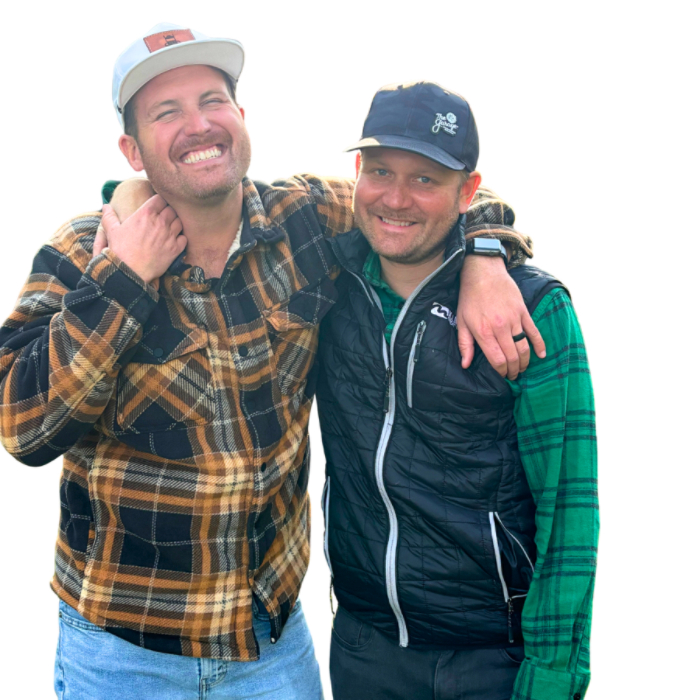
Charles Jelen: Welcome, welcome to Cool Air Hot Takes. This is the podcast about anything and everything from the world of HVAC. Energy in the Built Environment. We're your hosts. My name is Charlie Gellin.
Dan Gentry: And I'm Dan Gentry. So normally every couple of weeks we get together and bring you guys the latest in HBAC, headlines and expert interview, and of course,
Charles Jelen: your stat of the day.
But this time we're gonna do things a little differently if you're listening to this. When the episode first drops, we're over a hundred thousand listens
now. So we can say drops as like, we can actually say, you know, we're official.
We're currently in that wasteland between Christmas and New Year's, uh, where time stops.
It just doesn't exist for some people or project deadlines for others, and people are driving forward. So for this episode, it's just us. We're looking back at some of the hottest takes of 2025, so make sure you stick around here. Who takes home the trophy for the hottest takes of 2025? Mm-hmm. Who takes home the coal for the coldest takes?
Dan Gentry: Oh
Charles Jelen: yeah. I am excited. All right. We gotta do our own hot takes, but before we do that, we got a story. You got a story. So putting Millie to bed. Millie's my middle child, my favorite middle child by the way. And she's an avid listener. She's a friend of the show. She likes the podcast. She likes to tell her friends that her dad's a podcast, a host, which I think is super cute and I love that.
Shout
Dan Gentry: that to Millie. Yeah. Yeah.
Charles Jelen: Of all the kids. She's the only one that's like actually. A fan putting her to bed last night and she was like, dad, are you ever gonna talk about me on the show?
And so I, I was like, well, what do you think? Like I'd talk about you. And she was like, well, my. Softball team went undefeated this summer. I was like, alright, good job. So Millie's U nine softball team. She's eight years old. They went 12 and Oh, boys and Girls Club won the whole thing every game. There you go, Millie.
Way to go. Yeah, way
Dan Gentry: to go. Millie and team.
Charles Jelen: Yeah. All right. So what do you got for a hot take on this one?
Dan Gentry: So this one I think is, uh, might ruffle a little bit, but I'm gonna say the hot take is remote work is a thing of the past.
Charles Jelen: Mm. Mm-hmm. I totally agree. You look at any of the headlines across all these big companies and everybody's coming.
Back to work. Train is, yeah, train is going back to work. Anybody that is remote is coming back in. If they can, they're still obviously gonna be virtual teams and so they'll mm-hmm. Probably have some virtual people out there, but they're trying to pull as many people back in and
Dan Gentry: I. Love it. I think it's really hot because I, I love it too.
I, I remember, I mean, when this whole thing started, I came into the office as soon as I could just 'cause I personally hated working at home. I mean, we had like a one and a half and a 3-year-old or something at the time and just. It's distracting. I came into the office as soon as I could 'cause I'm a like a, I'm a social butterfly.
You are. I'm see people I wanna talk to. You're a water
Charles Jelen: cooler guy. You're a water cooler. Got it. Water cooler. You know, that's what it's there for. I agree. I remember when the pandemic first hit, there was this period probably like a month long where I. They didn't tell you to go home, so you could still come into the office.
It was kind of like come to the office at your own risk. Yes. You know, kind of thing. Yes. And there was nobody there, and I loved it. Got super productive, got a bunch of things done, but then it was like after a couple weeks, it was like, well, what's the purpose? There's nobody here. What's the purpose of this?
Like there's nobody here to talk to. And then the hammer came down there, like everybody out. And then we built the office. The studio that we're in now is the, is the COVID office,
Dan Gentry: I would say. I would probably feel a little different if I had this as my setup, as opposed to like sitting at this tiny little desk in our like guest bedroom that is in the basement and, yeah, not, not ideal.
Right. You know, this is a sweet setup he's got out here.
Charles Jelen: Yeah. So those that don't know about the studio, the cooler Hot takes studio. It's out on a farm and it's not at my house, so it, it's. 500, 600 yards from my actual house. It's out on the farm. We put this in the attic of an an old barn during the COVID years, so I don't have the kid problem.
No. A straggler once in a while makes it all the way down here, but that's not it. You just get
Dan Gentry: like a nice pop in once in a while. Yeah.
Charles Jelen: When my grandpa was still living up here, he'd hop in and he'd just show up at any time of the day looking for a cocktail. It'd be like 10 30, like
Dan Gentry: grandpa not, not quite yet.
You gotta wait till like get the noon sun warmed up and
Charles Jelen: the whole remote work thing. He didn't understand. Yeah. Computers, he didn't get like video conferencing, none of it. So he'd walk in and it'd be like, Hey, I'm on a call. And he's like. With who. Okay. I'll just wait here. And he'd sit right behind me on a couch, on a video conference.
Oh. Everybody on the call would be like, uh, what's going on with, uh, the guy in the background
Dan Gentry: that, that's my grandpa popped in.
Charles Jelen: Yeah, it's, it's my grandpa. He's just waiting for a cocktail. Oh, that is good. That is good. All right. My hot take is actually gonna be the headline for the day.
Dan Gentry: Oh, okay. A little, uh, changing gears.
I like
Charles Jelen: it. Okay, so we're gonna, we're gonna mash those two up. So we're gonna go right into your HVAC headlines. Go red,
VO: HVAC. Headlines your news today.
Charles Jelen: Alright. All right, listener, it's 4:00 PM in pen run. Here's your headlines. Alright, headline number one, train Technologies Unveils Industry's first comprehensive thermal management system reference design for gigawatt scale NVIDIA AI factories. That's a mouthful. This is, that is a mouthful.
That's a big headline. And it's a little bit of home cooking on this one. So this was my hot take too, because this came out as I was reading through HVAC headlines scouring the web. This was one that popped up right away. And our very own Mr. Dan Gentry here. Was a key contributor to it. So I'm gonna kick it over to you as the author or one of the authors, the author.
Give us what this is and I'm gonna ask a few questions as we go.
Dan Gentry: So we've really have been in this partnership with Nvidia and we're trying to figure out really a, say a thermal management system solutions. So we're talking about from CDUs fan walls, chillers. Heat rejection devices, dry coolers, cooling towers, that kinda stuff.
So what's, what's an optimal configuration as far as equipment selection goes? Uh, one of the big things is these sites need to have flexibility. So they don't know really what the ultimate say ratio of liquid cooled to air cooled is going to be
Charles Jelen: for the listener. Why is that?
Dan Gentry: Because the demands of the system are gonna change.
So the development of these chips is super fast and it's changing. Right, and so the cooling needs within the space are gonna change driven by those different technologies.
Charles Jelen: Then on top of that, there's also like the financial setup or, or the structure of how it's leased out. It's very different if it's a hyperscale client versus a colo client because the colo is building this for a tenant, and so there's a chance.
They don't actually know what's gonna happen because it's a year from now when this stuff is actually gonna get installed and built. So you need to have design flexibility in case the tenant changes, or in case the technology changes, so that you can adequately get the heat away from the chips. Yeah,
Dan Gentry: like it would be expensive to design for 100%.
Air cooled and 100% liquid. Cool. Like the concept of this, the reference design has what we call swing chillers. So you have some of your chillers dedicated to the air cooling, some of the chillers dedicated to the liquid cooling, and then you have to, we'll call 'em chillers in the middle. That could be serving either side.
Really what this guide does is it, it lays all that out. Yeah. And it talks about buffer tanks or thermal storage and mixing loops if you have to mix your temperatures. Yeah. Higher and like explains the chiller technologies, the CDUs, the fan walls. It kinda just explains kind of high level what they are, what you could design temperatures around for those pieces of equipment.
So just kind of lays all that out. Yeah,
Charles Jelen: that's, that's the, the temperature side of it I think is, is one of those that is underappreciated. I was talking to a, a couple of different engineering firms this last couple weeks, and their question was, what do you design the facility water loop for feeding the CDUs?
And it's almost like that, it's a different paradigm of a question because it's. What is the temperature that the client is willing to go to on the technology loop and then you work your way backward from there.
Joe Heger: Yep.
Charles Jelen: Yeah. And so like those temperature references from a chip manufacturer. Right. So like one of the reasons I think this is a cool partnership and this reference design makes a lot of sense is NVIDIA's the chip manufacturer and they're saying this is how we want the technical loop operated.
And then we work back from there.
Dan Gentry: Yes, and I've been talking about this for like a couple years now, actually is like where I really see that the train chiller manufacturers could be helpful in the data center industry is we know a ton about chiller plants. We know how to design 'em, we know what their capabilities are.
We can configure them to whatever your customer needs are, your temperatures, that kind of stuff. But we're not experts in say, chips. And what their precise needs are. So when we can work together, if they can tell us exactly what their requirements are, we can, again, like you said, start from their side.
Instead of looking at, okay, well I need a bunch of chillers. What temperature can they do? Yeah. That kind of stuff. So I think it's, it's an awesome collaboration.
Charles Jelen: Yeah, it's pretty cool. Check it out. If you want the manual, reach out to us. Cool Air hot takes@train.com. That was my hot take slash headline.
Dan Gentry: That's great for this little hinterland episode. If you'll
Charles Jelen: All right. Up next, the best hot takes of 2025. Don't go anywhere. Hey, Danno, did you know trains got purpose built units for all industrial process cooling needs? These chillers are total game changers.
Dan Gentry: Yeah, for over 35 years, MT a's been crushing it with reliable high performance chillers.
Now with Trane's expertise in outstanding service, we're taking it to the next level.
Charles Jelen: Need to cool your manufacturing equipment. We've got you covered from one to 53 tons. Very specific. Not sure what you need. No problem. Our experts are here to help you figure out the right model and capacity for your unique application.
Just reach out and we'll make sure you get the perfect fit for your cooling needs.
All right, listener. The hottest takes of 2025, the coldest takes of 2025. Let's do it. Can you believe it? Couldn't believe what it's like the end of the year. It's wild. We've
Dan Gentry: made it this far.
Charles Jelen: Yeah, so we cool. Air Hot takes it. It launched in 2025. So we're gonna take a look back. We're gonna go through our favorite takes.
Our not so favorite takes. We're gonna chop 'em up a little bit. So here we go.
Dan Gentry: Tripped on memory lane.
Charles Jelen: I'm gonna start with our own hot takes, not our guests. So based purely on feedback, I'd say my hottest takes twofold. One is we need more popin culture. That's a great one. We're replacing water heaters too quickly.
Dan Gentry: Dude,
Charles Jelen: they're both
Dan Gentry: great. The second one is like pretty, uh, it's kind of a big deal. I mean, I've had many, many people come up to me and say, yeah, hey, I'm, I'm draining my water heater. Yeah,
Charles Jelen: I just got it the other day. Joe Reamer just walked in. We were at a, we had customers in town. Joe walks into the room, he goes, Hey.
Just drained my water heater. Yeah, I He said the same thing
Dan Gentry: to Felix walking by.
Charles Jelen: That's,
Dan Gentry: oh man, it, no, there's been like. A lot of people that said something about that. So that was a good one. That was a good one. That really
Charles Jelen: hit a tone. How about you hottest take of 2025?
Dan Gentry: Well, personally, my favorite was the carburetors.
I'm just gonna say I'm on that one because I was like flying high. I felt like I was like, knew what I was doing. Yeah. Unless I felt, I felt, I still don't know if I do, but. I was feeling so good. I was so jacked
Charles Jelen: up about that. So, listener. You even didn't get the full spiel on that one. There was, there were four carburetor stories in that whole hot take and edited down to two.
Dan Gentry: Yeah. I mean, it's, it's unfortunate. I know we have limited time, but I mean, guys, he was
Charles Jelen: on a roll.
Dan Gentry: You were on a roll. I, I was feeling it because, you know, turn them carbs up.
Charles Jelen: Yeah. All right. So my coldest, my coldest steak. Okay. My coldest steak, the one that I like the least, I don't know why, is the uneven plant sizing.
Oh, okay. I didn't like it. I don't know. I don't know why I still believe in it. Yeah, I just, I just didn't hit,
Dan Gentry: I didn't like it. No, I get it. I think it's a great idea, but I get what you're, you know, it's, you wanna be a little spicy. Yeah. And it, it had
Charles Jelen: nothing. It was kind of vanilla. Okay. I didn't like it in retrospect, going through 'em.
How about you? Actually, I know where you're gonna go if it's not this one. If it's not the one I'm thinking of, something's wrong.
Dan Gentry: Well, I guess I'm gonna say I think mine's very easy because the first episode,
Charles Jelen: yes. Okay, good. We're on the same page.
Dan Gentry: I, I did not have a prepared take and no, four months, just one with yours.
Charles Jelen: Four months of prep. The show is called Cool Air, hot Takes. Dan comes with Zero Hot takes. What's your hot take for the episode? Um,
Dan Gentry: I tell you what, what I really like. I want to go for my hot take. I just think this episode and this podcast is hot. I am been talking about this. Can't we do that? I'll have to think about my hot take.
Charles Jelen: That's a self-serving hot take right there.
Dan Gentry: Yeah. You know, it was, um. It was a miss on, on my behalf. I think so.
I think so. I'm I'm totally, uh, owning up to it. Yeah. And, uh, i's really struggling. I was like, yeah, yeah. I'll just, I'll just think of something and now that I'm a a podcaster, I've learned a little bit of prep.
Charles Jelen: Well, prep helps.
Dan Gentry: I have myself to blame. Well, yeah.
Charles Jelen: Let's go to your favorite hot takes from the guests, all the guests.
We're at the end of season three here, so we've had basically 17 episodes now we've got one more that'll go out this year. What were your favorite hot takes? We'll go back and forth here. We'll, Hammond Egg this you start and then I'll add ham. Add
Dan Gentry: another one, Hammond. All right, I'm gonna do my first one.
So. Go ahead. First, I'm going all the way back to the beginning. I really liked John Horns.
Jon Horne: If you look at the next five to 10 years in, you know, the HVAC market taken broadly, I think you're gonna see more change in the next five to 10 years than you have seen in the last 50 to a hundred years.
Charles Jelen: Oh yeah.
He's an avid listener, by the way, still.
Dan Gentry: Hey, hey, John.
Sam Brown: Thanks
Dan Gentry: for listening.
Charles Jelen: First, our first guest. Still an avid listener. Thank you, John Horn.
Dan Gentry: That's a good take. It's awesome. It's pretty cool. I, I wouldn't have like, thought about that and I, I'm in it. Yeah. And I see all this innovation happening and it's kind of like the industry hasn't done a ton of innovating.
We've made an incremental. I think improvements, but nothing like huge. And if, you know, five to 10 years, that's like a, that's a really, really, really short time. Yeah. In this industry. So I hope he is right, because that's cool and exciting and it's just, I think it's hot. So that's, uh. That was my first one.
Charles Jelen: That's a good one. So John Horn is, uh, the managing partner, managing director of a venture capital firm called the Idea Fund. So he came in to talk kind of from an outsider's perspective. He doesn't have a lot of work in the HVAC space, but that was his take on what he saw from the outside as a venture capitalist.
Uh, I thought that was really cool. That was a good one. Or mine. First one is season one, episode four. This was, uh, around ai. We had Jean Simone on. He's the, uh, co-founder of Brainbox ai.
Jean-Simon: So the HVAC business will become a data business within the next five years.
Charles Jelen: Almost along the same line. Yeah. Yeah. It was really cool having like the, the venture capital person and then the, the AI person come in right, right on top of each other and Yep.
Kind of have that same vein. And we've talked about that previously, but it, it was a good hot take and, and it is an interesting one because in our business we're a product manufacturer. That's how we started. We've changed a lot, right? We've added a lot of services and we've become an innovator in terms of technology and.
The different types of business that we get into, whether it's controls or energy services. Mm-hmm. Or performance contracting, whatever. But to think of the product side, which is really where Trane started, is almost going to be negligible in his mind. Yeah. And it's just gonna be data. It doesn't matter what the widget is.
It's kind of crazy.
Dan Gentry: I would agree. It, it's like hard for me to envision 'cause I'm like a very like product and like thinking about the You're a heavy metal guy. Yeah, yeah. Heavy metal guy. And it's like, and so, no, I, I agree with Todd. It's very interesting and I get it and I see all these new innovations and new products we have around data.
Mm-hmm. And it's uh, absolutely. It's pretty cool and we're gonna be able to do some powerful stuff with it too. So,
Charles Jelen: all right, you're up next. What do you
Dan Gentry: next? So I'm also gonna go way back to the beginning, and so my second favorite one was from Joe Hager, who is an engineering Joe
Joe Heger: manager, manager. You should never fall in love with a bearing technology.
Dan Gentry: Oh, yeah, yeah, yeah. I love that comment. I loved it at the time. I still love it because I feel like this is something we still talk about. I, I've talked about it on the show before, but it's like, Hey, I need a standard chiller selection. I need a high efficiency mag bearing selection. And it's like, no, that's not how this works.
It's not the bearing technology that drives the efficiency. Of the piece of equipment. So, you know, think about what you want the the thing to do and then pick the piece of equipment that does that, not picking a piece of equipment based on the, the bearing technology. So I love it. Uh, I think it was a great one.
And. I'm sticking with it.
Charles Jelen: My next one came from Sam Brown. He's the Chief Development Officer at Server Farm. His hot take, and actually I think this is the hottest, most controversial take. It's a good one of all of the takes we've had.
Sam Brown: I don't think liquid cooling is gonna stay around. How about that one?
Charles Jelen: If you're in and around the data center space, liquid cooling is where everything is headed. We interviewed Ali had from Nvidia, and that was a lot of what we talked about is why they went with liquid cooling, not a liquid cooling. Right. And Sam, I mean, to his credit, he came out, we, you know, he, he did the asi, he knew the assignment, he came out with a really hot take and you know, the, the future will tell where we're gonna go, but.
You know, tip of the cap to
Dan Gentry: Sam for coming with something hot. No, I, I agree. That was, and he teed it up too, saying this is gonna be hot. He did, he knew what he, he, he knew what he was saying. He delivered. He delivered. Yeah. That's a good one.
Charles Jelen: Good one. I've got one more. It was a recent one here. It was with Jason Eth.
He's the, uh, principal electrical engineer at, at Geronimo Power in
Jason Espeseth: the data center industry. There has to be generation brought to the table and. I might be a little bit biased 'cause that's what we do, but there's not enough generation out there and everyone wants to go big. Everyone wants to go now, but they have no means to do it.
Charles Jelen: I thought that was cool because it's basically that whole bring your own power concept that's kind of seen over the last year and. We're starting to see some of it. Uh, there's data centers being designed right now with onsite power generation. Mm-hmm. We're working on a couple projects that they're looking at natural gas or they're looking at fuel cells and, you know, you see some of the go check out Bloom's stock price and, and that, I'll tell you all you need to know about onsite power generation, but I, I thought that was a good one and, and maybe it's timely, not so much hot, but I like that one.
Dan Gentry: Yeah. I mean, big data center guy. You know
Charles Jelen: that is good though, when the shoe fits.
Dan Gentry: I
Charles Jelen: like it. Alright, up next stat of the day. Stat of the day,
Dano. Yeah. What's available 24 7 365 to keep your operations up and running.
Dan Gentry: Oh,
Charles Jelen: you know, it's
Dan Gentry: all gotta be ball bearings these days.
Charles Jelen: Well, that's a good line, but I'm talking about train rental services.
Dan Gentry: Oh yeah. Whether you're dealing with seasonal demand, emergency needs, planned expansion, or those annoying production gaps, train rental
Charles Jelen: services has got you covered.
They provide customized solutions to keep your operations running smoothly and avoid any costly downtime. The best part, they're available 24 7 365, and of course, it's easy to connect with them too.
Dan Gentry: Check out trane.com/rentals to learn more today.
Charles Jelen: Here comes Joe Sta of the
Sam Brown: day,
Charles Jelen: the day, sta of the day.
This one, you know, if you're, if you're traveling around the holidays, I know a lot of people are. We're gonna give you a stat related to what airlines are the best for on time performance. So this one, the source of the data is the Bureau of Transportation Statistics, and we're gonna do top five, bottom five.
So, okay, most on time, least on time. Let's start with the best.
Dan Gentry: Okay,
Charles Jelen: let's do it. All right. Okay, so top five. In terms of most on time. Number five, spirit Airlines. You ever fly? Spirit? I
Dan Gentry: have once from, I think, Minneapolis to Cancun. Oh, um, nice
Charles Jelen: Spring break oh four or
Dan Gentry: what? Me and Amber went there with Fogel Landon and, yeah.
All right. It was great. But after all, like the bag
Charles Jelen: fees
Dan Gentry: and all that kind of stuff. Yeah. Get she just phone Delta? Yeah. Well,
Charles Jelen: they're on time number four, United Airlines, 78.6% on time.
Dan Gentry: Man, I feel like they should be higher if we're talking about the top five, but uh, I know. Well,
Charles Jelen: there you go, Southwest, which it doesn't surprise me at all, actually.
I think Southwest is a solid airline.
Dan Gentry: Never flown. Really? No. Wow. Okay. Well, I like Southwest. Yeah. I'm really apprehensive about the whole seating situation on Southwest. Don't you have to like check in early or something? And I,
Charles Jelen: they've
Dan Gentry: got like different options, but I've never dug in. I always thought you just got a seat.
So I've, it's kinda, I like picking my seat. Okay.
Charles Jelen: Alright. Alright. Number two. I've never heard of Horizon Airlines. Never heard of them. Yeah. Yeah, same here. Elena.
Producer Elena: Never out of them.
Charles Jelen: It's not a, it's not a UK line.
Producer Elena: No, but I'm happy to travel with them.
Charles Jelen: Okay. Right. Elena's looking for free flights, uh, number one, the number one most on time in terms of best performance.
Hawaiian Airlines. Interesting. 83.1%.
Dan Gentry: Huh? So I wonder if, does that just like hop in between the islands? I think that's all they do. I mean, that's kind of an unfair advantage. I, I believe, I think it's, you know,
Charles Jelen: sunny every day there's a lot going on. Snow. Yeah. Alright, let's go the other way.
Dan Gentry: Okay.
Charles Jelen: Bottom five, number five.
American Airlines.
Dan Gentry: WWW, right?
Charles Jelen: 73.6%
Dan Gentry: as is tradition
Charles Jelen: number four, United Express,
Dan Gentry: which must be like a regional carrier for
Charles Jelen: United, I think so. Must be number three on the bottom. Air Wisconsin. So,
Dan Gentry: um, I'm gonna say dis disappointed to see this because I don't know if you know, but Air Wisconsin does operate the flights from lacrosse to Chicago.
Oh, is that the American affiliate? Yes. Oh my gosh. I know. I've, I've got on a couple times and it's like, oh, look at this plane, and it's like, got like green and orange, it says air. I'm like, oh, cool. It says Wisconsin. I'm like, that is kind of neat. Yeah, that's nice. And now to see them down here, it's like, well that's, you know.
But we got the weather to deal with, to be, I was gonna say, to be fair, to be fair, it's not Hawaii, it's Wisconsin. They've got a couple more harsh conditions to deal with. So it doesn't make me feel more comfortable at, at the end of the day about making my connections. But,
Charles Jelen: uh. That's what it is. All right.
Number two on the bottom, five is frontier. And the worst offender in terms of on time flights is PSA.
Dan Gentry: Never heard of 'em. It's 65.7%. That's like not very good.
Charles Jelen: Very low. If I had to guess, it's like an Alaskan like bush plane, like commercial Bush Blaine. Yep. Which I, I'll give him
Dan Gentry: slack.
Producer Elena: Yeah. Um, I think I've got to come in and do a, a correction there.
Uh, what? Oh, I, I think PSA is a North Carolina, Charlotte, North Carolina thing.
Charles Jelen: Oh, boy. Oh, look at this. Look at this live correction here. Can you do a little, uh, research for us there, Elena? And, and find out where the PSA is?
Producer Elena: Uh, well, Pacific Southwest Airlines. It's part of American Airlines, um, and figures.
It looks like they operate from Dayton, Philadelphia, Washington, all the way down to Pensacola. Okay? The most west they go is Dallas. So. Definitely not Alaska.
Charles Jelen: Oh wow. Something's going on with PSA. Yeah. It's, that's not a crazy part of the country to have like that bad of a
Dan Gentry: watch, uh, watch out their travelers.
Producer Elena: Yeah. Although that'd be East Coast. Is East coast a tricky place to fly?
Charles Jelen: Yeah. Yeah. Maybe hurricanes and storms, whatnot. Yeah. Possibly go. You're behind air Wisconsin by 6% and you're not dealing with snow as much.
Producer Elena: There you go. Do better. PSA stuff do better.
Charles Jelen: You heard it here. All right. Thanks for listening to this episode of Cool Air Hot Takes, and thank you so much for listening to every Cool Air Hot Takes episode in 2025.
We couldn't have done it without you. Thank you for popping in with us.
Dan Gentry: Remember, we love hearing from you. Send us questions and hot takes by leaving us a comment on Spotify or YouTube. Leave us a review on Apple or drop us a message@coolair.hot takes@trane.com. And remember, we could be sending you some merch for some of those hot takes.
Don't forget to also leave us a rating wherever you listen. Of course, five stars, only please. Until next time, stay cool and keep those takes hot.