Dan Gentry: [00:00:00]
Charlie Jelen: Welcome to Cool Air Hot
Takes, and welcome back, Danny boy. five.
Dan Gentry: Season five. Let's go.
Charlie Jelen: Listener, we've been out for a little while, so sorry we haven't brought you episodes. We took a little break. We got our act together. We got some great stuff planned.
I hope you're ready for everything we got cooked up
for this season. I'm Charlie Jellin.
Dan Gentry: And I'm Dan Gentry.
Charlie Jelen: And before we get into it, we have to say thank you. We ran our first ever listener survey, and 82% of you said you would recommend us to a friend, which-
Dan Gentry: That's pretty good ...
Charlie Jelen: what I hear from, uh, the benchmarking folks that run the show is, that's pretty high compared to most.
Dan Gentry: Hey, pat yourself on the back,
pat yourself on the back, listener.
Charlie Jelen: You guys keep giving us feedback, so thank you very much.
Dan Gentry: Uh, one of my favorite, uh, comments was that someone said they think that, uh, the fact that we're kind of goofy makes us feel very accessible and approachable, compared to a lot of those stuffy business content podcasts there. So, uh, that's what we're going for,
Charlie Jelen: I think we'll just chalk up that goofiness to, uh, friendship.
Dan Gentry: [00:01:00] All right. I love you, pal.
Charlie Jelen: Yeah, I love too.
All right, listener. Every couple of weeks we get together and we bring you the latest in HVAC headlines.
We bring you a couple hot takes and an expert interview,
with industry leaders. This week we're talking data,
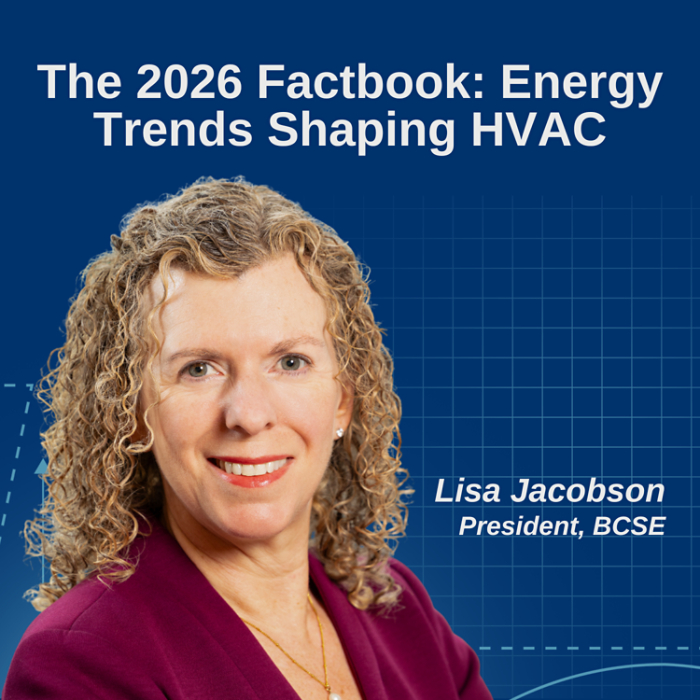
not data centers, but actual data. We're gonna be joined by Lisa Jacobson. She's the president of the Business Council for Sustainable Energy, and we're gonna break down all of the numbers.
percentages of energy, percentages of industry, she is part of the team that brings all of that together, which is pretty cool.
Dan Gentry: Sounds packed.
Charlie Jelen: It's absolute packed. Uh, we're gonna talk about why the US electricity demand just jumped for the first time in decades, and what it means for the people building and running these systems
Dan Gentry: This is gonna be good. I can't wait.
of course, we also have the latest HVAC headlines that we have personally curated for our listener. And then, uh, we'll be wrapping it up with the stat of the day.
Stat of the
Charlie Jelen: the Stat of the Day. Stat of the Day. We're still doing it. I [00:02:00] will say one thing, listener. We did get some feedback
Dan Gentry: of the day. The
Charlie Jelen: not
Dan Gentry: of the day lives.
Charlie Jelen: not everybody likes Stat of the Day.
Dan Gentry: We're gonna
Charlie Jelen: to make it better. We're not getting rid of it.
Dan Gentry: But first, we have, uh, some of our hot takes.
Charlie Jelen: takes. We're gonna do hot takes, but I gotta do one thing first. I gotta say yo. Yo.
Dan Gentry: Uh, okay.
Sorry.
Charlie Jelen: So
if you don't know what that's from or you're interested in finding out more, uh, you need to get up to Hayward, Wisconsin in August for the Lumberjack Championship
Dan Gentry: I've never been, so I need to go is what you're saying.
Oh, wow
Charlie Jelen: There is log rolling.
Dan Gentry: Mm-hmm.
Charlie Jelen: There is boom running.
Dan Gentry: Mm-hmm.
I need to go.
Charlie Jelen: Especially- The Lumberjack Championship, there's a whole, there, there's an entire stadium for it. Cool. There is log rolling, there is boom running, there is hot saw. You're gonna love the hot saw. The hot saw legitimately the, the biggest, fastest chainsaw in the world trying to go up and down on, on a big log.
but it, it's incredibly fun. And their call, like what they do when somebody does something good is, "Yo [00:03:00] ho."
ho."
Dan Gentry: Uh, that was great. Appreciate that.
Charlie Jelen: Hot take time.
th-this is, uh, also from a listener, but I can't name the listener's name
But I wrote down what he said,
Dan Gentry: He goes, "I got one for you." he goes, "The vapor compression cycle will save the planet."
Charlie Jelen: Most people are on the other side of that.
Dan Gentry: he's all into heat pumps, electrification, electrify everything with heat pumps.
Charlie Jelen: Yeah.
Dan Gentry: So in his mind, the vapor compression cycle heat pumps are gonna save the planet.
Charlie Jelen: like it.
That's good. Actually, I have a listener hot take, too. We're both starting the season with listener hot takes.
This is from Mitch in LA.
He said, "The era of chasing the lowest first cost is over."
He said, "Owners who award projects to the lowest bidder are guaranteeing higher operating costs for the life of that equipment. When something needs to be fixed, if you're not tied into a service network that can respond quickly or have the smarts embedded on the unit to have remote capability, you're throwing money away.
Higher service cost, higher parts cost, higher energy cost, it's all increasing the [00:04:00] lifetime cost of the unit after the point of upfront purchase."
Dan Gentry: this is a good one.
Charlie Jelen: I also, like, think about it like Harbor Freight versus Ace Hardware. I have this problem all the time.
I'm much like you,we do, home projects. Love a good home project, but every project, you probably have to go buy a tool.
Dan Gentry: Mm-hmm.
Charlie Jelen: Usually. There's one tool purchase required for most
Dan Gentry: A unique tool- that you're never gonna use again.
Charlie Jelen: Well, and that's the thing is, like, you've got an option, right?
You can go to Harbor Freight and you can buy the cheapest tool possible, or you can, go to Ace Hardware and get an expensive tool, but it's gonna last you f- forever. Which way do you go? It depends on what you're gonna use it for, right?
Dan Gentry: That's
what you're gonna use it for, right? Depends on the tool.
Charlie Jelen: 100%. Same thing with HVAC stuff.
Dan Gentry: that makes a lot of sense,
Charlie Jelen: Good one, Mitch. I appreciate it. All right, up next, we got your HVAC headlines
HVAC HEADLINES
Charlie Jelen: All right, listener. It's 3:30 in Da Nang, Vietnam. Here's your headlines[00:05:00]
And Danny boy, you're up first on the headlines
Dan Gentry: First headlines I like this one because some-- it's a little personal to It's been very, it's been very hot it's,
Charlie Jelen: it's clo-close to home for you.
Dan Gentry: it's been very hot and, um, my air conditioner like, doesn't shut off. It's been a while.
So the headline is, "An AC shade to block sunlight without limiting airflow." So this is like a, airflow shade thing for your condensing unit at home. So I'll just read a quick couple sentences. It's, "The new AC shade from AC Shades LLC is designed to shade an air conditioner's condensing unit from the sun in order to improve its efficiency without restricting the airflow needed around the unit."
So if you think about this, like, take a big piece of cardboard, put it on top of your unit, and cut out a hole in the top, except it's made of some, plastic material, so the bladesstick out. So the sun doesn't beat on your unit. So my unit [00:06:00] is on the our house facing the, the blistering sun in the afternoon with absolutely no shade or reprieve from the sun, so it just gets blasted.
I mean, there's been days I just go put the sprinkler on and let it run, and she'll keep up with the house. But, um, I personally loved seeing this headline 'cause I need this product. So I should get it and test it out and write a review, and I'll tell everybody that
Charlie Jelen: that my,
Dan Gentry: AC actually cycles off when it's, you know, a b- below 75 degrees.
Charlie Jelen: I gotcha.
Dan Gentry: So I loved it. that's my headline.
Charlie Jelen: All right. So listener, just like to give you an idea. from this picture here that I'm seeing, it's like you put a bar around your condensing unit. And that condensing unit is the thing outside, and what that thing outside is doing is it's trying to reject heat.
It's taking all the heat from your house, and it's throwing it outside. And if your condensing unit is sitting in the sun, it's heating up the condensing unit, making it [00:07:00] hotter, limiting how much heat it can reject. This thing, it's like a ledge, all the way the condensing unit, blocking the sun from hitting it, absorbing the heat, letting your air conditioner work more efficiently, rejecting more heat.
Dan Gentry: I think it's cool.
Charlie Jelen: I like it. I like it.
Dan Gentry: Gear up. I'm excited for this one
Charlie Jelen: Oof. All right. Listener, it's maybe a little controversial, but the headline is, "The Heated Debate in Europe Over Air Conditioning." This is from an outfit called Noma, and it is authored by Nathan Gardels.
And I don't normally read, long parts of these headlines. Usually just do some bullets and comment on it. But this is very well-written, so I'm gonna read you a few excerpts and then we'll chat about it
Dan Gentry: I'm ready
Charlie Jelen: Recently, Elon Musk stirred controversy across a sweltering Europe simply by tweeting on X that Lee Kuan Yew, the founding [00:08:00] father of Singapore, was a genius because he had the vision to see that introducing air conditioning would entirely change what was possible in a post-colonial tropics and make the city-state he ruled as prosperous as the imperial West.
Dan Gentry: Okay.
Charlie Jelen: European reticence seems
grounded in the notion that the climate is natural while conditioning it is the kind of tech fix associated with big living Texan trillionaires who admire authoritarian leaders and the extravagant overconsumption of Americans.
AC, in the minds of some, appears to be a proxy for all the things wrong with America. If climate is a determining factor in culture, then, as Singapore has shown, conditioning climate through technology will fundamentally shape the culture as well. Technology is not somehow the enemy of humanity. It is what makes us human.
The real issue is not what is natural versus artificial. It all comes down to what kind of social and physical technology we deploy, how governing institutions are [00:09:00] designed, and what source of energy is used to fuel the project of civilization. Slow-motion climate calamity is already a normalized reality across Europe.
Anti-Americanism should not be an excuse for not embracing technology the way Singapore's genius did to escape the torments of torpidity I thought that was a, an a- an awesome article that kind of bridges this difference between when and how much do we deploy technology to help us.
Dan Gentry: I liked the, statement project of civilization. 'Cause you think about it, it's like,
How can we best use the resources to progress, be comfortable without- being destructive? saw
Charlie Jelen: Go out there and read it. it's called "The Heated Debate in Europe Over Air Conditioning."
Dan Gentry: I was thinking it was gonna be like Elon like just [00:10:00] making fun of Europeans for not having air conditioning.
Something like that. Something a little more. this is a good article.
Charlie Jelen: a
right, listeners.
Stick around. Next up
good article. I agree. Interesting to read. All right, listeners, stick around. Next up, we got our expert interview with Lisa Jacobson
AD BREAK I
Charlie Jelen: There's a major shift happening in how organizations think about buildings.
Dan Gentry: how organizations think about buildings. For years, buildings were treated like overhead, something to maintain, manage, and react to.
Charlie Jelen: But forward-thinking leaders are starting to see them differently, as strategic assets that can help drive business performance.
Dan Gentry: At Trane,
leaders are starting to
It's
see them differently as strategic assets that can help drive business performance. At Trane, we call this Building Brilliance.
It's the belief that every building has the potential to do more than simply function.
Charlie Jelen: But realizing that potential takes more than equipment alone. It takes deep expertise, smart connected systems that never sleep, and energy strategies that turn operational savings into momentum for your business goals.
Dan Gentry: When buildings work smarter, organizations
potential takes more than equipment alone. It takes deep expertise, smart connected systems that never sleep, and energy strategies that turn operational savings into momentum for your business goals. Because when buildings work smarter, organizations can fund expansion, modernize operations, improve resilience, and create better experiences for the people who rely on them every day.
Every building [00:11:00] has a potential for brilliance. Trane has the ingenuity to unlock it. See how we're turning today's buildings into tomorrow's breakthroughs at Trane Building Brilliance.
INTERVIEW
Charlie Jelen: This week's expert guest spent over twenty years in the energy policy space. She's testified
Dan Gentry: before Congress and
Charlie Jelen: represented US in UN climate talks. now the president of the Business Council for Sustainable
Dan Gentry: a coalition that brings
Charlie Jelen: renewables, and energy under one roof.
Dan Gentry: Welcome to Cool
Charlie Jelen: Air Hot Takes, Lisa Jacobson. you doing today?
Lisa Jacobson: Oh, I'm doing great. It's really terrific to be here. Thanks for having me
Charlie Jelen: How's your summer going? Summer's winding down here. What's, uh, what's the highlight of your summer so far?
Lisa Jacobson: Oh boy. Um, well, right now I'm in Austin, Texas, and spending time with family and doing work. As we'll probably talk about, Texas is, uh, really leading here, uh, in the United States in terms of bringing together clean energy, energy efficiency, and grid [00:12:00] optimization. So it's an exciting time to be here in the state of Texas, uh, thinking about energy
Dan Gentry: That's
Charlie Jelen: great.
Lisa Jacobson: we kick things off with a hot take, and I'm sure with 20 years of experience watching the energy sector transform, you probably have a handful.
Charlie Jelen: So did you bring us a hot
take today?
Lisa Jacobson: we are in an unprecedented time in the energy sector. We are thinking about strong, low growth, low growth we have not had in over 20 years. We are thinking about sustainability, and we're thinking about affordability for businesses and families.
So my hot take is that energy efficiency and flexible demand may be the fastest energy resources we have, and we still do not treat them that way
Charlie Jelen: So like our listeners, uh, a lot of people,
we think of energy efficiency, it's how do we reduce the amount of energy that our, uh, our chillers use or our air handlers use, or how do we adapt our controls to turn equipment off smartly?
when you think of energy efficiency and, and it [00:13:00] being the quickest way to reduce, what, what does that mean for you?
Lisa Jacobson: I think it's an economy-wide opportunity, so all the things you mentioned, plus thinking about optimization of the grid and load flexibility. how do we manage, supply and demand in our energy systems, in particular our power sector? And then it's all the way down to the household level, like the same types of controls and optimization can be done in residential settings.
And so I think it's all those things combined. So it's the entire demand side portfolio.
Charlie Jelen: let's up little bit know, give us a little bit of background. Uh,
Dan Gentry: how
did you end
Charlie Jelen: up in energy policy, and can you share more about the Business Council for Sustainable Energy
and what you actually do?
Lisa Jacobson: Sure. Well, let's start with the Business Council for Sustainable Energy. We're a broad-based energy trade association. We were founded over 30 years ago all around this vision that US innovation, US technologies in the energy [00:14:00] efficiency, natural gas, and renewable energy sectors were poised to transform the US energy marketplace and, and really the marketplace around the world, and that has occurred.
Um, the council works on policy, so energy markets, you know, very closely connected to regulatory and other policies, and that spans state, local, federal, and in some cases, international policies. So having that really send the market signals to invest in energy technologies that are gonna be reliable, that are gonna be affordable, and they...
that are going to be sustainable are what the organization is founded on. So we do policy education, we advocate on policy, and we bring this really diverse set of industry players together with a common voice, uh, in the areas that we focus. For me personally, I did not start my career in the energy sector.
I started working as a congressional [00:15:00] aide in Washington, DC, and loved the work that I could do as a young professional, making an impact not only on policy, but really what policy is the output of. It's, you know, changing people's lives. Uh, when I went to grad school, I had the opportunity to read one of my friend's, uh, thesis paper, and it was all on environmental economics, and climate change and greenhouse gas emissions markets were a key part of it, and that was very new then.
And it really, sparked my interest because I wanted to work with the business community, I wanted to work on international and global policies that were,gonna have that kind of an impact to, to better people's lives. And energy touches everybody's life, and in many parts of the world, we still don't have access to basic energy services.
And then here in the United States, we have an abundance of energy resources. But as I said before, we're still not using them, um, in the most,optimal way. So that's what keeps me going every [00:16:00] day.
Charlie Jelen: you said Business Council kicked off 30 years ago, '90s.
Dan Gentry: What, what
Charlie Jelen: was the
impetus that, that kicked it off? Was there a thing, a bill, a, a policy? Did, did something happen that, that started this?
Lisa Jacobson: Well, actually, the Business Council for Sustainable Energy started in the early 1990s, and if you think back about what was going on in the early 1990s on global environmental issues, there was a big global conference called the Rio Earth Summit held in Rio de Janeiro, and that was a summit where four major global environmental treaties were established.
One of them, i- the Framework Convention on Climate Change under the United Nations, is the one that the Business Council for Sustainable Energy focuses most on, and, um, that's one of the reasons why we were created. US energy executives from the efficiency, renewables, and natural gas sector said, "You know, we have solutions here.
We have technology solutions. They're readily available. We do not need to wait." [00:17:00] And when you look at them as a portfolio, they are highly reliable and affordable, and we can improve air quality, we can address climate change, we can make our economy more resilient. All of these things can be done with technologies that we have available today, and they wanted to share that with policymakers and communities.
And big focus at that time was what would the US energy policy be with climate change in mind? So they very much wanted to come together, multi-industry, to have a clear voice that we should have a seat at the table, um, from the United States in these really important global talks, and that US industry should also be a resource, and that's what we've been doing, you know, ever since
Charlie Jelen: it.
we the book. my, interaction with the Business Council Sustainability, uh, until
Lisa, you came on the show here,
Dan Gentry: was
Charlie Jelen: hundred percent through the fact book.
and
so we know about that. one of past roles, uh,
Dan Gentry: it around [00:18:00] electrification, decarbonization, and so we'd always
Charlie Jelen: look to point to trends in,
in the energy sector, in the building sector, uh, different mix shift of, of how we produce electricity, especially down to the state level or the, the grid level. And I found the Fact Book, like, five years ago, and, and it was awesome because it has really, really well-done graphs,
trends, explanations what's happening.
And, and so that was how I, how I found out who you
guys were. So give a little bit, what is the fact book, what's all in it, how do people use it?
Lisa Jacobson: Right, so the Fact Book really was a very intentional and authentic, product of the Business Council for Sustainable Energy's board and the analytic firm Bloomberg NEF. Um, sitting around a strategic planning meeting about 15 years ago now, uh, Bloomberg NEF analysts were talking with BCSC board members.
We knew we were on the cusp of some pretty significant [00:19:00] changes in the sector, and there were really no resources that brought together the demand side and supply side energy resources in the United States. And if there were resources, the data was very out of date, and they didn't really understand energy efficiency markets well.
They didn't necessarily understand new and emerging technology sectors well. So we set about this partnership to try to build a report that would holistically look at the US energy marketplace, and it would think about not only te- technologies that were well established, but technologies that were maybe small or nascent at the time, but poised for very significant growth.
I mean, there are just two areas I can give you as examples over the last 15 years of this project that fit that mold, energy storage and electric transportation. actually for energy storage, other than pumped hydro, which still is, you know, 80% or more of our energy storage, uh, in the country, [00:20:00] there was really no battery, you know, nothing would've been on the chart,and if you went back 15 years ago, and same with electric vehicles, very nascent.
Um, so I think it's useful For industry as a planning tool. it's very broad in its scope, so it covers many areas and, you don't need to read it,top to bottom. I would look at the executive summary, and then I would drill down, and it's very easy to search the areas that you're most interested in.
But, thinking about energy efficiency, there's different technology trends, there's economic trends, there's policy trends, um, drill downs in the utility sector, drill downs in what's going on, uh, with energy management in different parts of the economy. So it, it shows somebody who is making investment decisions for another company or, for a city, you're not alone.
I think that's really important from a planning or, an engineering perspective. I would also say not everything in the fact book [00:21:00] is a positive story.
I mean, we have some pretty significant bottlenecks, and I think it also shows that as well.
Dan Gentry: this is the first I've heard of the fact book, unlike my co-host. how would myself or any of our listeners go about, using this in a, in day-to-day?
Lisa Jacobson: Well, first of all, it's very easy to use 'cause it's all available for free, and you can access it off of the Business Council for Sustainable Energy's website, which maybe you'll put in the show notes, but it's
www.bcse.org/factbook.
there you can see, the whole fact book, which is about 60, uh, data sets with... As was described, you'll get the data set, and then you'll get some important commentary to put it in context. Um, it has an executive summary, but then we produce a whole bunch of tools to make it easy to use and easy to understand.
So you could actually go into the fact book, search on a particular topic, and read really quickly, all the key [00:22:00] things you need to know about that particular topic
Charlie Jelen: It's really good.
I I think like
one thing that I used a lot when I was in applications was the year-over-year
Dan Gentry: net
Charlie Jelen: capacity
adds-
Lisa Jacobson: Mm-hmm.
Charlie Jelen: for the US utility grids, but they would block it out by type of energy generation.
Dan Gentry: I feel like I remember you like I've-
Charlie Jelen: yeah.
Dan Gentry: Talking about and seeing some of this.
Charlie Jelen: One 100%, if you've seen any of my presentations in the last five years, it's
Dan Gentry: Okay.
Charlie Jelen: It's had slides from them.
Lisa Jacobson: You know, that's actually one of my favorite slides too, especially when you do the look back because it shows like in the early 2000s which is where I think we start, you know, how natural gas was really, had its big moment of build and then towards 2010s you start to see things shifting more towards renewables.
But right now if you look at the last couple of years, you really see energy storage coming in, at gigawatt scales and grid. You see a lot of grid enhancement and investment [00:23:00] in the sector. it's getting more diverse and it's really exciting and, and then that translates to some really foundational data on our energy mix.
Charlie Jelen: Mm-hmm.
Dan Gentry: it's great for like guys like us too, because then we can say like, "This isn't An industry association is putting this information together." We're not saying, you know, Trane is saying, "Do this," or, "This is the problem." So it, it's definitely very helpful for those kind of conversations
Lisa Jacobson: one of the things I've found that is unique versus others, A, we cover the demand side and the supply side. It's not just a supply side report. But also, I think BloombergNEF's economic work is really strong.
So if you're looking at comparing technology costs or, other economic trends, it's, it's pretty strong there. So hope you check it out
Charlie Jelen: what jumped out most from this last edition of the Fact Book?
Is there anything where you were like, "Wow, that-- did not expect that"?
Lisa Jacobson: I was very nervous to see how our energy productivity as a country would [00:24:00] fare because as we've discussed, we are seeing significant load growth that we haven't seen in two decades. Now, if you look at energy productivity, which is basically how much energy do we need to consume for our economy to grow, we could go back to the '90s, 1990s when the council was founded, and we would see consistent structural every year energy productivity gains.
And that is happening not just in the United States, but in many industrialized countries around the world, and it's because of new technology, it's because of all this energy efficiency. I think it's important to note that there's been analysis of energy productivity trends, in particular by the American Council for an Energy-Efficient Economy.
They've looked at it twice, and they've found that at least 60% of the energy productivity gains in the United States can be attributed to energy efficiency, investment, and policy. So it's not just, manufacturing going offshore or, those kinds of things.
the bigger story is really because we've invested in energy efficiency in our economy, and again, [00:25:00] we're not alone. But I was worried that some of those structural changes, uh, might be altered given all of a sudden we're seeing this really strong uptick in demand, and it was showing up in the data, and we didn't.
I mean, we need to continue to be focusing and encouraging,our government, um, our customers and, and clients in the private sector as well, as other influencers here, to be focused on the demand side as much as they are thinking about the supply side.
Charlie Jelen: I think people hear productivity and, and that can mean a, a variety of things. Is, is productivity in the fact book the ratio of GDP to
overall
n- energy capacity?
Lisa Jacobson: Energy consumption. Yes,
Dan Gentry: Or
Charlie Jelen: ener-
yeah, energy consumption.
Dan Gentry: Okay.
Charlie Jelen: So we wanna our productivity on pace with the growth of both.
Lisa Jacobson: Right, or we wanna outperform, right? So it's
Charlie Jelen: yeah, ideally. Ideally, you'd outperform, so you're-- you'd,
Dan Gentry: you'd have more GDP per
Charlie Jelen: energy production.
Lisa Jacobson: That is [00:26:00] correct, and that's what we saw in 2025 as well as, um, pretty much every year since the early 1990s. It's been-- over 90% energy productivity gains if you go back over 20 years. It's really strong
so in thinking about some of the big changes in the energy landscape in 2025, I think there are three findings that stood out. First, as we've discussed, the demand trajectory. Retail electricity demand rose 2% in 2025 and is now 8% higher than a decade ago, and this is again following more than a decade of flat, uh, energy demand.
Second, um, we've had a lot of new capacity come online. So the United States commissioned fifty-four gigawatts of new utility scale generation and storage, and this is the highest annual addition in more than two decades. Renewables represented sixty-one percent of those additions, and storage added a record fifteen gigawatts.
So [00:27:00] this is big stuff.
Dan Gentry: Yeah,
those are some big numbers.
Lisa Jacobson: yeah, and it's also tied to strong investment numbers. We also, you know, had a rise in our overall, uh, energy transition investment, which is, methodology that Bloomberg NEF uses, so we track it year after year. And three hundred and seventy-eight billion dollars, um, in energy transition investment in the United States.
Dan Gentry:
Charlie Jelen: the projects that seen in-inside
Trane, a, a lot of what we do are in the areas that are, are lucrative to do it in.
So you go to Illinois where they've got an attractive SREC market, or you go to California or, you know, these other places where there's, there's lucrative local
incentives.
know, there's always been this tie with solar around, you know, incentives to make it viable.
I-Is that still a big part of the equation or has, has the cost of it come down to a point where it's a little bit more ubiquitous?
Lisa Jacobson: I mean, solar and solar and storage in particular is basically the cheapest you could bring a lo- bring on on a [00:28:00] levelized cost of energy perspective, and the fact book has some really good data across many technologies comparing the levelized cost of energy. And basically there, that's an unsubsidized figure.
So you're just looking at, what it would cost to generate a certain unit of energy from a particular project type based on real projects, not based on forecasts. So they have a really rich database looking at these different technology sectors. I mean, the tax policy that has been, you know, really the primary energy policy we've had at a national level for many decades has changed.
what it comes down to is ultimately, what can we permit? What, um, equipment can we get, and how can we do this fast?
Because, you know, the other change in the last several years isn't just that we are, moving into this low growth trajectory, it's that these demand centers, which we haven't really talked about yet, which is quite amazing, what's driving [00:29:00] this, um, increase in demand, require speed. So what can we do quickly? And solar and storage, um, in many parts of the country, we can move that fast, and so we are sh- seeing that show up in the data
Charlie Jelen: I find it hard to couple storage and solar with a data center. do you see it differently?
Lisa Jacobson: I think load growth is occurring, it was occurring before, this massive, uh, wave of data center demand in the last several years.
data centers are a portion of it. 80-plus percent of the load stack is other parts of the economy.
So I think solar and storage, may serve data centers' needs, but they can certainly serve a lot of that other load, and, I think it's, it's the holistic picture. I think it's important to think about the needs of data centers and how they're, reshaping, um, the investment as well as policy structures in the United [00:30:00] States.
But it's the entire, uh, energy economy that we need to look at and plan for.
Charlie Jelen: I haven't heard anybody say that data center load growthis a minor thing that doesn't need to, be grappled with from an energy perspective. it feels like it's the opposite, where people are putting moratoriums in place so that they get their arms around what is going in, or you go to, like, where you're at right now in Texas, where they're doing a lot of behind the meter to be able to serve a lot of that load growth.
you, when you're looking at a
holistic energy picture,
Dan Gentry: it seems like a behemoth of
Charlie Jelen: something to with
because the load growth is so fast, how, how does that come, like, to a
an nexus in
terms of
policy and advocacy?
Lisa Jacobson: there are a couple of things that are important to think about. when energy planners are looking at reliability, they're looking for, you know, the, the peak days. what is the maximum possible need we're gonna have? It is not acceptable for us not to be able to make that, uh, that level [00:31:00] of, um, generation, and how do we make that work?
one solution is that we build for it. That might be, you know, impractical and very costly. Another might be that we build some, and we optimize the system we have today. So maybe we're making investments in grid, and, we're basically keeping the same system we have, but we are making sureit's as efficient as possible.
And with digital tools, there's so much more we can do in that regard. Then we might take it another level and say, "Well, how do we optimize for those days?" You know, maybe there's certain load that with the right incentives, it doesn't need to run on those high-stress peak moments. And if you can do that, maybe we don't need to build as much as we thought we did, and that's actually what's happening in Texas and happening in many parts of the country, and what many policymakers are looking at is: How do we really deploy, uh, creative and, um, proven optimization strategies to [00:32:00] reduce load at peak times?
And if we can do that, maybe we can also help consumers save money on their energy bills, and we have less stress on our system.
sure That's interesting. Got a lot of options, it feels like.
Last question before we go.
Charlie Jelen: If you
were to come back on the show
Dan Gentry: in three years,
Charlie Jelen: what do you think we'd
Dan Gentry: be
talking
about? What
Charlie Jelen: be the hot
topic?
Lisa Jacobson: I think load growth would still be, top for us. I think that there would be a focus on how, uh, the energy system has changed, I hope we will say that it has been a portfolio of sustainable solutions that helped us meet that energy need, and that our economy is thriving because of it.
we are on a load growth path. I think that can offer tremendous opportunity to the energy sector. Everyone is focused on investment. Um, everyone's talking about it, [00:33:00] and, we have an abundance of resources and technologies and expertise in the United States, and we are poised to do great things in this moment
Charlie Jelen: Well, Lisa, thank for coming
today. That was an
awesome conversation. appreciate it
Lisa Jacobson: All right. Well, thank you.
AD BREAK II
Dan Gentry: Hey, Charlie Yeah
Charlie Jelen: Ja.
Dan Gentry: Have you heard about engineers' newsletters from Trane?
Charlie Jelen: Nope, but I love hearing about new stuff. What you got?
Dan Gentry: Well, let me introduce you to the ultimate resource for HVAC engineers. Engineer's Newsletters offer self-paced learning on topics like acoustics, water piping, ASHRAE standards, and sustainable systems.
Charlie Jelen: systems. Sounds cool, but is it just reading material?
Dan Gentry: Oh, it gets better. They also have in-depth sixty-minute Engineer's Newsletters live video programs available on demand. And guess what? They're free and offer continuing education credits on hot trends like [00:34:00] expert guidance on electrified heating systems.
Charlie Jelen: Oh, that's awesome. How do I get on this?
Dan Gentry: Just join
that's awesome. How do I get on this? Just join over forty thousand professionals who rely on Engineer's Newsletters. Subscribe now at train.com/en
trane.com/en.
Charlie Jelen: I'm on it.
Thanks, Dan.
STAT OF THE DAY
Charlie Jelen: All right, listeners. Stat of the Day time. Get
Dan Gentry: Stat of the day. Here we go
Charlie Jelen: what we're gonna try to do, and I hope you guys, uh, appreciate this, is we're gonna try to tie the Stat of the Day to either the interviewee or the headline or something about the episode itself.
Dan Gentry: Okay.
Charlie Jelen: All right. So we're gonna try to tie it in a little bit. First one, in honor of having Lisa Jacobson on from BCSE, we pulled out a stat from their fact book, and I think this one is good. So Americans are spending a smaller share of their personal budget on energy, 3.66%, than they did a year ago, even though electricity prices have increased.
Dan Gentry: Hmm.
Charlie Jelen: Well, I think that's-
electricity prices have increased. Hmm.
Dan Gentry: Because [00:35:00] everything else
increased more?
Charlie Jelen: That is 100%. So everybody's like laser-focused like a lot, well, in the industry that we're in, is,
you know,
energy pricing is going up. We're paying more, our bills are going up, uh, which is true. Mm-hmm. But everything else is going up faster.
Dan Gentry: Yeah. And it's funny. this is a great one. I've seen a couple of these similar things where it's like, Oh, electricity's expensive," but everything else is more expensive, but we're just focused on this thing. It's just kind of funny how we choose to be upset about the price of some things, but not the price of whatever other things.
Charlie Jelen: That's
Dan Gentry: So it's interesting. That's a good one. Ties in well. I like that.
Charlie Jelen: you know what has gone down in price?
Dan Gentry: I don't know.
Charlie Jelen: Busch Light. No, I'm just kidding.
Nah, I'm just kidding.
Dan Gentry: I feel like it's still, like, 20 bucks for a 30-pack. used to
Charlie Jelen: a while now. Yeah
Dan Gentry: Okay. Yeah. Okay.
It's a good stat. Good stat.
OUTRO
Charlie Jelen: Close her out.
Dan Gentry: done. Thanks for listening to this episode of "Cool Air, [00:36:00] Hot Takes." We are very happy to be back and welcome you guys all back for Season 5. Remember, new episodes are dropped every two weeks on Tuesdays, and that is a statement, not a question.
Charlie Jelen: Really good. Leave us a comment on Spotify or YouTube, a review on Apple, and a shout-out to Miranda Iserman. She was spotted in the wild with a "Cool Air, Hot Takes" T-shirt at the Grand
Charlie Jelen: Ole Opry,
Cool Air Hot Takes taking over Nashville.
I love
Dan Gentry: And remember, we've got merch.
send us those, uh, hot takes at coolair.hottakes@trane.com, and if we feature you, you might see some of that merch in your mailbox. Until next time, stay cool and keep those takes hot.