What Is a Boiler?
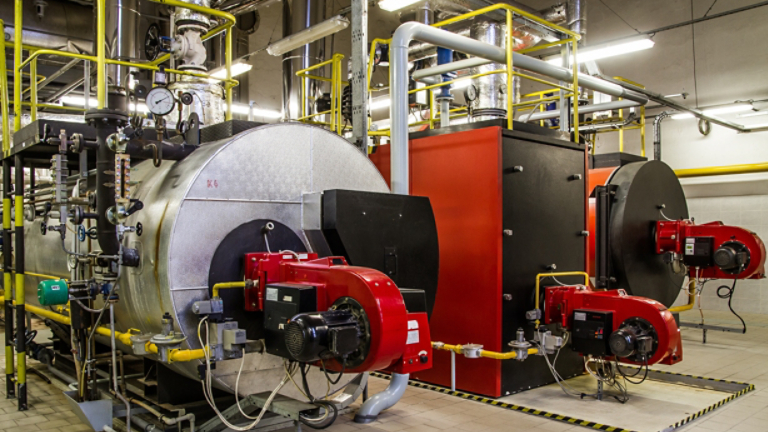
A boiler is a heating appliance that uses a combustion fuel or electricity to heat water. The hot water (hydronic) or steam is then circulated via piping distribution network to deliver heat to a building or process. In commercial HVAC, boilers are typically part of a hydronic heating system that feeds coils in air handlers, fan coils, variable air volume (VAV) boxes with reheat, radiant panels, or unit heaters. Some systems also use steam for humidification or other specialized processes.
How Does a Boiler Work?
The process involves heating water and distributing it to warm a building through the following steps:
- Energy in: Fuel, such as natural gas, oil, propane, electricity, or, in limited cases, biomass/renewables, is supplied to the boiler.
- Heat transfer: Burners or electric resistance elements heat water inside a heat exchanger.
- Distribution: A pump moves hot water to terminal units or an air handler coil, or the boiler produces steam that flows to steam-using equipment.
- Heat delivery: Air passes over a hot-water or steam coil, or water flows through radiant panels, transferring heat into the space.
- Return and control: Cooled hot water returns to the boiler to be reheated. Sensors and controls, like an outdoor temperature reset, supply water temperature setpoints, staging/lead–lag, and variable-speed pumps, modulate output to match the building's load and improve efficiency.
- Venting and safety: Combustion boilers require flues or vents and safety devices, including pressure and temperature relief valves and a low-water cutoff. Condensing boilers also need to manage exhaust flue condensate.
How Does a Boiler Fit into a Commercial HVAC System?
There are several ways to incorporate a boiler into an HVAC system:
- Heat source: It provides the hot-water or steam side of a heating system, while chillers or heat pumps typically provide chilled water for cooling. Heat pumps can also be a heat source for hot water.
- Airside integration: Air handlers and rooftop units with hot-water coils use boiler-supplied water for heating and/or dehumidification reheat.
- Zoning: Hydronic loops can feed many zones via fan coils, VAV reheat coils, radiant floors, or baseboards, allowing for precise temperature control.
- Controls: A building automation system (BAS) sequences boilers, pumps, valves, and setpoints. It may also coordinate with chillers, heat pumps, economizers, and demand-response programs.
- Domestic hot water (DHW): In some facilities, a boiler plant also serves DHW via heat exchangers; in others, DHW is separate system.
Incorporating a boiler into a commercial HVAC system makes sense when your facility requires these features:
- Consistent and even heating: Boilers are known for providing steady and comfortable radiant heat, which can be preferable to the sometimes-drafty output of forced-air furnaces.
- Improved air quality: Because they don't rely on blowing air to the same extent as furnaces, boiler systems can be a better option for facilities where air quality is a high priority, such as hospitals and schools, as they don't circulate dust and allergens as much.
- Energy efficiency in colder climates: Modern condensing boilers can achieve high-efficiency ratings, making them a cost-effective solution for buildings in regions with cold winters. Water retains heat more effectively than air, which contributes to their efficiency.
- Zoning capabilities: Boiler hot water distribution systems can be easily configured for zoned heating, allowing for different temperature settings in various parts of a building, which can lead to significant energy savings.
- Redundancy and resilience: Multiple modular boilers can provide N+1 reliability.
- Humidification: Boilers can provide steam to process applications and facilities with specific humidity requirements.
Resources for Boilers
Several factors should be considered when deciding to incorporate a boiler into your HVAC system, including size, capacity, fuel type, and up-front versus long-term costs. Whether you're planning a building retrofit or new construction, reach out to your local Trane representative for help assessing your facility's needs.