Charlie Jelen: [00:00:00] We've got a favor to ask. We love making Cool Air Hot Takes, but we wanna make sure you love
Dan Gentry: listening to it. So head to podpolls.com/hottakes, fill out our survey, and give us your hottest takes about the show. We'll bring you more of what you love and less of the
Charlie Jelen: rest. You're listening to Cool Air Hot Takes.
Dun-na-na-na-na-na-na-na. Na-na-na-na-na-na-na. Welcome to Cool Air Hot Takes. If you're interested in HVAC energy and the commercial or industrial markets, you're in the right place. I'm Charlie Gelin.
Dan Gentry: And I'm Dan Gentry. Every couple of weeks, we get together and bring you the latest news in HVAC, some hot takes, expert interviews with industry leaders, and this week we got a good one.
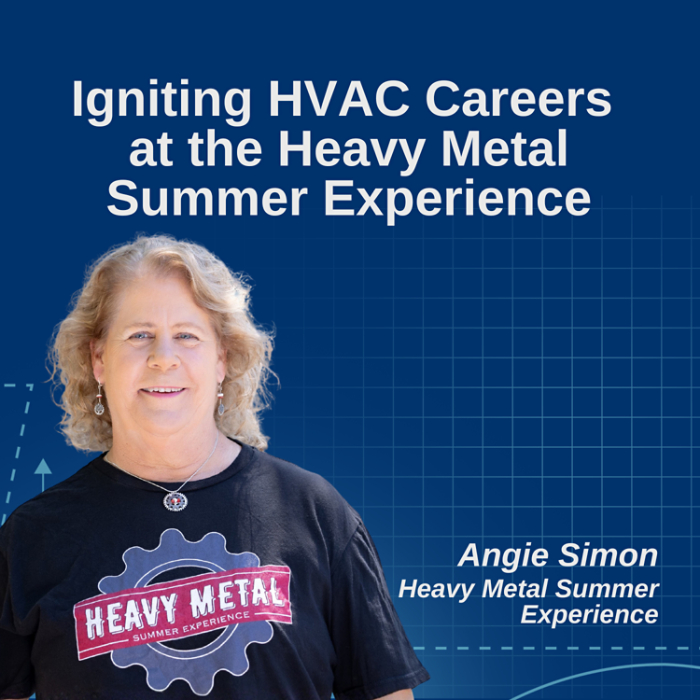
We got Angie Simon from Heavy Metal Summer Experience on the show. It's gonna be a good one.
Charlie Jelen: Dun-na-na-na-na. Speaking of heavy metal. Love it. Love it. Yeah. That's gonna be fun. We're gonna find out what that's all about.
Dan Gentry: Yeah. Did you [00:01:00] bring a hot take this week? I did. So this is mine, that, um, the anti-data center community are like modern-day Luddites.
If you don't know what Luddites are, they're really kind of people who are opposed to, like, new technology or new ways of doing things. Well, like when the printing press came, like, "Oh, we're gonna, like, lose our stories," and then when, like, computers come out, we're like, "Oh, we're gonna lose printers," and when cars come out, "We're gonna lose horses."
That... I'm just throwing out some stuff, but- ... I'm saying these people that are, like, massively opposed to data centers are, like, modern-day Luddites, are just ostriches sticking their head in the sand 'cause this stuff is coming, and we should embrace it, and we wanna work with these folks and be good neighbors, have them be good neighbors, and they can bring in income to communities and provide jobs and all these great things.
So I think that, uh, you know, just being opposed to this, like, new big thing is kind of, you know, like, anti-technology sort of a thing and, um, that's my take.
Charlie Jelen: Is, uh... I'm still fixated on a Luddite. [00:02:00] Um, is a Luddite a specific person, like a, a specific group of people from a specific segment of time, or is this a term that is widely used across time?
Dan Gentry: I looked up the definition on Google- Okay ... and I have it pulled up here, and number one is there's derogatory and historical. Okay. Derogatory is a person opposed to new technology or ways of working. Okay. I, I learned that pretty well. Uh, second is historical, a member of any of the bands of English workers who destroyed machinery, especially in cotton and woolen mills, that they believed was threatening their jobs.
Got it. They were the original Luddites. They were the original Luddites, so it's like... And then the other part, too, I was talking actually to my brother-in-law about this, like, "Oh, data centers use all this water," and it's like, "Ah." It, they don't have to. They, they, some can, some do, but they don't have to.
Andy, don't be a Luddite. So stop being a Luddite. And embrace the technology. Uh, y- and your brother, my- Well, that was [00:03:00] actually my brother-in-law. That was Adam. Oh, that was Adam, sorry. Adam. Sorry, sorry. Yeah. So- Yeah, I didn't, I wouldn't take Adam for a Luddite. Yeah, you know, so it's just, that's it. Don't be a Luddite.
Charlie Jelen: Got it. What do you got? Mine came today working on a project, and it was more of a realization of just what's happening in time and kind of where our industry has gone and, and more so a lot of it is the quantity of projects that are going in this direction. But I realized that I hadn't selected a chiller hooked up to a cooling tower in over a year, at least a year.
Dan Gentry: Whoa, whoa.
Charlie Jelen: Yeah. And that was like
Dan Gentry: so before that, how
Charlie Jelen: long had it been s- Or not even selected, just, like- Yeah ... worked on a project or been around a project that... And it just had, it's been a very long time. That is kind of crazy. It, it was, it's kinda crazy, and I, you know, just the hot take is air-cooled everything.
So you're, like, no longer, like, no more [00:04:00] 85/95. No. No, not even close. Uh, 120/140. It's the n- it's the new 85/95. Oh, that is, that's interesting. No, it's, it's, it's wild. It just kinda goes back to, like, this, you know, you were just talking about the water thing. E- exactly the same thing is everybody's very concerned about water and water consumption, and people are trying to move away for it, so air-cooled chillers or water-cooled chillers hooked up to dry coolers That's just where a lot of the work that I've been tied to has, has gone.
And you've touched quite a bit of
Dan Gentry: work too, so it's, uh, it's not a small quantity.
Charlie Jelen: Yeah, so that one, uh, you know, it's not a hot take, but it's, uh, more of just a, it was a realization. It was like this thing that went off in my head. I was like, "Wow, that's..." Hey, it's our show. We can do what we wanna. I like it.
Up next, HVAC Headlines.
Angie Simon: HVAC Headlines. Your news today. All
Charlie Jelen: right, listener. It's 5:00 PM in Karachi. Here's your headlines. We've got a split [00:05:00] headline today. I've got a headline, Dan's got a headline. Shared the duty. Here we go. Headline number one, new hospital in Newfoundland features Canada's largest geothermal system.
This one's from Building Design and Construction. I like the headline. I'm a big fan of geothermal in general. Yeah. We, we're, we're- Think it's a, it's a very efficient way to do heating and cooling. We're geo guys. So it caught my attention. Yeah. All right, so here it is. Uh, Western Memorial Regional Hospital features roughly 375 bores roughly 600 feet deep.
So this is a traditional geothermal. In the past on the show, we've talked about groundwater enhanced geothermal- Mm ... where we, where we put, like, a heat exchanger in the ground, and we tap into, you know, water tables. This is kind of your traditional... It's more of just a radiative heat exchanger in the ground.
But you can still get these big, especially on hospital campuses where you've got a lot of land. In terms of cooling capacity, it's a couple thousand tons, 2,000 tons-ish on the cooling side. The building itself is over 600,000 square feet. They're estimating 12% reduction in energy use and savings of [00:06:00] 2 million gallons of annual water consumption.
Ooh. So really, it's a water consumption episode. There you go. We're really hitting the water consumption hard. But, you know, the geothermal systems, I like them because they're battery systems. Mm-hmm. All of the energy that you use in one season, you dump it in the ground, and you pull it back out in the next season.
Bring it back. So it is a massive heat recovery system, highest, usually the highest COP's that you can get out of any traditional system that we have available in this fine industry of ours I like it. So the MEP firm that worked on this that was, uh, cited in the article was Cahill Plan Group JV. Are you familiar with them?
Nope. In your time on... You're an honorary Newfoundlander. I am. I am. A Newfie.
Dan Gentry: See, I'm screeched in and everything. I, I did the- I don't know what that means, but, uh- Well, it's, it's a pretty cool thing. I will have to tell you. So you, like, eat a piece of sausage, and then, um, take a shot. Are you making this up?
No. It's like a, it's a ceremony. Like, you have these people around, and there's a guy in, like, a fisherman suit, and he, like, does the thing, and they have a piece of, like, bologna or whatever on a toothpick, and [00:07:00] you eat that, and you take a shot of rum. Okay. 'Cause, like, the rum thing, like, uh, the Newfies would trade cod down to the Caribbean, and they would send rum- Rum back
up north. Okay. And, uh, so there's this type of rum, and, uh, you eat the sausage, you take a shot, and then you kiss a codfish. And then you get a certificate- ... and, like, it's signed, and it's, like... I, I got mine framed. It's in my, uh, it's, like, in my office.
Charlie Jelen: Do you have to have a preexisting Newfie-
Dan Gentry: nominate you? No, I think you just, you go to the bar, and they have, like, they have, like, ceremony times, and you- Oh
like, I was, um, honored in or whatever with, like, a dozen people probably, and- Okay ... I think you, like, hold your hands, and you say something to... I can't. It was a while ago now, but, uh, it's an experience. If you go to St. John's, Newfoundland, check it out. It's way more than
Charlie Jelen: I was expecting out of that headline.
Dan Gentry: I, I loved it. Yeah, that's what I said. And I was gonna say we're putting in a big geo field here in our engineering building in La Crosse. They're putting it in right now, and it's super cool 'cause we get to, like, see them do the drilling, and we get to- [00:08:00] Oh, yeah ... they had the test bore rig up there the other day, so- Nice
it's pretty cool getting to actually see that stuff go in, so- Yeah ... yay for geo. Yay for geo. Yay for geo. All right. What's your next- Headline number two, I found this one today. So headline comes to us from ACHR News, frequent contributor, I believe. Oh, yeah. Uh, HUD rescinds energy code rule impacting HVAC systems' home costs.
Subheadline is "Federal rollback could shift HVAC system demands and electrification." So just a little bit of reading here. So a Biden-era policy has been rescinded by the Department of Housing and Urban Development and the Department of Agriculture, which is expected to affect housing affordability and the types of HVAC installed in homes.
According to joint announcement from the departments, a 2024 final determination issued under President Biden rendered all new home construction ineligible for FHA or USDA-backed mortgage loans unless the home was built in accordance with the 2021 [00:09:00] International Energy Conservation Code, which is also known as IECC.
So the last part of this is rescinding that 2024 rule could result in more affordable homes. According to the joint statement, the 2024 rule added 20 to $31,000 to home construction costs. It also reportedly resulted in longer permitting and inspection times. So the idea here was that this rule was created that these homes had to be built under the 2021 IECC code or ASHRAE 90.1 2019, which, you know, increases the targets for efficiency and all that kind of stuff.
So what this is saying is you're generally gonna be able to put in, like, more standard, uh, HVAC systems, which also includes, like, the building envelope and all that. So the- Yeah ... idea is they'll be able to build houses faster and at a lower cost. So I mean, with the housing shortage, I think that's a good thing.
Obviously, we like energy efficiency, but, like, housing is pretty [00:10:00] important, uh, getting more of them, reducing the cost. I think that's a good thing.
Charlie Jelen: That was good. There's your headlines. All right, listener, next up, we've got our interview with Angie Simon, the founder of Heavy Metal Summer Experience.
Hey, Danny boy. Are you, uh, are you ready for the biggest event of the summer?
Dan Gentry: Always, Charlie. And if you're in real estate, you should be, too. The BOMA International Conference and Expo is back June 27th through the 30th in Long Beach, California.
Charlie Jelen: It's the most trusted event for building owners and managers.
Think networking, big ideas, amazing tech, and people shaping the future of our industry.
Dan Gentry: And bonus, I'll be there with Trane. And if you're a listener, come say hi. I'd
Charlie Jelen: love to connect. Don't miss out. Register for BOMA and join us in Long Beach.
Today's guest has quite the career. She is a mechanical engineer, a former president of a $125 million contractor, [00:11:00] and is in what she calls her retirement, but as you're gonna find out, she, uh, she's not doing so great at that. She is getting kids off the couch, she's putting a torch in their hands, and showing them what a career in the trades can look like at the Heavy Metal Summer Experience.
Now, listener, when Dan and I just saw that headline- ... in one of the subject to the emails, we were like, "All right, we are- We are ... we are all in on this one." Let's click on this one. All right. But the camp has been featured in The Wall Street Journal, and she's even gotten featured on CNN at 3:00 AM, which I'm pretty sure it went like Mark Zuckerberg, Elon Musk- Yeah.
and then our guest for today- ... Angie Simon. Welcome to Cool Air, Hot Takes.
Angie Simon: Thank you very much. I love being here, and I, I love the name of your, of your, of your podcast, so thanks for having me.
Charlie Jelen: Absolutely. Thank you. Absolutely. And we are, we're gonna talk about the Heavy Metal Summer Experience for sure, what that's all about.
But before we get that, we ask all of our guests, you know, name of the show is Cool Air, Hot Takes. We ask all of our guests to come with a hot take. It could be from your personal life, your professional life, anything in between. What do you have for us [00:12:00] today?
Angie Simon: You know, my hot take is, and it's from Heavy Metal Summer Experience, we found that kids love fire.
That's a hot
Dan Gentry: take.
Angie Simon: Okay. That basically from the camps that they love fire and they love welding and soldering, so that's, we've decided we have to do welding in our camps.
Charlie Jelen: It is a literal hot take.
Dan Gentry: It's a literal hot take. I love that because as a kid, I loved fire, too. Yeah. Still
Charlie Jelen: do. So I still, still do.
Still do. To this day. Yeah. Building that fire. I tell you what, uh, you know, nobody likes a good fire more than Rob Jordan, though.
Dan Gentry: Oh, he's a g- he likes a fire. Yeah. He, he's very- He's a fire guy ...
Charlie Jelen: meticulous about his- ... his fire-starting.
Dan Gentry: Oh,
Charlie Jelen: starting the fire? Yes. Okay. Mm-hmm. There you go. Has to be the log cabin.
Angie Simon: So I hopefully he has the lessons- Love it ... that we give at our camp, which is learn how to use a fire extinguisher because he can start that fire, but he needs to know how to put it out. There you go, Rob. That is very good. Put it out. That is very good. Yeah.
Charlie Jelen: All right. You have had an incredible career and well before founding Heavy Metal.
So let's start there. Can you give us a little bit of your background running up to how you [00:13:00] got to
Angie Simon: Heavy Metal Summer Experience? As you said, I'm a mechanical engineer. I went to Cal Poly, San Luis Obispo in California, and played softball actually while I was becoming a mechanical engineer. So I was on- What position?
Uh, I played third. I was in NC- on the NCAA team. Oh, the, the hot corner. The hot corner. That's right. All right. That could've been one of my hot takes as well, so. There we go. Well, I graduated from Cal Poly. I had the five-year plan, because between engineering and softball, I enjoyed that fifth year for sure, so Yeah.
Mm-hmm. Good. Good for you. And, you know, when I was picking a major, I remember my dad, who was an electrical engineer, but my dad worked at Point Mugu, which is a Naval Weapons station. Oh. So you, you do not bring your daughter to work when you work at a Naval Weapons station, so. I bet not. No, I didn't understand what my dad did.
And, and I remember looking at the catalog and the, and for the college and said, "What do I wanna do?" And, um, within environmental engineering at the time, which they switched to mechanical, was solar energy and HVAC, and I thought, "Wow, solar energy." You know, energy, that's the future. I thought that sounded really interesting, but I also thought...[00:14:00]
I didn't care about the HVAC at the time. I thought solar's- Oh. Then I also thought, uh, of environment, uh, in, uh, natural resource management. I thought I could be a forest ranger, or I thought I could be- Okay ... a PE engineer. So my dad convinced me to go for the, uh, the engineering and, and try it, and then I could go to the others.
And I fell in love with the HVAC side in college. We were designing duct systems in college, and actually interviewed with all kinds of different companies, and actually in- even at Cal Poly, we interviewed with Trane and thought about Trane. Did you? I did. Do you remember what the role was? It was in the Tyler, Texas office.
Oh, yeah. Is that... I mean, where, like, the smaller... That's, like, your residential stuff maybe? Correct. Mm-hmm. Yeah, that's our residential manufacturing
Charlie Jelen: location.
Angie Simon: Yeah. Yep. And I was more interested, if I would've gone to Trane, it would've been the larger stuff, and it would've been in La Crosse, where I have relatives, so.
Oh. But in the end, I ended up wanting, kinda wanting to go to a contractor, 'cause I thought, "I don't wanna sit behind a desk. I wanna get out and do stuff." And I started with a very small contractor in the Bay Area, and it was an okay fit, but one year later, I [00:15:00] got to where I really wanted to be, which was Western Allied Mechanical.
And, um, we were a little larger than that small one. At that time, we were probably 30 million when I started and- Okay ... just became a young project manager, and I fell in love with being a project manager. And we were a design build company, so our engineers designed it, but I also was involved in the design side as an engineer myself and Ran projects and just I kind of grew up at that company and took, uh...
Became a partner about 10 years into the company and became our president another 10 years from that. So I was president of Western Allied Mechanical from about 2008 to 2021 when I retired. So-
Dan Gentry: Wow. Wow. Yeah. Yeah, I was gonna say, I, I love a good HVAC love story.
Charlie Jelen: That, that's, that just, uh, you know, touches my heart.
Yeah. So for that time while you were working there, you were running the company, do you have something that stands out, a project, an initiative that, that you kicked off that really sticks out as like, "This is one of my biggest achievements"?
Angie Simon: Well, I was still running projects as a, the president of the company too, just because of the- you kind of did that.
But-
Charlie Jelen: Yeah ...
Angie Simon: during that timeframe, there was a [00:16:00] couple things that do stand out. One is I really worked on culture. I mean, culture was really important to me. Mm-hmm. And relationships and trying to teach the next generation that relationships are what make it. One of the things that I taught our folks underneath was that, that were younger, is that our vendors are our partners just as much as our clients are our partners, and if we treat our vendors well, they'll treat us well too.
And- Mm-hmm ... we had some amazing salespeople, and Trane was one of our salespeople that was really good. And, um, so that was important to me. I mean, that whole team aspect came from the, the softball and the sports that I played.
Charlie Jelen: Yeah.
Angie Simon: Team was important, and I really made sure that we were a team, and I, I feel like we were never...
there's never one person that was more important on our team, even to the point of, I mean, your project admin who does so much of the important work is an, a very important person, and your receptionist who answers the phones is extremely important. So I did love it. We grew... Well, I took over in 2008, great time, recession hits- Oh, yeah.
and I learned a lot about Ouch ... about running a company, right? Um, we were about 40 million at that time, and when I retired, we were doing about 125 [00:17:00] million, so we grew nicely.
Dan Gentry: That, that's awesome. So speaking to that point, how did you... what did it take to do that, and can you maybe talk about some challenges in, for growing a business to that size?
Angie Simon: The people are important. I mean, having the right people in the right seats on the bus at, at your company is really important, and realizing that if you don't grow, you get a little stale, and so you should always be looking to grow a little bit, and but there's also that controlled growth. We had a couple years of a little more than controlled growth 'cause we definitely, uh-
a couple year, good years where we really took the reins and, and rode it, but we had great people in place. And I think some of the challenges were, A, I have a hard time saying no, period. In my personal life, you'll find that out, that I say no to nothing, and I'm d- that's why I'm not retired very well. But, um-
I also had a hard time saying no to clients that wanted us to do fun jobs, and- Yeah ... particularly if they were challenging and fun jobs. We did a lot of- Life science and biotech. We did a lot of green, and we did the Packard Foundation, which was the first 40,000 square foot [00:18:00] net zero done back in early 2000.
Charlie Jelen: Yeah. Well, you were really in the right spot for some of that- Yes ... on-the-edge- Mm-hmm ... building design, for sure.
Angie Simon: In the Silicon Valley and the biotech and Genentech and everything, uh, we did so much of that was design-build. And it... I mean, biotech is lovely 'cause it's a lot of mechanical.
Charlie Jelen: Mm-hmm. You know,
Angie Simon: it's a lot.
Yep. So.
Charlie Jelen: All right, so you're, you're running the company. Yep. You're kicking butt. You're doing great. How do you go from that to the Heavy Metal Summer experience? First, why don't you tell us what it is and then give us the, give us the how you got there. How did you get there?
Angie Simon: Well, it goes with a little story, actually.
So- All right ... what happened was I was also very involved in SMACNA, the Sheet Metal Contracts Association. Uh-huh. I was, um, locally I was on the board and president for a while, and then eventually I went on the national board back in 2008, I think I was on the national board. And after I got off that, they kept telling me, "We want you to go through the chairs."
And I kept saying, "Well, I gotta get my kids out of high school," and stuff. So finally I got my kids out of high school, and I said yes. And while I was going through the chairs, it became very apparent when I visit [00:19:00] contractors That workforce was a problem, and we all were looking at it here, particularly in California, but everywhere across the United States that our trades are retiring, and we really didn't have hardly anybody coming in, and it became pretty obvious.
So, you know, I heard it over and over and over again. So in 2019, at the end of '19, I went in and smacked the president. And then 2020, we all know what happened in March, and the pandemic hit. Mm-hmm. So now I'm virtually the, the president. I'm virtually visiting board meetings and everything. But, um, that summer when we were surviving the pandemic and my partner, we started talking about East Palo Alto, which is right next to Menlo Park, where we were at, and how we had been working with that community, which was a very underserved community for a long time, and how we had been encouraging, you know, working with their afterschool programs, and we were mentoring and tutoring and things.
Said, "Let's show them about a career in the trades." I said, "We need more people. Let's start doing something about it." And I suggested to him that we make... we d- run a summer camp, and so he said, "Well, put a plan together and let's see if the partners agree." So I put a business [00:20:00] plan together, and all my partners said, "Yeah, let's do it in '21."
So I was sharing that idea on a virtual convention, and my good friend up in Seattle, Rick Hermansen, said, "I'd love to do it with you." He called me, and I said, "Let's do it." So the two companies got together virtually on Teams, and we've had many meetings, and all of a sudden we were like, "What are we gonna call it?"
And we thought, "What would be fun?" And somebody threw out, it wasn't me, I wish I could take credit for it- ... but somebody threw out heavy metal. Let's call it heavy metal. And we said, "Well, let's call it Heavy Metal Summer Experience." We don't wanna call it like a camp. We don't wanna think it's like summer camp necessarily.
Yeah. And we started putting it out there and putting some heavy metal music with it, and, um . I love it.
Charlie Jelen: So for the listener out there, if you're listening to this right now and you're thinking like, "What does this have to do with HVAC?" Yeah. Heavy metal. In our world, when we start talking about heavy metal, it's the big equipment that does a lot of the air moving or a lot of the chilled water, a lot of the heat rejection.
Like a- It's all the big stuff ... like a full
Dan Gentry: truck. A full truck. Yes. The whole trailer.
Charlie Jelen: Exactly, yeah. So that's what we're talking about, we're talking about a Heavy Metal [00:21:00] Summer Experience. You're talking about getting your hands on, figuring out how to work with these large pieces of equipment. Yeah. So what's the camp look like?
Well, how's it structured?
Angie Simon: So the camp is 30 to 40 hours. Um, we actually rely on finding hosts, either union contractors or union training centers across the nation help host these camps. So we started with mostly, um, in contractor shops. At that very first summer was a camp in my shop in Menlo Park and my friend's shop in Hermanson's in Seattle.
So we had two camps and 28 kids, and what we had done as a team before the camps, we figured out, what, do we need permission slips? Do we need release forms? Oh, yeah. You know, what, do we need graduation certificates? You started thinking of all that, right? And you started, "Okay, how do we structure the camp?"
And so we also came up with projects, so a couple of our shop folks would be stay after at night and make projects, and they'd bring a kid in and have them try it so to see how long it would take, and it was a lot of fun. We decided we better write a playbook because everything that we learned we wanted to share, and this was kinda what locked me in for a summer.
Mm-hmm. So we went to Hermanson's graduation, and a [00:22:00] mom pulled us aside and said, "Can I talk to you?" And we said, "Sure." She said, "I'm a housekeeper, and my husband's a framer. Our daughter was in a really dark place her last semester, senior year in high school." She said, "She knew she didn't wanna go to college.
She didn't know what she wanted to do with her life, and she wasn't sure." The mom started crying. She said, "I had lost my daughter." And she goes, "Now, six weeks after your camp, I have my daughter back, and I have you guys to thank for it." So- Oh, HVAC saves lives. And that young lady joined the apprenticeship, got in the apprenticeship about six months later, and she's gonna be turning out this year as a journeyperson in the Seattle market making 130,000 a year.
Oh, man. That's so cool. So, um, you know, it kinda hooked me. It's like, if we can s-
Dan Gentry: Yeah ... we
Angie Simon: can help in the industry, but if we can save one kid in every camp It's so worth doing. It's worth it.
Charlie Jelen: Yeah. That's g- that's great. That's great. What,
Angie Simon: um, what age kids are we talking about? High school. So we're talking, we might have some 15-year-olds, but mostly 16 to 19 is what we kind of encourage them to do.
Mm-hmm. But we, so any high school age, or even we've taken some gap year kids as well right out of- Okay ... right out of high [00:23:00] school. How do you recruit? How do you get the word out? Well, that is a challenge, particularly when a contractor is the one hosting it, because we as contractors don't really know how to go into high schools, and who do we talk to.
So we, we, Heavy Metal encourage them and help them. They have to recruit for their camps in their areas, and we tell them, "Hey, go to the career tech education portions of the high schools." We also team with ACE Mentoring Program, which is, uh, in high schools already, and the Boys & Girls Club, which is also in high schools.
And so we, we help them that first summer. After one summer, though, once some of the kids go back to high school and tell them about the how cool a camp it was or how hot a camp it was, depending on what you're looking at. Um, once they tell them that, the next thing you know, it's no problem recruiting the second year and the third year, so.
So they're excited about
Charlie Jelen: it. That's awesome. They are. Very excited. That's great. What are your projects? What do you have them working on?
Angie Simon: Well, so we start with sheet metal. Let's say if it's a sheet metal camp, they're making toolboxes. They might be making stars. They might be making flowers that they put together, and they cut them on the laser.
Charlie Jelen: Okay.
Angie Simon: [00:24:00] Piping-wise, the first thing we decided that first summer was we built a lamp that was all out of copper. So they soldered all the joints, and they- Yeah ... learned how to wire it, and it's a big lamp, and we had expanded metal as kind of the shade. Nice. So that was bent on the sheet metal shear bent and, um, a big light in the middle.
So that was kinda cool. I mean, Dee Cramer in, in Michigan, who runs one of our camps, has made fire pits that the kids weld together. Cool. And then they have... They could take that fire pit home. It's got a Heavy Metal symbol on it, and then they take it home, and they can have their own fire in it, which we want them to make projects that the kids can actually show their parents and take home and show other people, 'cause it, they get a sense of ownership.
Yeah, that's
Charlie Jelen: great. Love it. And then, so after a camp or after one of these experiences, it, I'm assuming since it's high school kids, they could come back a few years, and then is this getting them in line for the apprenticeships or with companies locally? How do you make that connection from these camps experience into the workforce?
Angie Simon: Well, we're actually having pretty darn [00:25:00] good success with getting them work. In the camps, I'd say about 25% of the kids are the ones that have just graduated that year. Mm-hmm. And of those 25%, more than 50% of them are getting jobs in construction trades. So- All right. Sweet ... w- we are able to track those a lot easier than that sophomore that goes back into high school, 'cause a couple years later- Yeah
it's hard to know what they're doing. Well, one, they're taught by contractors and contractors union folks particularly, and if they're taught by them, they'll also use them as mentors, and they mentor a lot. And they do talk to the kids about how to get jobs and how to apply to the apprenticeship. A lot of the times, the contractors are hiring them as pre-apprentices Or tradespeople immediately, and then eventually they're working their way into the unions.
So sometimes if we're working in underserved areas particularly, sometimes we need a little time to work with them on the math, you know, test, you know... My son worked at Western Allied after college, and he on his own decided he would help tutor a lot of these kids. So for about six months, he was tutoring two or three kids on math to help them pass the test, which I thought was really [00:26:00] nice of him.
So- Yeah, that's great ... you find that in a lot of the camps, that they really wanna help the kids get in.
Charlie Jelen: In terms of locations on where people could find these experiences, these camps, is it primarily on the West Coast still, or are you guys expanding? No.
Angie Simon: So summer one we had 28 kids and two camps. And we are in summer six in 2026, and I have 64 camps across the United States and Canada- Whoa
and 1,100 kids this summer Oh my gosh. Wow. Now do you understand why I'm not retired anymore? Congrats. That's awesome. We're in over 30 something states, and we're in five locations in Canada.
Charlie Jelen: Yeah.
Angie Simon: So we have a website, um, hmse.org, so H-M-S-E, like heavymetalsummerexperience.org, and there's a map on there with all the locations.
And they... Most of the camps at this point of the summer or closing to the summer are probably sold out. Not sold out. I mean, the kids go free, by the way, for the camps. It's a free camp for those kids. Nice. And when they show up, they get a set of boots that Heavy Metal sponsors. So we buy them a set of work boots with a [00:27:00] safety toe, and then they get a bag of tools that they get when they graduate since we have amazing partners from Milwaukee and DeWalt- Oh
that donate bags of tools. So I'm still pushing my limit a little, but each of those companies donated 600 bags this summer to me, so we had 1,200 bags of tools from them. So-
Dan Gentry: Wow ...
Angie Simon: they're amazing partners, and I hope I can continue to have them grow with me, so, uh, but we've... Trane's been a partner for almost the very beginning as a supporter, and we really- Oh, great.
Love it. Yeah, and we're gonna work with Trane, uh, this summer to do some- Service training, uh, down in Southern California and San Diego area. Very
Charlie Jelen: nice.
Angie Simon: Yeah.
Charlie Jelen: That's awesome. So that's crazy. So you've got roughly 250 kids through your programs that are gonna step into an apprenticeship or- Yeah
pre-apprenticeship.
Angie Simon: Yeah, I would say that's probably about right. You know, I mean- That, that's incredible ... that are interested anyhow. And-
Charlie Jelen: Yeah ...
Angie Simon: you know, these are kids that really didn't... I mean, there's many kids that don't even know how to use a tape measure when they start this camp. Yeah. And their parents talk so much about their confidence level and how they never seen their kid grow with such confidence in one week- Mm
or in three weeks or six weeks if the camps are [00:28:00] only half days. And then also the parents say, "We've never had our kid ever talk about their day like they do when they come home from camp." So the kids are just really excited about it. And- That is perfect ... and we convince the parents how, what a great career a career in the trades could be, and how financially secure it could make them.
Think the parents don't really realize that. You know, uh, working in construction was not always the most appealing for people, and I'm- Mm-hmm ... I'm excited that the narrative seems to have been slightly turning now at this point, and, um, maybe college isn't for everybody.
Dan Gentry: I love that. I can't even get my kids to tell me what they did at school- Right
the, the s- the same day. Right. So that's, uh, that is I mean, that's a good thing if- How was school? Good ... kids are, you know, excited about what they're doing, right?
Charlie Jelen: Yes,
Dan Gentry: exactly. Yeah.
Charlie Jelen: So for reaching out to you guys, if there's a, if somebody's listening out there and they wanna host one of these camps- Yeah
same site?
Angie Simon: Same site, yes. And, I mean, there's an info@hmsc on that site, but I'm also angie.simon@hmsc.org. Reach out to me, and I will basically get back to you, and we will start talking. [00:29:00] We do have a list already of potential camp, uh, new camps for next summer. We have over 20 new camps this summer- Mm
which is great. And if you think about it, so if I have 60-something camps this summer already, and those 60 are doing it again, and it's not hard to find, to get to 20, you know, we'll be at 85 next summer probably pretty easily. So, and it's wonderful getting some attention. The Wall Street Journal article helped a bit, and CNN helped a bit.
And we actually, because of CNN, though, we got a lot of attention. I'm working with the Compton School District. Okay. So Compton in LA, in s- Mm-hmm ... Los Angeles, um, is kind of an area, it's like kind of where the Watts Riots were back in the, I don't know, '70s or '80s, whenever the Watts Riots were. And it's really an underserved area.
And that school district, their president of that called me and said, "I really wanna do that camp here." So that was, so we actually have three school districts in California that are running camps. It just means that I have to work with them to find hosts. Mm-hmm. So, like, we were working with, I'll call the IBEW training center.
Will you host it? I'll call the, I'll call a contractor. So down there in Compton, uh, Southland, one of [00:30:00] our larger contractors across the nation there, they're hosting three days, and the IBEW is hosting another two days. And so, um, makes it a great camp
Charlie Jelen: Angie, thank you so much for coming on. This was a great conversation.
I am, I was very excited about the Heavy Metal Experience- It's very cool ... after hearing the story and where you guys are at and what you guys are doing, I'm even more excited about it. I hope our listeners go check it out. Thank you again for coming on the show.
Angie Simon: Yeah. Well, thank you for sharing the story, 'cause it's important that we continue to do that.
And, and really what our job as people working in construction, it's to change the narrative that construction is an amazing career. Because I think if we can get people to understand the opportunities that are available, I mean, so many of our contractors, they own, the contractors came through the trades.
Mm-hmm. So just, you know, we need tradespeople, and it's a great place to start, and it's a wonderful job, so let's change that narrative.
Charlie Jelen: Are you a high school student or know a high school student looking for what's next? Check out Heavy Metal Summer Experience, where students between 12 and 19 get real-world training and a front row seat to the skilled trades.
We're [00:31:00] talking about hands-on projects, working
Dan Gentry: alongside real craft professionals, and tour job site activities. Every camp is unique, but every experience is built to show you what it takes to succeed and how you can jump into a rewarding career with job security. If you know a high schooler ready to build their future, spark passion, and see what's possible in the trades, the Heavy Metal Summer Experience is their place to start.
Visit www.hmse.org to learn more.
Charlie Jelen: Here comes your stat of the day. Stat of the day. Stat of the day. Stat of the day. All right, listener, it is time for your stat of the day, and after our interview with Angie Simon from the Heavy Metal Summer Experience, I thought a stat around career and top 10, bottom 10 in terms of college degrees- [00:32:00] Okay
and what you're making coming out of that. Because Angie told us that one of their students that just came out of their apprenticeship, that went through the Heavy Metal Summer Experience, got an apprenticeship, came out as a journeyperson, journeyman, is now making about $130,000. Not bad. All right? And as we go through and talk about some of the numbers on this list after your college degree, I think you're gonna think twice about where to go.
This'll be fun. All right, so let's start. What do you wanna do? Top 10, bottom 10. What do you wanna do first? Top 10. Top guy. Top 10. I'm gonna rattle these off, and then we'll talk about the top couple here. So these are the top 10 bachelor's degrees that earn the highest early career salaries. Number 10, construction services.
Nine, general engineering. Eight, miscellaneous engineering. I don't know what that would be. Whatever that is. Probably, probably, like, a manufact- or not manufacturing. Um, what's that, industrial [00:33:00] engineering? Yeah, could be. Yeah. That was, like, a- Yeah ... wide niche in there. I could, uh, see that. Number seven, mechanical engineering.
That's a good one. Six, electrical engineering. Mm-hmm. Five, industrial engineering. I don't know if you're picking up on a trend here, people. Engineered. Number four, aerospace engineering. Three, chemical engineering. Two, computer science. One, computer engineering. In general- Eight of the 10 are engineering.
Engineering is a, is a, is a hot commodity right now. The top major, computer engineering, the median average salary is $131,000 coming out of school. That's not bad. No. Coming out of school? The r- the range on the top 10 is Let's see here, 105,000 to 131,000. Not bad. So any of those engineering degrees, good ones to go into right now.
I'm glad I got my engineering degree. But, but remember what Angie told us. There's a student that just came out of their program making $130,000. So you don't need to go get an engineering degree to be on that, you know, income list, if you will. That's right. [00:34:00] But we al- you know, we need some engineers though, too.
Yeah. Bottom 10. All right, bottom 10. Bottom 10 bachelor's degrees that earn the lowest early career salaries. Number 10, fine arts. Nine, elementary education. Sorry, Amber.
Dan Gentry: Oh,
Charlie Jelen: honey. Number eight, early childhood education. Seven, biology. Number six, art history. Number five, anthropology. Number four, performing arts.
Three, social services. Two, theology and religion. Number one, pharmacy. The lowest- For the listener out there, Dan's early career aspirations.
Dan Gentry: I thought I was gonna be a pharmacist when I went to college, started college. I did, uh... I wasted two years of my life, actually, thinking I was gonna be a pharmacist.
And, uh, you know, hey, dodged a bullet though, you know? You know, f- ditch pharmacy and go to engineering, uh, good life choice.
Charlie Jelen: Yep. Yeah. And so the, the range of, uh, what you can make in the bottom 10 here is, you know, right around, like, the [00:35:00] $60,000 coming out with a four-year degree. Trades, man.
Dan Gentry: Yep.
Charlie Jelen: There you go.
All right. That's your stat of the day, listener.
Thanks for listening to this episode of Cool Air Hot Takes. We're very happy to be back for season four. Remember, new episodes are released every two weeks on Tuesdays. Leave us a comment
Dan Gentry: on Spotify or YouTube and a review on Apple. And we do have merch, so send us your hot takes to coolair.hottakes@train.com.
If we feature it on the show, you might find some merch in your mailbox. Until next time, stay cool and keep those takes hot.