INTRO
[00:00:00]
Charlie Jelen: Welcome to Coolair Hot Takes, the podcast where we talk about HVAC, energy, and the built environment. I'm Charlie Gellen.
Dan Gentry: And I'm Dan Gentry. Every couple of weeks, we get together and bring you the latest in HVAC news, our hot takes, and expert interviews with industry leaders.
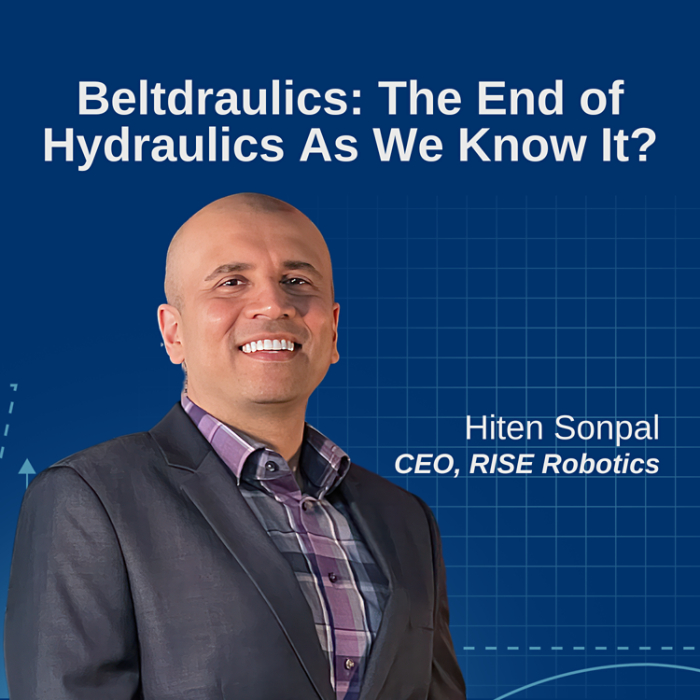
Charlie Jelen: This week we're joined by Hiten Sonpal, whose company started out trying to build a real-life Iron Man suit, which is pretty sweet, my favorite Avenger by far, and ended up on a mission to rip hydraulics out of heavy machinery entirely. This interview is going to be more about the underlying technology, which is one of my favorite things to talk about on the show, uh, so stay tuned for that.
Dan Gentry: Iron Man is a good Avenger. You are right on that.
Charlie Jelen: A good avenger?
Dan Gentry: Yeah, he's a great Avenger, okay? I'm a big Iron Man fan, yes. Uh, we also have the latest HVAC headlines and your stat of the day. But first, time for our hot takes
Charlie Jelen: you got number one here. What you got?
Dan Gentry: got [00:01:00] number one. So this is a personal one. Yeah. My hot take is my wife is one tough cookie, and I love her. Aw. I love you, honey. So I'm saying that because, well, a- today is our anniversary, so-
Charlie Jelen: It's your... I didn't-
It's your anniversary today.
Dan Gentry: It's our anniversary today.
Charlie Jelen: You know what? Out of the, uh, out of the two of us here, both of us got married, but only one of us went to the other's wedding.
Dan Gentry: wedding. I did not attend your wedding, and I am very sorry about that. I had a cousin get married, now divorced, but I still went, I I I wish I could've been there, but Amber did a good job for me.
Thank you. Um, hot take about that though is also yesterday she finished, uh, chemotherapy. She was diagnosed with breast cancer earlier this year. Went through six rounds of chemo. Uh, finished yesterday. We had, uh, friends and family came over, and she rung the bell, and-
Charlie Jelen: That's great ...
Dan Gentry: it was, um, a very happy time with lots of tears and hugs, and I love you, honey.
Charlie Jelen: We, uh... I love you too, Amber. Uh, we got the video last night. Somebody was recording [00:02:00] Amber ringing the bell, and, uh, my whole family was gripped.
Dan Gentry: I didn't really know what I was getting into, and it's a pretty... It's emotional.
Charlie Jelen: Yeah, for sure. It's a big deal.
Dan Gentry: deal. Yeah. So good job.
Charlie Jelen: A good one. I should've do you have second on that one, not first.
Dan Gentry: Try to beat that one.
Charlie Jelen: Okay. Okay, we're gonna take a, a hard right turn into rock and roll is coming back.
Dan Gentry: I- Okay. Let's go.
Charlie Jelen: Hard rock is coming back. All right. So, uh, this is a couple different things all kinda coming together at once. Uh, there's this thing locally here in La Crosse called Ultra Rocks. it's a credit union here locally. They sponsor a rock concert, and this year it's Megadeth. Okay? I'm gonna check that out. Uh, and then our kids were watching some kinda cartoon, and there was, like, this hard rock, cartoon band that was on there. then I also heard on a radio, uh, like, commercial the other day driving around, heavy metal drumming on the commercial.
It was [00:03:00] all just coming together. I think hard rock's coming back. I think our kids are going to be into rock. I think part of that is just, like, wishful thinking. Get from this, like, soft country a little bit, you a little bit. You know?
Dan Gentry: Uh, I, I love it. So maybe rock isn't dead.
Charlie Jelen: Maybe a little more Metallica, a little less Taylor Swift,
Dan Gentry: maybe that's something I'll have to think about. Uh, you know, I, I always liked Linkin Park. I was a pretty big fan.
Charlie Jelen: Dude, I remember listening to Linkin Park in Gina's basement, Gina's Dan's mom.
Dan Gentry: Yeah
Charlie Jelen: that have come out like right then because there was a lot of Linkin Park. But I went out and I looked at, this is a little early stat of the day, a little double feature for the, listener. 2026 top hard rock bands:
Linkin Park, Metallica, Black Sabbath, Disturbed, who I never really listened to, Deftones, who I didn't really like. Bring Me The Horizon.
Dan Gentry: Never heard of them.
Charlie Jelen: Never heard of them. Rammstein.
Dan Gentry: There you go. Du hast.
Charlie Jelen: Never heard of them. Rammstein. Ooh. A plus. Yeah, absolutely. Avenged Sevenfold, [00:04:00] falling in reverse, Sleep Token, and Bad Omens. Those last five I've never heard of, but
There you go. Listener, if you've got a favorite hard rock band and you think hard rock's coming back, send us, send us your Coolair.hottakes@trane.com. We would love to feature you on the next episode of Who Likes What?
Up next, we got your HVAC headlines
HVAC HEADLINES
Charlie Jelen: All right, listener. It's 9:15 in New Delhi. Here's your headlines
Dan Gentry: I got the first headline.
Charlie Jelen: got number
Dan Gentry: one. Look at this.
Charlie Jelen: I kinda like doing the, the split headlines. You get a little, uh, ham and egg for the
Dan Gentry: week. my first headline is, "The 1980s: The Decade that Changed HVACR Forever." I I had to click on it. You know, we were born in [00:05:00] the '80s. and so I thought, what's going on?" So the article points out essentially five points that were transformative in-
Charlie Jelen: the '80s. Okay, let's hear it. I'm excited for this.
Dan Gentry: First one was computers in design and fabrication
Charlie Jelen: Um, like CNC machines, or is that, what, what is that?
Dan Gentry: that is part of it. So it's also, it's designing buildings, so like, using computers and like CAD-style systems to design
Charlie Jelen: CAD in general.
Dan Gentry: Yeah. That's what it is. But also manufacturing. Yeah. Um, so those are like pr- pretty big- Yeah, that's huge ... things if you think about- Sorry, s- um,
Charlie Jelen: load modeling.
Dan Gentry: modeling. Yeah. I mean, think about what everything was done by ha- hand before that.
so that's pretty p- that's transformative. One Um, the rise of electronic controls.
Charlie Jelen: Absolutely.
Dan Gentry: I I mean- mean huge.
Charlie Jelen: Well, yeah, they're primarily replacing pneumatic controls or no controls.
Dan Gentry: I mean, that's a, that's a big deal. Like, I think about, you know, unit controls, like safeties and being able to adjust set points and We [00:06:00] talk about, like, variable primary flow and rate of change and, like, how controls, like, allow for us to do that now,
Charlie Jelen: yeah, it's like the advent of optimization.
Dan Gentry: it's a pretty big deal. Uh, number three is energy efficiency standards. you know, as energy costs were soaring in the late '70s and, and '80s, um, unit performance and efficiency actually became a big deal. Mm-hmm. And so standards started getting, a lot more, stringent or more strict, so that was- Yeah
people were actually thinking about energy, whereas before it was really just does the system- Yeah ... heat? Does the system cool? Does it do what it's supposed to do? starting in that time, that became more of a big deal, and that, you know, translates to new efficiency standards today that we still deal with.
Charlie Jelen: And there's, there's a ton of, there's a ton of Trane people that take part in that. I think at one point, it still might be true, we had the most ASHRAE members of any company.
so thank you for, thank you for helping out on those standards and, and, and progressing those.
Actually,There was a campaign for Trane [00:07:00] that was Trane for Energy
Dan Gentry: Yes. I, I've seen the- Yeah the, picture of
Charlie Jelen: it. Yeah.
Dan Gentry: Energy Fitness, I feel like they should bring that one back.
Charlie Jelen: good. Gen-
Dan Gentry: in the '80s.
Charlie Jelen: Z's all about that fitness.
Dan Gentry: Yeah, there we go. Gotta stay fit. Um, so
Charlie Jelen: that's not you, by the way. I'm just
Dan Gentry: No, no, I had Burger King for lunch today. number four, environmental regulations and refrigerants. You know, still living with this today. That started back then looking at, uh, ODP or ozone depletion potential. And so those refrigerants were phased out.
Uh, now we're in the GWP, global warming potential, um, area for refrigerants, and we went through a transition, but- Yeah ... all that stuff is still, um, important, gaining importance in some places. So again, came from the '80s and we're still deal- dealing with it
today.
Charlie Jelen: I, I, I retired from re- my refrigerant talks, so I'm... We can move on.
Dan Gentry: All [00:08:00] right. Last, shifting contractor practices. So what the note says here is contractors had to evolve their daily workflows, moving past pure muscle and wrench mechanics to adopt advanced diagnostics, math, and new technical skills
Charlie Jelen: Interesting. Okay
Dan Gentry: I'm gonna be honest, I don't fully understand that part, but it was number five, and it's I guess practices have changed.
Charlie Jelen: like it.
Dan Gentry: 1980s. It all started back then.
Charlie Jelen: All right. we took a little time on that one to get through it, but I'll balance it out with a quick one here on my headline. So headline number two: Trump emergency order casts uncertainty over grid. This one's from Canary Media
Dan Gentry: Hmm.
Charlie Jelen: A Trump administration executive order on grid cybersecurity is creating uncertainty in the US energy storage market by restricting foreign-made bulk power equipment that could pose security risks.
my understanding on this one is that they believe there is software embedded on some of [00:09:00] these assets that, that could be used to disrupt the power grid, so they're trying to limit that.
Um, the battery sector may be the most affected, especially because China supplies a large share of lithium-ion batteries used in US grid projects.and the order is unclear on whether it applies only to the software and the controls or to all of it, like all the hardware, everything that's coming.
Uh, China supplies a, a crazy amount. I think it's three-fifths of all grid-scale lithium-ion batteries for US So it's big, and China's on the list. Um, but until the, the Department of Energy issues clarifying rules, developers, financiers, everybody in this, like, contracting, um, are rethinking supply chains and potentially looking to cancel or slow down battery storage projects.
So listener, if you're out there and you're wondering why this is happening, if this is i- in your, your space, go check it out. Uh, it sounds like they have until the end of December, uh, to come out with clarifying rules.
Dan Gentry: Interesting.
Charlie Jelen: all right, listener. Up next, we've got our guest [00:10:00] interview with Hiten Sonpal, the CEO of Rise Robotics. Don't go anywhere.
AD BREAK I
Dan Gentry: Hey, pal
Charlie Jelen: Hey, buddy
Dan Gentry: Where do you get your, uh, HVAC innovation updates from?
Charlie Jelen: Ooh. Well, Grandma Diane's 1984 encyclopedia set is very helpful with innovation, so Trane's unstoppable innovation is where I go
Dan Gentry: Yeah, I imagine. What's new?
Charlie Jelen: We've got action, man. On the data center side, 14-megawatt CDUs, 3-megawatt air-cooled magnetic bearing chillers, and Trane cloud applications like Analytics and Maintenance Manager.
Dan Gentry: Wow. Anything on the commercial space?
Charlie Jelen: on the commercial space? Oh, yeah. IntelliPack One heat pump rooftop units and the Agility TwinPlex.
Dan Gentry: All right. Where do I find all these good deets? Head
Charlie Jelen: Head to trane.com/unstoppable to explore the latest. Let's get back to the show
INTERVIEW
Charlie Jelen: All right, listener. This week's guest has spent more than 20 years in robotics and automation, including time at iRobot, [00:11:00] where he helped build robots that got deployed to Iraq and Afghanistan to defuse bombs. Very cool. These days, he's the CEO of
Charlie Jelen: Rise Robotics where his team is trying to pull hydraulics out of heavy machinery entirely and replace them with electric actuation.
Welcome to Cool Air, Hot Takes, Hit 10, Sound Pal. How you doing today?
Hiten Sonpal: Good. Dan and Charlie, thank you so much for having me on the show
Charlie Jelen: Absolutely.
All right, The name of the show is Cool air, Hot takes. We ask all of our guests that come on to bring us a hot take. Could be anything from your personal life, professional life, anything in between. Hiten, what did you bring for us today?
Hiten Sonpal: Well, my hot take is that AI is going to create more blue-collar jobs in the near term than it's going to destroy
Charlie Jelen: All right. Okay.
Dan Gentry: dig into that. Yeah.
Charlie Jelen: Double click
dan likes saying this. He always, he's always saying, "We should double click into that."
Dan Gentry: click.
Charlie Jelen: Big thing. Uh,
where do you see the job creation coming?
Hiten Sonpal: the need for AI, the pull on AI is driving, um, a lot of, uh, data center build-out, [00:12:00] right? And, um, people are protesting it for good reason, but the whole process of building out data centers requires construction workers, require electricians, requires plumbers to deal with the heat, uh, and the liquid cooling that has to happen in these centers. And then all of the material has to be brought to the site and so on. So there is this big sort of stimulus effect that's happening where, call it shovel-ready jobs, right, are being created as part of this process. And then in the long term, uh, a lot of the blue-collar jobs are actually hard to replace because they rely on a lot of experiential knowledge, right? Things you do, you kind of learn it as a trade and there's some craftsmanship to it. And that whole process is really hard to replicate into an AI system and to put in a robot, for example, right? Versus programming, right? There's all this free programming and code on the internet that an AI system can slurp up and learn how to do something with it. But that same AI system is gonna have a really hard time knowing how hard to turn a wrench before you break a rusted bolt. That only comes with experience. So,
Charlie Jelen: Ja.
Hiten Sonpal: So [00:13:00] I think the AI systems are gonna take a long time to start touching those jobs.
Charlie Jelen: let's get into your current role. Why don't you give us a little background? You're, you're the CEO. Um, what are you guys doing at Rise Robotics? What are the products that you're getting into? And give us a little bit of how you got here
Hiten Sonpal: Before I joined, the company was predominantly focused on joint development contracts, doing a lot of research and engineering projects. And I was brought on board to help productize and commercialize the technology. So over the last couple of years, that's what we've done. We've taken some of our early, uh, research work and contract work that we did, packaged it into a commercial product, and then selected our first three commercial customers that we wanted to tackle. Uh, before joining RISE Robotics, um, I was, uh, president at Electric Sheep Robotics, which is based out of the Bay Area. They do robotic lawn mowing, uh, commercially. Uh, and then before that, I was with a company called Robin Autopilot, uh, that was doing also robotic lawn mowing, but for landscapers,
And then before that, um, I was at iRobot [00:14:00] where, um, I led teams that, uh, developed products but, uh, generated over two billion in revenues, uh, shipped nine million units across 20 product lines. And that was in the consumer business. And then before that, uh, I was in their military business helping ship robots to Iraq and Afghanistan, where we shipped 1,200 robots and saved well over twen- 1,200 lives, which was, a lot of fun and very energizing to do that work
Charlie Jelen: Yeah, absolutely. how did you get into being an entrepreneur and taking these risks and, and kind of getting in early? Like, where did that come from?
Hiten Sonpal: I came to the US with 250 bucks in my pocket when I was 18. Came here for college, uh, went to school for computer engineering, and didn't really have the money to take on any risks, And it wasn't until, um, I was in my late 30s that I had gotten to the point where I'd saved enough money to feel like I could start taking on risk. But the work I was doing at iRobot was really exciting. And then COVID hit, The project I was working on was the consumer robot lawnmower. got shelved and two-thirds of my team got [00:15:00] laid off.at that point, I left the company and decided that I was gonna try and-- put Humpty Dumpty back together, and I tried to spin out that company. Was not successful, uh, but in that process of talking to VCs and seeing what it took to raise money, I sort of got the hang of how to build a company. But at the end of that, I had enough experience that I got recruited by Robin autopilot to be their head of product. They promoted me to be their CEO six months later. Um, and then, uh, I was hired at, uh, Electric sheep, and then now at Rise Robotics. at some point, I had to decide that I was gonna bet on myself, but it only happened because I was trying to reemploy the team that I'd been working with for, for four years. So that was where I got the energy to go take that risk, if you know what I mean.
Charlie Jelen: Ja. Ja
Hiten Sonpal: a-and it took, call it 20 years of grinding to save up enough of a nest egg to feel that I could financially take that risk.
Charlie Jelen: That's crazy, $250
Dan Gentry: that's good ... to
Charlie Jelen: CEO of a robotics company. [00:16:00] Yeah, that's wild. The American dream is alive and
Dan Gentry: There you go.
Charlie Jelen: let's get into Rise Robotics.
I am a sucker for, the technologies that people take for granted and how they get disrupted, and that kind of story arc.
So why don't, you walk us through what does Rise Robotics do? What is that underlying technology? And then we're gonna talk about what it's supplanting.
Hiten Sonpal: So our technology was inspired by human muscles, right? I'll take a step back and talk about the founding team. Most of them are from mIT, and their original passion, uh, project was to build a, uh, exo-suit. So think Iron Man without the jet pack. And they started to look at what tech they could use to build that suit, and they started with hydraulics, and then they realized that hydraulics wasn't going to give them the speed, wasn't going to give them the efficiency 'cause it has to be portable, uh, and certainly wasn't going to give them the durability 'cause there was a lot of leaks and so on to make this system work. So they invented something new that we call Beltdraulics. And the Beltdraulics technology is three times as fast as hydraulic systems. It's three times as efficient, it's three times as durable. [00:17:00] It's completely fluid-free and one hundred percent digital, so it enables teleoperation but also autonomy in the future.
And the way that works is, I want you to think about how human muscles work, right? Anytime we want to exert force. Let's say you're doing a bench press, right? You're pushing the weight, but inside your body, all the muscles are only pulling. There's really no muscle inside your body that's pushing. And if you think about how our muscles work, the, the pulling motion is super efficient, right? You think about how little food we have to eat to operate all day, and it's very fast. And muscles last a lifetime, so they're very, very durable.
Um, now, if I told you that I'm gonna replace these muscles with bladders, and anytime I wanted to open my elbow, I would pump blood into the bicep bladder, and then anytime I wanted to close my elbow after opening it, I would take blood out of the bicep bladder and put it into the tricep bladder. You can imagine how slow that would be, [00:18:00] just moving all that blood around. You can imagine how inefficient it would be 'cause I'm moving blood, but that's not my end goal. My end goal is to make something move forward and backwards, right? And it's not liquid that I'm targeting. And the pressures would eventually cause the organs to fail.
And that's what hydraulic systems are. Just inherently, they're going to leak eventually. They're going to be slow. They have a limit, um, and they're definitely inefficient 'cause you're moving all this liquid. And that's what we've done is we invented a technology that uses belts. That's why it's called Beltdraulics. So hydraulics, take out the liquid, put in belts and pulleys, and they mimic a human muscle. And instead of using liquids to push a piston back and forth, we have belts on the inside that are pulling the same piston back and forth. And that's what gives us the speed, the efficiency, the durability.
Charlie Jelen: What are the belts made of?
Hiten Sonpal: So these belts have not been around for a long time, which is one of the reasons why this is a new innovation. They've been around about 20 [00:19:00] years. Uh, they were invented by the elevator industry, and they're made out of polyurethane on the outside, and they have steel rope on the inside. And they're as strong as the steel cable that they replaced, but much, much lighter and much more compact
Dan Gentry: Why is it, stronger? Why can it lift more than hydraulics?
Hiten Sonpal: on a per density basis, our systems aren't necessarily as strong as hydraulics, but we cover about 80% of the force class that hydraulic systems do. Our cylinders roughly are twice the diameter of that of a hydraulic system. Um, but in all other aspects, we outperform hydraulic systems in speed and efficiency, in durability, in control, precision
Charlie Jelen: is there a general, metric for weight to, um, force? Is it like a weight to force ratio? I'm assuming you're, winning in that area.
Hiten Sonpal: Yes. [00:20:00] There's a power density number that folks use, and, we definitely beat every other actuator on power density because power is both force and speed sort of multiplied. And so our systems can go very fast, and they can generate a substantial amount of power. So for a given cylinder size, we'll outperform hydraulics and power. We may not be able to outperform hydraulics in force, but you just make the cylinder bigger, and then we can match the force
Charlie Jelen: Got it. All right, so I'm thinking in my head j- just, you know, like a comparison and trying to paint a picture for the listener out there. You think of a, a regular hydraulic ram, like maybe, uh, like wood, like a
Dan Gentry: wood splitter. Yeah.
Charlie Jelen: Right? I think, well, maybe we're both in Wisconsin, Hiten, so that's probably maybe bad, but I'm gonna, you know... listener, stay with us here. So a hydraulic ram on a wood splitter, you put block of wood in, and then you push a handle, and then the, the, the ram slowly extends, and it, and it pushes the wood through, uh, like a wedge, splits the wood in half. All right. What's happening there is we've got a motor that's running, [00:21:00] and it's moving the hydraulic fluid into that cylinder, and it's slowly pushing that cylinder out, right?
Hiten Sonpal: Yes
Charlie Jelen: With your system, walk us through how the belts are moving in a way that it's actually pushing that ram. Like, you were using that example of, when you're doing a bench press, you're actually, your muscles are all pulling. how does that workwith that ram pushing something?
Hiten Sonpal: Yeah. So imagine the same hydraulic cylinder, right? And we've taken out the hydraulic fluids, and then where the piston is, there's a set of pulleys. at one end, there's a set of pulleys, and at the other end, there's also a set of pulleys, right? And there's a belt that snakes through this entire system. And the belt goes over a shaft, and forms what's called a capstan drive. So a capstan drive is, um, think of, uh, a rope that you wind around a tree, right? The amount of force you need to hold something, decreases exponentially with the number of turns, right? So you can hold a lot of weight if you keep [00:22:00] winding rope around a tree because the friction's gonna hold it in place. The capstan drive sort of switches the core movement to the tree. So if you were to now twist the tree, you can imagine that the rope would get pulled on both sides. And as long as you have enough turns, it's never going to slip because you're engaging the entire surface area of the belt.
Charlie Jelen: Got it
Hiten Sonpal: So we have a capstan drive that's attached to a motor or a gearbox if we need to gear it down. And that capstan drive then moves the belts, and the belts move the pulley in sort of a block and tackle configuration, which we're familiar with.
Charlie Jelen: Got
Hiten Sonpal: And that ends up moving the piston back and forth.
so the belt goes from one side of the cylinder to the other side of the cylinder. Just like hydraulic fluid will flow through a pump and go from one side of the cylinder to the other side of the cylinder, that's what we're doing with the belt as well. In fact, we look to make equivalents of any hydraulic circuit and said, "Okay, how do we reimagine this in belts?" So instead of pushing liquid here, how can I put a belt in there and now I'm pulling on it? And then what that does is we're really [00:23:00] intentional about the energy we're transferring because we're very, uh, controlled about the molecules we're moving. In a hydraulic system, you're moving all the liquid, it's pressing against everything, and that's why you're eventually going to generate leaks. And you get these eddy currents when you try to move it through small hoses and valves, right? With belts, you don't really have that problem. You size the, openings for the size of the belt, and you're not really pressing against anything or pulling against things that you don't wanna be
Charlie Jelen: It-
Dan Gentry: up the video on the website. It's very helpful.
Charlie Jelen: What's, what's the, the website name for, for the listener?
Hiten Sonpal: It's, uh, rise robotics.com
Charlie Jelen: I went into just like the technology and you can go down and you can look at the video and then there's great cutaways of what this looks like. Very, very interesting. Helps a lot. So for the listener out there that's trying to visualize it, check that out.
so thank you for that. All right. That's kind of the underlying technology. so talk through us where you're, where you're deploying this technology.
Hiten Sonpal: So the first commercial customer we selected, [00:24:00] um, was in the oil and gas space. we're working with, um, an OEM based out of Texas that builds natural gas pumps, and these used to be hydraulic powered, and the hydraulic systems would fail every three months. And we're basically building them a system that's gonna last nine months. That doesn't sound like a lot, but they get service revenues for maintaining these pumps, and they can't really-- because of changing dem-demographics, they can't find more people to add to their service team. So by implementing our technology, they're going to triple their service revenues, right, for the same number of people. So those are the kinds of pain points and opportunities we look for. Um, also, these systems run twenty-four/seven, so every efficiency gain, every, speed gain, they're going to see that in one-sixth the time that s-- uh, you know, a construction company might using our actuators and construction machines.
Charlie Jelen: in three months, what's the first thing that usually fails in, in a, in an oil or gas hydraulic system?
Hiten Sonpal: The, uh, hydraulic system [00:25:00] gets fouled with natural gas, uh, and the seals, uh, get fouled with natural gas and they start failing
Charlie Jelen: Okay.
you're projecting a nine-month, failure rate. What, what's the first thing that would, would fail on yours?
Hiten Sonpal: it would be the belt, right? So the belt is the thing that would wear, uh, because as I mentioned on the traction drive, like it's, um, you're using the surface of the belt, the full surface of the belt to, uh, generate the force. And so there's molecule-to-molecule interactions that will eventually cause the belt to wear. And we know, the belt is going to fail before it fails because we put electricity through those wire ropes that are inside the belt. And then anytime we detect a short or a change in resistance, we know it's time to replace the belt even before it fails
Charlie Jelen: sure. Yeah, that's smart. Yeah, that's cool.
Dan Gentry: I like that.
Charlie Jelen: Do you replace the belt, or is it just you get a whole new system?
Hiten Sonpal: No, it's a replacement part. Uh, for our small cylinders, um, you know, an untrained person can do it in roughly four hours. So you open one side. The belt is, [00:26:00] single-ended, so it's attached on both sides. It's not like a, a continuous belt. Um, and so you disconnect it from one side, you connect the new belt to the old belt, and then you go to the other side and you just pull out the old belt and the new belt snakes into the system. You attach the two things, you close the covers and you're good to go
Charlie Jelen: I love it.
Dan Gentry: do you have like a, a product type that is applicable to all these different customers or do you guys, like for these three customers, do you develop a specific solution for what they're looking for?
Hiten Sonpal: So, um, we picked these customers because it required very little re-engineering on our part. Um, all the, the work that we're doing is what we call application engineering, making sure that our product fits their requirements, running the tests to gain confidence that it's going to work past the warranty period, and so on and so forth. Um, but they didn't really require any substantial changes. The next three customers we're picking are actually pushing our roadmap. there's one customer that's a government agency that we haven't worked with before. Uh, they wanted [00:27:00] us to give them something that was very low latency and could handle many, many, um, actuators on the same bus. And so rather than selling them a CAN bus solution, we are working to sell them what's called an EtherCAT solution. This is used in industrial controls, um, very popular and kind of the next generation high-speed, um, digital control architecture. So first few customers, we wanted them to be easy, uh, wanted to just focus on the application, get it right. Next three customers, we want them to start pushing us and helping us figure out where we're going next.
Dan Gentry: Interesting.
Charlie Jelen: Is this gonna be core technology that you see in robots?
Hiten Sonpal: it depends on the size of the robots. So if you think about, you know, humanoid robots in the house, they'll be designed to be very, very light. Uh, I'm not sure they're going to be a thing for another 10 years, um, simply because they're gonna be expensive and there are a bunch of safety standards that have to be first written, then components have to be built [00:28:00] around those standards, and then testing agencies have to start testing against them. So that's a, long process. But I can see outdoor robots, robots with legs that are, uh, working on ground that's not flat, moving heavy things. Uh, when they need linear actuation of any kind, uh, they're gonna need, um, our technology. I mean, certainly they could try to do it with hydraulics, but it's going to be slow, and you're going to need a person there. to maintain the systems and to actually do visual inspection before you start the machine. So what's the-- you lose some of the advantages of having an autonomous system. Like, you want it to just go when you say go, and you wanna know when it needs to be serviced, right? So those are key things that we provide out of the box
Dan Gentry: That's super cool. You can think of a whole ton of ways to use this, it seems like. Like the outdoor robots, I started thinking about moving furniture. How sweet would that be if you didn't have to move furniture? Well,
Charlie Jelen: didn't have well, uh, uh, my, my co-host here is, is he's got dreams of starting a, uh, a, a backhoe business.
Dan Gentry: are we gonna see these on excavators?
Hiten Sonpal: Absolutely. do you have a, a [00:29:00] lawnmower in your house?
Dan Gentry: I do
Hiten Sonpal: have you transitioned from gas to electric?
Dan Gentry: I did
Hiten Sonpal: Okay. And how was the experience?
Dan Gentry: um, seamless and awesome.
Hiten Sonpal: Yeah. Excellent. Yeah, so you can imagine excavators at some point are also going to go electric, right? And we enable the transition very, very easily. So if you were to use a hydraulic excavator and just change, uh, the engine with, uh, an electric motor and then add batteries, you'd end up doubling the price of that excavator roughly and-- 'cause the batteries are-- would be super expensive, especially for like an eight-hour shift. And if you use our Beltdraulic technology, well, we're three times as efficient, so at the system level, we roughly need half the power. So those batteries would be half the size for the same runtime. But not only would the batteries be half the time, the electricity consumption and any charging infrastructure that you needed would cost you half as much
Dan Gentry: So that's, that's huge.
Charlie Jelen: Yeah, that's insane.
Dan Gentry: That's crazy.
Charlie Jelen: the [00:30:00] average consumer, where are we gonna see Rise Robotics first?
Hiten Sonpal: Well, because we're a little bit more expensive. Uh, we did a recent study where we found out that, you know, call it at, at high volume, 10,000 units, we're roughly 50% more ef- expensive than a hydraulic system. our technology, CoreTech, is 50% more expensive than the hydraulic circuit. So for a construction machine, the hydraulic circuit is roughly 30% of the price. So we're gonna jack up the top price or drive it up by 15%. Um, and in consumer applications, the additional cost is not really worth it, right? Because, um, if the machine is not being used very often, if the utilization is low, um, there's no really return on the investment. So we're predominantly going to be in B2B applications. One of our products is a liftgate. So hydraulic liftgates break down fairly frequently, and oftentimes they cause trucks to fail and get stranded on the side of roads, which is very expensive. Working with a company called Anthony Liftgates, and, uh, we're working on a [00:31:00] liftgate design. And so most consumers will first see that tech where they see something being delivered, and then they'll, they'll hear, "But why is this liftgate so quiet?"
Charlie Jelen: Yeah.
Hiten Sonpal: That'll be the first observation, 'cause you can't hear the hydraulic pump. It's just quiet electric motors that are driving up the liftgate up and down. And there's no banging sounds because right before the liftgate hits the ground or hits the top or, or closes against the truck, we know that's gonna happen, so we slow down the motor. So it's just everything is soft impact and quiet and very premium feeling.
Charlie Jelen: Yeah, it's like an arm. It's just like, it's just like a big arm, you know? Dropping that gate down. Yeah,
Dan Gentry: pay so much more attention to lift gates now when I'm driving around.
Charlie Jelen: So much more attention to lift gates now when I see them. I know, right? It's like imagine if that was just a big human bicep- taking that thing down to the ground.
Dan Gentry: To the ground. That's so funny. I like it.
Charlie Jelen: That's awesome.
All right, last one. you get a chance to change one thing about the hydraulics or heavy equipment industry overnight. What do you change to make Rise Robotics the [00:32:00] number one supplier?
Hiten Sonpal: I would change the sales cycle. So the sales cycle into a lot of these industrial sectors is long and for good reason, right? Uh, a lot of the large companies excel in operations, right? So they don't wanna make any changes that can disrupt their operations. And so the whole process of selling into them involves convincing them that a change needs to be made, then working through a pilot to make sure the change isn't disruptive or that they understand what the implications are, and then sort of starting to scale. If I had a magic wand and I could shrink that cycle, that would make us, go through this hockey stick much, much faster
Charlie Jelen: Yeah. Okay. I like
Dan Gentry: Yeah. That's good.
Charlie Jelen: thank you so much for coming on. I, i love talking about new technologies a- and this one was very cool. I hope our listeners go out and check. I- If, they wanna get in touch with you, how do they get ahold of you?
Hiten Sonpal: Um, well, they can find me on LinkedIn. Uh, there, there's a form on our website also at riserobotics.com that [00:33:00] they can fill out. and they can send me email at, uh, hitan@riserobotics.com. The one thing I'll say is, um,
one of the things that we're doing that's unusual is we're allowing retail investors to own a part of this company and this technology if they're interested. And so anyone, they don't have to be accredited investors, can buy a piece of the company for as little as $250. There, there was a law passed by the SEC a while back that allows companies to raise up to five million dollars from the public as long as they use an intermediary platform and they, uh, go through the various processes and they inform the investors and so on. So we, we did all of that work, and last year we had $5.8 million of interest when we opened up our round and allowed people to invest in the company. And that was way over what we could take. So we've had to open another round, and, uh, we have well over 3,000 investors, uh, who've written us, uh, an average check of $2,000. And people can invest as little as 250 and buy a piece of the company. So if folks are interested in that, they can check us out at [00:34:00] invest.riserobotics.com
Charlie Jelen: Oh, that's great. I love it I'm in. You're gonna see my name on That one.
Hiten Sonpal: Awesome
Charlie Jelen: we're gonna cut this from the episode so nobody else gets in. I'm gonna take, take the rest of it. No, I'm just kidding. I'm just kidding. No, that's awesome. Hiten, thank you so much for coming on. This was very fun.
Hiten Sonpal: Dan and Charlie, thank you so much
AD BREAK II
Charlie Jelen: Danny boy
Dan Gentry: Yo.
Charlie Jelen: You know what nobody wakes up excited about?
Dan Gentry: I can only guess.
Charlie Jelen: Rooftop unit replacements.
Dan Gentry: Oh, this is true. But Trane's giving it a glow up with the new IntelliPack One heat pumps. Their first large rooftop heat pumps from 30 to 60 tons.
Charlie Jelen: New kid on the roof energy. Come on.
Dan Gentry: Right.
And they fit legacy IntelliPack One footprints, so in many replacements there's no curb adapter needed.
Charlie Jelen: So less install drama, lower replacement costs, and better efficiency?
Dan Gentry: You nailed [00:35:00] it. Trane IntelliPack One heat pumps, available to order now.
STAT OF THE DAY
Charlie Jelen: All right, listener. In honor of HITEN's interview where we talked a lot about their new hydraulics or their replacement for hydraulic systems, the stat of the day is a little overview of hydraulics in time.
Dan Gentry: Oh, okay.
Charlie Jelen: when do you think the first hydraulic system was used or created?
Dan Gentry: I mean, without cheating, I'm not looking at the notes, I'm gonna say like the, like 1800s.
Charlie Jelen: Okay, a little off. 5000
Dan Gentry: I, I knew it. That's, you know, that's what I guessed.
Charlie Jelen: BCE. I knew it was ancient. That's a good guess. So Mesopotamia and Egypt, this is kinda cheating. The earliest recorded use of hydraulics, ancient civilizations constructed massive irrigation canals and dams to control floods and divert water to crops. All right.
Dan Gentry: okay.
Eh. Okay.
Charlie Jelen: Theoretical foundations, 1648, [00:36:00] Pascal's law.
Dan Gentry: Oh, Pascal.
Charlie Jelen: Yeah, one of my favorite, uh, laws back in the day. French physicist Bla- Blaise... Dan, how do you say that?
Dan Gentry: Blase.
Charlie Jelen: Blase. Blase. You actually knew that?
Dan Gentry: No, I'm guessing.
Charlie Jelen: Blaise Pascal discovered that pressure applied to a confined fluid is transmitted undiminished in all directions. The scientific breakthrough became the foundation for all modern pressurized hydraulics.
Dan Gentry: I was only about 200 years off.
Charlie Jelen: And then in 1795, English inventor Joseph Bramah patented the hydraulic press. By applying Pascal's law, he created the first industrial machine that multiplied mechanical force using pressurized water, kicking off the industrial hydraulic industry.
Getting more into some modern times, in the 1850s, the accumulator was invented.
1906, we switched to oil-based systems. The 1920s, we started to create actual products, so the, hydraulic pumps, valves, and cylinders. We started to make this more modular [00:37:00] and put it into mobile applications, which Then leading into World War II, we utilized all throughout the war effort. And then coming out of World War II is when hydraulics went nuts.
Uh, in the 1970s, we went to, um, the integration of electronics, which allowed computers to electronically control hydraulic valves. 2000s, uh, just they got smarter. We started putting more sensors on it using the Internet of things, IoT. And who knows? Maybe the next, uh, bullet point in here is gonna be belts,
Dan Gentry: and
Charlie Jelen: we'll be talking about HITEN again.
Dan Gentry: That is interesting. Good one.
Charlie Jelen: Yeah.
OUTRO
Dan Gentry: All right. Thanks for listening to this episode of "Cool Air, Hot Takes." Remember, new episodes are dropped every two weeks on Tuesdays.
Charlie Jelen: Leave us a comment on Spotify or YouTube and a review on Apple.
Dan Gentry: And we've got merch. Send us your hot takes to coolair.hottakes@trane.com, and if we feature it on the show, you might find some of that merch in your mailbox. Until next time, stay cool and keep those takes [00:38:00] hot.