
Blog
Published: September 23, 2026
Benefits of Hybrid Heat Pump Systems for Cold Climates
A practical path to electrification that pairs heat pumps with supplemental heating for better cold-climate performance.


Quick Facts
- Products
- Precedent® Heat Pump Rooftop Units • IntelliPak® Heat Pump Rooftop Units • Thermal Battery™ Storage-Source Heat Pump System • Air-to-Water Heat Pump System • Heat Pumps
- Topics
- Electrification
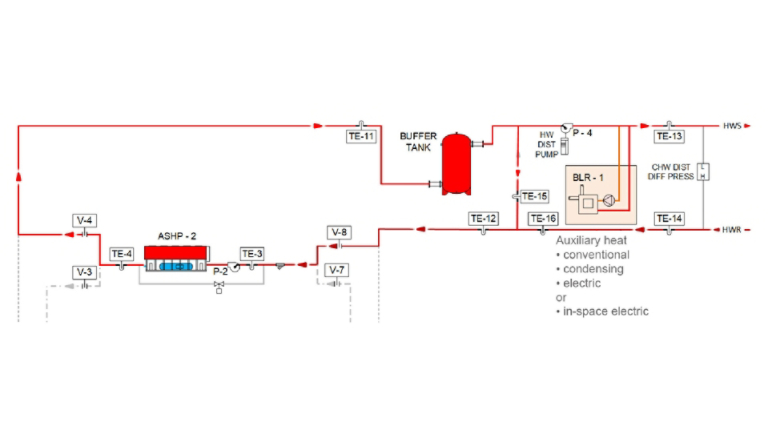
Figure 11: Auxiliary boiler shown on the hot water supply to provide supplementary/back-up heat to the AWHP
What Are the Benefits of a Hybrid Heat Pump System?
Reduces System First Cost
In cold climates, specifically ASHRAE climate zones 6, 7, and 8, the peak heating load is often higher than the peak cooling load. If we were to design a fully electric HVAC system, then we would need to size our heat pumps to meet the peak heating load. The peak heating load tends to only occur for a small portion of the annual heating operation and so sizing heat pumps to meet this peak load means we need more heat pumps which may correspond to a higher equipment first-cost.
Alternatively, if we leverage using a hybrid heat pump system, then we can size our heat pumps to help meet the peak cooling load. With this hybrid approach, we would still have plenty of heat pump heating capacity available for most of the heating season, but we would come up short on capacity during the peak heating loads. That’s when the gas system can kick-in to supplement the heat pumps.
The graph below illustrates this point using an example building load profile of a school in ASHRAE climate zone 4a. When we apply heat pumps in colder climates this difference between the heating and cooling loads becomes even more apparent. The heating capacity line shows the capacity derate of an air-to-water heat pump as the ambient temperature drops. Note how we have more than enough capacity as the ambient temperature rises.
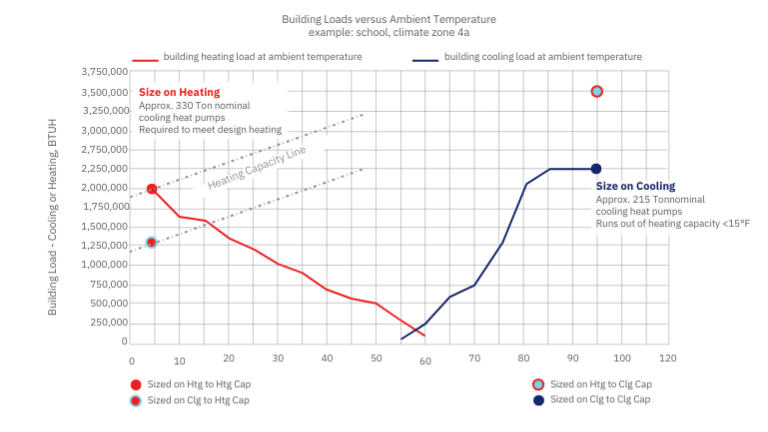
Figure 2 2: Sizing air-to-water-heat pump system capacity based on peak cooling load.
Gas heating equipment carries a lower first cost than heat pump heating equipment. Especially for hydronic systems. Having a gas system to supplement the air-to-water heat pumps at low ambient conditions when peak heating loads occur and heat pumps derate can save on first cost. Aside from just the equipment costs, there may also be savings in architectural or structural costs as gas heating equipment tends to be lighter and takes up less space than heat pump equipment.
Reduces Utility Spend
Reducing first costs can help a project meet an initial construction budget. However, the utility and maintenance costs to operate the HVAC equipment over its lifespan may outpace the first cost of the equipment. Therefore, we should consider operating costs when designing heat pump systems.
As the ambient temperature drops, the heating efficiency of heat pump equipment will also drop. Depending on the cost of gas and electricity, it may become more cost effective to run gas-fired heating equipment at lower-ambient conditions than electric heat pump equipment.
A hybrid heat pump system provides a building owner with the ability to heat with whichever fuel source they choose. At higher ambient conditions where heat pumps are more efficient, running electric heat pumps systems may cost less than running gas-fired heating systems. However, if the temperature drops, heating with gas may become more cost effective than with the less efficient heat pumps.
Building automation systems can be designed to track the electricity and gas usage of the heating equipment and make a changeover decision using current building utility rate data. This ultimately can help reduce the long-term utility costs of the heating plant.
Reduces Winter Peak Electrical Demand
Heat pumps require a lot more electrical power than gas-fired equipment. We may not always have the electrical infrastructure in place for a fully electric heating solution, especially if it’s an existing building or located in a place where the electrical grid already has a lot of strain. Upgrading the service can be expensive and not always possible. A hybrid system helps to reduce the number of required heat pumps and supplement them as needed with a gas-fired system that requires less electric input.
Furthermore, many commercial buildings in cold climates install generators in case of power outages in the winter. With a fully electric heating system, the back-up generator would need to be sized for all the heat pumps. Whereas if we had a gas-fired system in place, the generators can be downsized to just cover the gas-fired heating equipment.
Improves System Serviceability
Heat pump equipment is commonly located outside. In cold winter months, this can make maintenance more complicated. If a component of the heat pump were to fail, the cold outdoor conditions may make it difficult to repair in a timely manner. Gas-fired systems like boilers or furnaces are located indoors and are easier to service and maintain in the winter months.
Having both gas fired and heat pump equipment in a hybrid system offers added peace of mind that if the heat pump were to go down during a blizzard or extreme cold snap, the building could continue to be heated using the back-up gas system.
Adds Heating System Redundancy
I’ve hinted at it already with the generator and the winter serviceability, but by having a hybrid heat pump system with gas back-up, you inherently add heating redundancy. If a heat pump goes down, you have a boiler to supplement, and vice versa.
If the application requires N+1 redundancy, then we can just provide a redundant boiler to handle the heating redundancy as opposed to a redundant heat pump in a fully electric system which may add more equipment cost and may require more space.
Provides Enhanced Future System Flexibility
We can’t accurately predict the future economic and political landscape. Will electricity get cheaper? Will local or federal governments require electrification? Will there be a carbon tax? With a hybrid system, we have greater flexibility to adapt to these future unknowns.
If the cost of gas rises or mandatory electrification legislation is adopted, we can always add more heat pumps to a hybrid system, provided we have the space to install them. Future heat pump additions may also provide the added benefit of higher efficiency or better capacity at lower ambient conditions as heat pump technology continues to evolve. The opposite is true too: if gas prices were to fall relative to electricity rates and there are no requirements for electrification, then we could heat a building entirely with the gas-fired sources.
Utility prices will fluctuate over time, so having the ability to switch between electric heat pumps and gas-fired heating equipment provides a building owner with some flexibility on their future heating utility spend. In addition to fluctuating utility prices, recent local legislation such as New York City’s local law 97 or Boston’s BERDO, to name a few, are starting to require building owners to track and reduce carbon emissions from their facilities. A hybrid heat pump system provides buildings with flexibility to navigate utility rate fluctuations and potential electrification requirements. For even more future flexibility, we can implement an energy storage system, such as Trane’s Thermal Battery Storage-Source Heat Pump System.
Sweets Spots to Apply a Hybrid Heat Pump System
New Construction Buildings
This one should come as no surprise, but if you’re starting with a blank slate, why not go with a hybrid heat pump system and take advantage of all the benefits outlined in the last section?
The key is to coordinate with the architects and the building owner early in the design process to provide sufficient outdoor space for the air-source heat pump equipment. Coordinating the space requirements and locations for the hybrid heat pump system equipment is critical to support adequate airflow, reduce long pipe runs, and provide necessary service access. Switching to a hybrid heat pump system late in the design process could be prohibitive as there may not be a mechanical room that can satisfy a fossil-fuel boiler, or there may not be outdoor space available for larger air-to-water heat pump equipment.
If the new construction building utilizes a hydronic heating system, then it’s imperative to use the lowest possible hot water temperature. The lower the supply hot water temperature, the more efficient an air-to-water heat pump becomes. Even if you’re designing a building without air-to-water heat pumps, it still makes sense to design with lower hot water distribution temperatures to allow for future flexibility if the building is ever converted to heat pumps. For more details on designing with low temperature hot water, you can reference the Trane engineer’s newsletter title Heating with Lower-Temperature Hot Water.
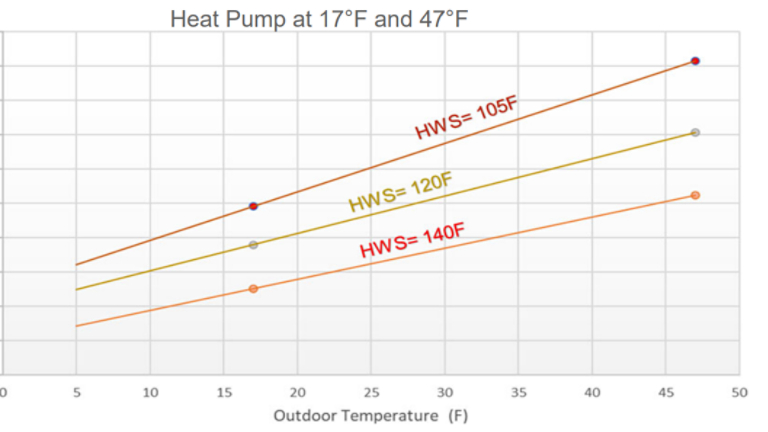
Figure 3 4: Lower hot water supply temps lead to higher heating COP for air-to-water heat pumps
Chiller Retrofits or Replacements
There are many existing buildings that have air-cooled chillers installed for hydronic cooling. As an air-cooled chiller approaches end of life and needs to be replaced, we have an opportunity to replace it with an air-to-water heat pump and supplement the building’s existing heating production.
This isn’t always an easy retrofit as we need to review the existing building pumping configuration, controls sequences, loop volume, etc., and potentially make some considerable changes to the hydronic system design in the building. However, when it comes to the required space and electrical infrastructure for the heat pump, it’s already present which gives us an opportunity to retrofit the chiller with an air-to-water heat pump.
This type of retrofit isn’t exclusive to existing air-cooled chillers. It’s more complicated, but if there is an existing water-source heat pump system or an existing water-cooled chiller system with a cooling tower located outside, there may be an opportunity to retrofit an end-of-life tower with an air-to-water heat pump system.
Rooftop Unit Replacements
Buildings with packaged rooftop units (RTUs) are more prevalent than existing buildings with air-cooled chillers. Many existing RTUs are configured for DX cooling and gas heat or electric resistance heat. If an RTU reaches its end of life, why not replace it with a new dual fuel heat pump? The heat pump RTU utilizes a refrigerant reversing valve to provide heat pump heating as the first stage of heat and has a gas furnace or electric resistance heater for the second stage of heat.
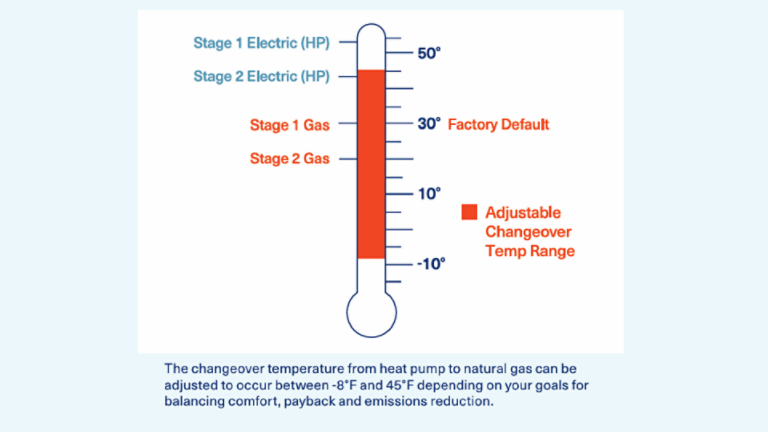
Figure 4 5: Precedent dual fuel heat pump rooftops changeover from heat pump to gas based on a field-adjustable ambient changeover temperature.
In most cases, going from a standard cooling/gas heat RTU to a dual fuel heat pump RTU doesn’t change the unit footprint or electrical requirements which makes it a relatively easy retrofit. In some areas, there are local utility incentives that can make the cost of the dual fuel heat pump RTU lower than the standard cooling/gas heat RTU. You can use Trane’s rebate finder to see if this incentive is available in your area.
Where do I start?
For new construction buildings, the answer is a bit easier: Start with a building energy model to understand the building’s heating load profile and determine how to best size the heating equipment. My recommendation is to size the heat pumps for the cooling load and to size the back-up gas-fired heating equipment for the heating load.
For existing buildings, the best place to start is to understand the building’s current heating and cooling needs. The systems in existing buildings are often oversized due to an engineer’s safety factor, or from the building’s use changing over time. Before investing in a major HVAC equipment retrofit, it makes sense to first connect the building to Trane Cloud and trend the building’s heating and cooling performance to build the 8760-hour load profile.
Trend data will provide a clearer picture of the building’s current load profile as a starting point which can help with prioritizing which energy efficiency measures make the most sense to start with. We at Trane love HVAC retrofits, but sometimes an insulation project or lighting upgrade can be a better place to start than just replacing the HVAC.
Contact your local Trane account manager for more information or for help getting started.
Conclusion
Today’s heat pump technology allows us to fully electrify buildings even in cold climates. However, full electrification of heat may not make sense for every project. In some cases, a hybrid heat pump system with supplemental fossil-fuel heating equipment might make more sense.
Some of the benefits of these hybrid heat pump systems may include:
- Reduced system first cost
- Reduced life-cycle utility spend
- Reduced electrical demand
- Improved system serviceability
- Improved heating redundancy
- Improved future system flexibility
New construction projects, chiller replacements, and rooftop replacements are some sweets spots where we can apply a hybrid heat pump approach.
Sources
[1] Figure 28 from Trane’s Air-to-Water Heat Pump System with Cascade Option: Part of the Comprehensive Heat Pump Chiller System
[2] Figure 16 from Trane’s Air-to-Water Heat Pump System with Cascade Option: Part of the Comprehensive Heat Pump Chiller System
[3] “The Future of Heat Pumps” https://www.iea.org/reports/the-future-of-heat-pumps/executive-summary
[4] Figure 13 from Trane’s Air-to-Water Heat Pump System with Cascade Option: Part of the Comprehensive Heat Pump Chiller System
This is for informational purposes only and does not constitute professional advice. Trane Technologies believes the facts and suggestions presented here to be accurate; however, final design and application decisions are your responsibility. Trane Technologies disclaims any responsibility for actions taken on the material presented.