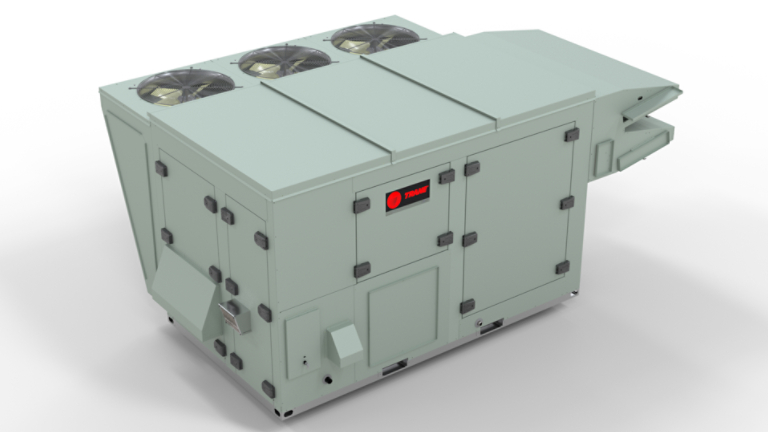
What Is a DOAS Unit?
A dedicated outdoor air system is a type of heating, ventilation, and air conditioning (HVAC) system that processes 100% of the outdoor air brought into a building for ventilation separately from the building's primary heating and cooling system. Unlike traditional HVAC systems that mix outdoor air with recirculated indoor air, a DOAS conditions the fresh outdoor air before it is distributed throughout the building. This decoupling of moisture, humidity, and ventilation from sensible heating and cooling allows for more precise control over indoor environmental quality.
How Does a DOAS Unit Work?
A DOAS unit conditions and delivers only outdoor air, ensuring a consistent supply of fresh, dehumidified, filtered air. The process typically involves several stages.
- Air intake and filtration: The system draws in up to 100% outdoor air through an intake and passes it through filters to remove particulates and contaminants.
- Conditioning: The filtered air then moves through heating and cooling coils to adjust its temperature to the desired level.
- Dehumidification/humidification: A key function of a dedicated outdoor air system is to control humidity. In warm, humid climates, a dehumidification unit removes excess moisture from the incoming air. In cold, dry climates, the system can add humidity. This is crucial because the primary source of humidity in most buildings is the fresh outdoor air.
- Distribution: Finally, supply fans distribute the conditioned and dehumidified (or humidified) fresh air throughout the building via ductwork.
Some DOAS units incorporate energy recovery ventilators (ERVs) or heat recovery ventilators (HRVs). These devices capture heat and moisture from the exhaust air leaving the building and use it to precondition the incoming fresh air, significantly reducing the energy required for heating and cooling.
The Benefits of Installing a DOAS
From improved indoor air quality to enhanced sustainability, there are many potential benefits to installing a dedicated outdoor air system.
- Improved indoor air quality (IAQ): By consistently supplying fresh, filtered outdoor air, a DOAS dilutes and removes indoor pollutants like volatile organic compounds (VOCs), odors, and airborne contaminants. This helps to create a healthier environment for occupants and can mitigate issues like sick building syndrome.
- Enhanced energy efficiency: Decoupling ventilation from heating and cooling prevents the unnecessary conditioning of large volumes of mixed air. This allows the primary HVAC system to operate more efficiently, leading to significant energy savings compared to traditional systems. Energy recovery technology further enhances these savings.
- Superior humidity control: DOAS units excel at managing humidity by treating the outdoor air directly. This prevents moisture-related problems, such as mold growth, and creates a more comfortable indoor environment.
- Precise temperature control: By separating the tasks of ventilation and temperature control, a DOAS allows for more stable and precise temperature management throughout the building.
- Design flexibility: DOAS units can be integrated into both new construction and existing buildings and can be paired with various types of heating and cooling systems. This versatility makes them suitable options for a wide range of applications.
- Smaller ductwork: Because a DOAS handles only the ventilation air, the required ductwork can be smaller than in traditional all-air systems, potentially saving space and initial costs.
When Does a Dedicated Outdoor Air System Make Sense?
A business should consider installing a DOAS under the following conditions:
- High ventilation requirements: Buildings with high occupancy densities, such as schools, theaters, and auditoriums, or spaces that require large amounts of fresh air due to building codes or specific activities, like laboratories and commercial kitchens, are excellent candidates for a DOAS.
- Stringent IAQ needs: Facilities where maintaining high IAQ is critical, such as healthcare facilities, office buildings, and hotels, can greatly benefit from the dedicated ventilation a DOAS provides.
- Humid climates: In regions with high humidity, a DOAS is particularly effective at controlling moisture and preventing related issues.
- Energy efficiency goals: For businesses looking to reduce their carbon footprint and lower operating costs, the energy savings offered by a DOAS unit make it a compelling choice.
- New construction and major renovations: Implementing a dedicated outdoor air system is often most cost-effective in new building projects or during significant renovations, as it can lead to cost reductions in other mechanical systems.
- Variable occupancy: Buildings with fluctuating occupancy levels can leverage the demand-controlled ventilation capabilities of some DOAS units, which use sensors to adjust airflow based on real-time needs, saving energy.
Resources for Dedicated Outdoor Air Systems
Trane's comprehensive approach to DOAS technology makes it an increasingly popular choice for commercial buildings seeking to balance energy efficiency with superior indoor air quality and humidity control. Contact your local Trane representative to learn more.