
Trane delivers customizable LED and control solutions for every facility, including sports lighting. Options include durable LED retrofits, modern troffer kits, and integrated luminaires—all with advanced controls and design flexibility.
Overview & Benefits
What Are the Benefits of Updating Lighting and Lighting Control Systems?
-

Achieve Greater Energy Efficiency
Advanced LED systems and integrated controls can cut building lighting energy use, delivering significant cost savings and reducing overall carbon footprint.
-

Increase Lighting Quality
Lighting solutions deliver improved color rendering, uniformity, and reduced flicker for environments that boost productivity, comfort, and well-being.
-

Enhance Architectural Aesthetics
Our flexible lighting designs modernize facilities, enhance occupant experience, and support your vision for a vibrant space.
-

Improve IEQ (Indoor Environmental Quality)
Lighting upgrades improve indoor air quality, lower heat emission, and support occupant circadian rhythms—foundations for wellness and focus.
-

Future-Ready Building Connectivity
Lighting integrates with automation systems, centralizing control, and unlocking whole-building energy savings.
-

Custom-fit for Local Requirements
Solutions are tailored to exceed your regional, regulatory, and operational requirements, backed by Trane’s local expertise nationwide.
Key Features
The Positive Impact of Quality Lighting
High-quality lighting has a direct impact on critical factors of your indoor environment, from comfort to productivity and safety.
-

Improved Student Performance
Dynamic lighting that’s adjusted based on student activity is correlated with higher alertness and test scores.1
-

Boosted Patient Comfort
Human-centric LED lighting is connected to improved well-being.2 For ADRD patients, it resulted in 24% longer sleep cycles.
-

Increased Employee Safety and Productivity
Enhanced lighting can increase productivity and work accuracy by as much as 18% and 12%,4 as well as lower the likelihood of slips and falls.
-
Reduced Carbon Emissions
LED upgrades lower Scope 2 emissions and compliance risk while contributing directly to your sustainability goals.
-

Lower Maintenance Requirements
LED solutions last up to 50,000 hours (many times longer than fluorescents), resulting in fewer replacements and reduced maintenance.
-
Smart Integration & Control
Features like sensors, timers, and BACnet compatibility mean your lighting adapts to usage, further optimizing energy and comfort.
FAQs
Your questions about lighting, answered.
Smart lighting control systems let businesses manage lighting automatically and efficiently. They use sensors, timers, dimmers, and connect to other building systems to adjust lighting based on occupancy, natural light, and time of day. These systems save energy while enhancing comfort, while enabling both central and local control.
Trane’s solutions work seamlessly with HVAC and other systems, centralizing control for greater efficiency, data analytics, and reduced energy use, all from a single platform.
Customer Stories
See how we've helped customers like you.
-
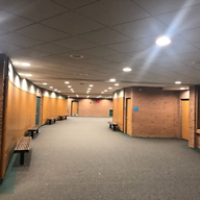
Holt Public Schools Upgrades Improve Illumination, Lighten Energy Costs by $3 Million
Holt Public Schools uses an ESPC to upgrade lighting, controls, and water conservation in nine buildings, saving $3M in 12 years and earning DOE honors. -
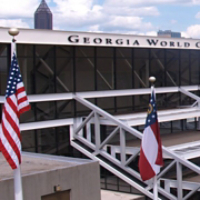
Energy Efficiency Upgrade at Georgia World Congress Center Authority
By centralizing mechanical operations, replacing aging HVAC equipment, and upgrading lighting fixtures to LEDs, GWCCA reduced energy use by over 39 percent, saving 20 million+ kWh of electricity and $2.5 million+ annually. The project also led to LEED Gold certification, making it the world's largest LEED certified convention center. -
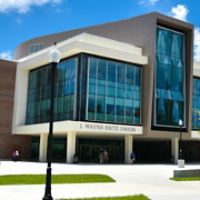
Performance contracting upgrades at J. Wayne Reitz Union increase capacity; projected to exceed guaranteed savings of 3,728,505 kWh of electricity, 13,597 therms of steam/yr, and result in first year savings of $535,657; receive $90,549 under an energy efficiency structure.
Resources & Insights
Knowledge is the power to do more.
-
-
Clarifying Misconceptions in Lighting and HVAC Integration
What’s changed to shift the lighting conversation to consulting engineers rather than electricians? Every technology prior to LED has been based on a prescribed form factor lamp with either a filament rate or a gas discharge. These lights could simply be turned on or off.
Related Products
-
Discover how Trane AI-powered building controls and HVAC automation systems can improve efficiency, integration, resilience, and cybersecurity in your building.
-
Advance your mission with Trane as your dedicated partner in creating lasting improvements for your people, facilities, and future.
-
Stay ahead of evolving building regulations with Trane. Navigate energy codes, emissions limits, IAQ standards, refrigerant rules, and more.


Connect with an expert.
Still not sure which solution is right for you? Connect with a Trane expert.
Prefer to chat with someone at your local Trane office?