Glossary
Rooftop Heat Pump
A rooftop heat pump is a type of rooftop HVAC unit. Learn how it works and the benefits of installing one.
Quick Facts
- Products
- Heat Pumps • Rooftop Units
What Is a Rooftop Heat Pump?
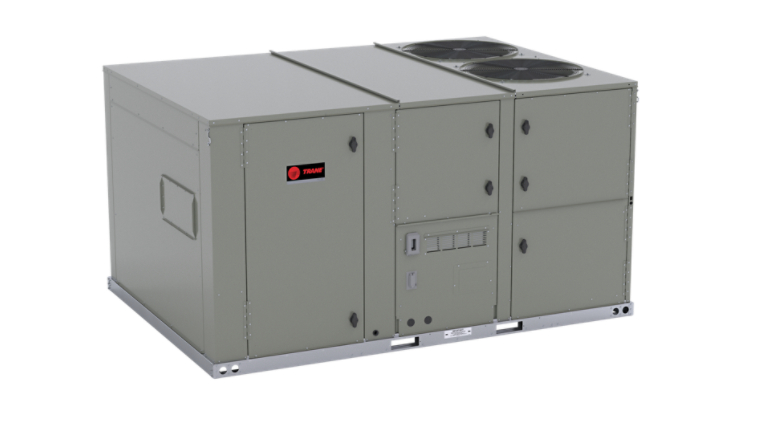
A rooftop heat pump is a packaged rooftop unit that provides heating and cooling for commercial buildings in a weather-resistant cabinet installed on the building’s roof. Electricity provides the cooling, and the heating can be from electric resistance heat, an electric heat pump or hybrid dual-fuel heat pump with auxiliary gas heat or water-source heat pump rooftop units.
How Does a Packaged Rooftop Heat Pump Work?
Rooftop heat pumps are connected directly to a commercial building’s ductwork. The system draws indoor air up through the return ducts into the rooftop unit, conditions the air, and then forces it back down into the building through the supply ducts.
To condition the air, the unit uses a reversing valve to transfer thermal energy rather than generating heat through fossil fuel combustion.
- In cooling mode: The system absorbs heat from the indoor air and releases it outside, sending cooled air back into the building.
- In heating mode: The cycle reverses. The system captures ambient heat from the outside air, even in cold weather, and transfers it indoors to warm the building.
Benefits of Installing a Commercial Rooftop Heat Pump
Rooftop heat pumps are a staple in commercial HVAC design for several reasons:
- Space optimization: By consolidating the entire HVAC system into a single cabinet on the roof, facility managers free up valuable indoor square footage or ground-level real estate that would otherwise be required for indoor air handlers or split-system components.
- Streamlined installation and maintenance: Because it is a packaged, factory-assembled unit, installation is generally faster and less complex than split systems. Service technicians can perform routine maintenance on the roof, minimizing noise and disruption to the business operations going on inside the building.
- Electrification and decarbonization: Many rooftop heat pumps run entirely on electricity and move heat rather than burning fuel. This makes them highly energy-efficient and an ideal solution for commercial building owners aiming to meet sustainability goals, comply with local emissions regulations and transition toward building electrification.
- Replacing a gas heat rooftop unit with a dual fuel heat pump unit is as easy as replacing it with a new gas rooftop unit. With the same gas and electrical connections and no need to upgrade the electrical supply, you can save on installation costs.
- Scalability and zoned comfort: Large commercial buildings can easily install multiple packaged rooftop heat pumps to serve different areas of a building. This allows for precise, independent temperature control across various zones, ensuring comfort while preventing wasted energy in unoccupied spaces.
Commercial rooftop heat pumps are one of many rooftop unit options you can explore when you contact your local Trane expert to discuss the best HVAC options for your facility.