What Are HVAC Controls?
HVAC controls are the hardware and software systems that monitor, regulate, and automate heating, ventilation, and air‑conditioning equipment to maintain occupant comfort, air quality and energy efficiency. When applied to a whole facility or campus, advanced HVAC controllers are often integrated into a centralized Building Automation System (BAS).
Components of HVAC Control Systems
Controls for HVAC consist of four elements:
- Sensors (inputs): Inputs are sensors and devices that collect information about the environment and/or equipment status, which is sent to the controller. These include temperature sensors, humidity sensors, pressure sensors flow sensors, and occupancy sensors that gather real-time data about building conditions.
- Controllers: The controller collects the data provided by the input sensors, processes the information based on programmed logic and setpoints, and commands the appropriate actions through output signals to control devices. Central controllers and most terminal unit controllers are programmable, meaning the direct digital control (DDC) program code may be customized for the intended use. The program features include time schedules, set points, logic, timers, data trend logs, and alarms.
- Controlled devices (outputs): These are HVAC system components that perform the task required by the controllers. These include condensers, evaporators, ventilators, heat pumps, and others. After the sensors collect information and transmit it to the controllers, the controllers direct the appropriate device to perform the required action to meet the desired conditions.
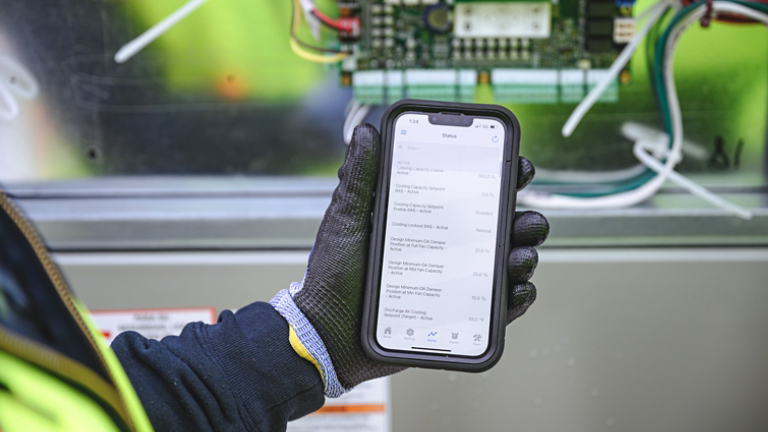
- User interface: The user interface allows users to change the parameters based on their preferences. Most modern systems provide user access through web or phone applications in addition to on-site user interfaces.
Benefits of Using a Trane Commercial HVAC Control System
- Energy efficiency: HVAC control systems decrease energy consumption by employing strategies that optimize the system operation to meet the desired space parameters. This can be accomplished through algorithms programmed into the controller that use input from sensors and the user interface to automatically adjust the HVAC devices to meet the facility's needs while using the least amount of energy.
- Interoperability (open protocols): Look for systems that communicate using standard, open protocols like BACnet® to ensure your new HVAC controls can seamlessly communicate with your existing equipment, even if it is from different manufacturers.
- Scalability: Buildings evolve, and the control system you purchase should easily scale up if you expand your facility, add new zones, or acquire adjacent buildings.
- Sustainability: Modern systems include energy-saving algorithms, scheduling features, and data reporting to help you meet decarbonization mandates.
- Cybersecurity: Modern controls are connected to your building's IT network and the cloud, which makes cybersecurity features key to protecting your facility from external threats.
- Lifecycle support: When you install HVAC controllers from Trane Commercial HVAC, you'll also have available access to local support, remote troubleshooting, regular software updates, and user training for your facility team.
Investing in the right HVAC controls transitions your building from a static structure into a smart, dynamic environment. It is an effective way to lower operational costs, extend the lifespan of your HVAC equipment, and keep occupants comfortable and productive. If you're ready to learn more about HVAC control systems, contact your local Trane representative.