
Customer Story & Case Study
Four Seasons Produce Precisely Powers Cold Storage
Discover how a refrigerated warehouse optimized HVAC controls to boost energy efficiency, advance a commitment to sustainability, and maintain conditions critical to keeping produce fresh.
Quick Facts
- Location
- Ephrata, Pennsylvania
- Industry
- Industrial & Manufacturing
- Products
- Comprehensive Chilled Water Systems • Symbio® Equipment Controls • Trane Intelligent Services
- Topics
- Sustainability • Energy Efficiency
- Services
- HVAC Services
Results
- 2M kWh/year in energy savings
- $90,622 utility rebate
Highlights
- Achieved +2 million kWh in annual energy savings.
- Secured +$90K in utility rebates through Pennsylvania’s Act 129 program.
- Optimized glycol piping and HVAC controls without disrupting temperatures critical to protecting produce.
- Advanced long-term sustainability commitment while lowering operating costs.
The Challenge
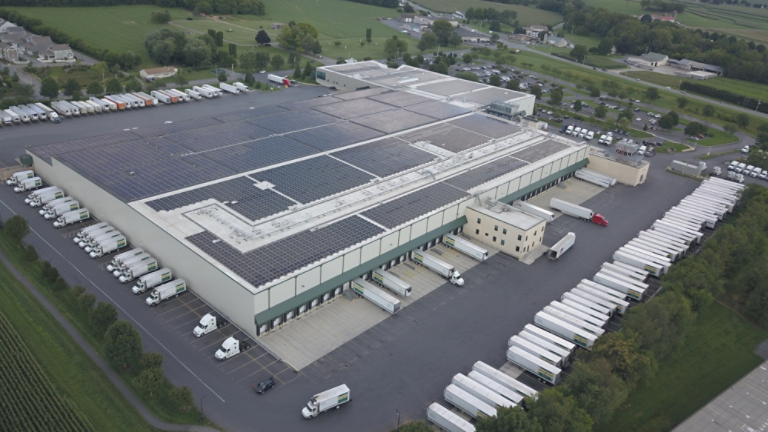
Four Seasons Produce’s business was built on a foundation of caring for people and the planet. The family-owned distributor operates a large, refrigerated campus at its headquarters in Ephrata, Pennsylvania, where even small inefficiencies can ripple into higher costs and a larger carbon footprint.
Unfortunately, the glycol piping layout was forcing the plant’s cooling system to work harder than necessary, driving up operational costs and signaling room for improvement in critical food storage systems.
Randy Groff, Director of Facilities and Energy at Four Seasons Produce, knew the glycol process plant was essential to protecting food, and that any system upgrades would need to deliver efficiency without disrupting temperatures or reliability.
The Solution
Leveraging Data for Smart Decisions
Trane’s relationship with Four Seasons Produce began with digital services and expanded as needs grew. While cold storage facilities often avoid system changes because of the risk to product quality, Groff and his team were willing to take a closer look.
This project began by using meters, sensors, and Trane intelligent services to gather data and garner a solid understanding of how the plant performed throughout the year. The analytics confirmed what the facilities crew suspected, which was that the legacy piping was forcing pumps to work harder than necessary, and fixed pressure set points ignored real time demand.
Proving Every Step for Premium Produce
Trane engineers integrated Symbio® controls with the site’s existing Programmable Logic Controller (PLC) process automation system so the facilities team could effectively minimize risk. This approach allowed them to make measured, transparent adjustments and ensure that temperature stability would not be compromised.
Together, Trane and Four Seasons Produce facilities teams converted the glycol piping loop process from an inefficient layout to a primary-secondary arrangement. This redesign optimized pump pressure control so that it’s based on actual system needs instead of maintaining a constant flat setting.
Trane also implemented several control strategies across the broader refrigeration operation, including tower chiller optimization, adjusting set points, and refining defrost schedules. These steps reduced pump work, improved heat transfer, and cut unnecessary run time while adhering to strict temperature settings.
The Results
Four Seasons Produce now saves more than 2 million kilowatt hours per year. The company also received a utility rebate of +$90K through Pennsylvania's Act 129 program.
The energy savings contributes both to lower operating costs and reduced emissions every day, all without sacrificing the strict temperature control needed to keep inventory fresh.
Four Seasons Produce has made substantial sustainability commitments, including reducing water usage by 36% since 2016; cutting energy use by 56% (kWh) per square foot since 2018; and achieving a 91% waste diversion rate in 2024 alone. The facility was also the first to achieve US Department of Energy 50001 Ready energy management designation.1
This project showcases the company’s ongoing commitment to sustainability by reinforcing that reliable cold storage and energy efficiency can complement one another.
“This project proves that protecting food, people, and the planet can go hand in hand,” said Groff. “By making smart, measured changes and optimizing how our refrigeration system responds to real-time demand, we reduced energy use without compromising reliability, which is exactly how sustainability should work."
With upgraded systems and clear visibility into performance, the facilities team has a clear roadmap for additional improvements that will continue to benefit both people and the planet.
Sources: