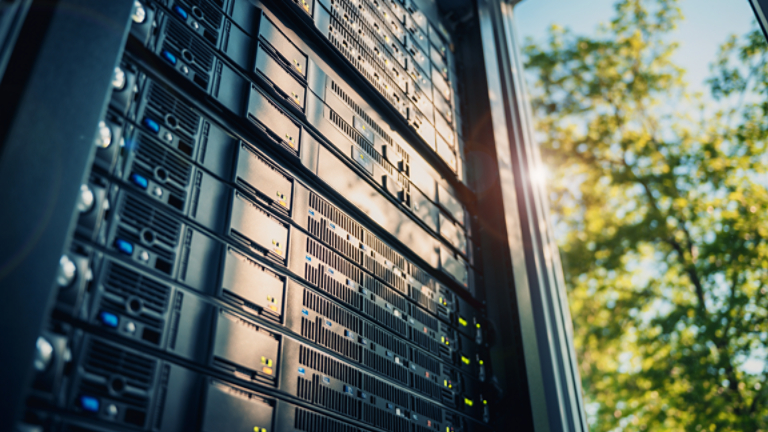
As AI workloads and high-density computing continue to push data center performance requirements higher, thermal management has become a business-critical priority.
Today’s operators need cooling strategies that can keep pace with their projects, whether they’re building new capacity, commissioning equipment, validating performance, performing planned maintenance, or protecting uptime during an unexpected outage.
Temporary thermal management provides the flexibility to address these needs without waiting for permanent infrastructure to be fully operational. Rental equipment can also help teams navigate equipment lead times, maintain water quality during construction and commissioning, and validate system performance before a facility goes live.
With Trane Rental Services, operators can access temporary thermal solutions backed by experienced support to help address changing project demands while maintaining focus on performance, reliability, and uptime.
Equipment Built for Mission-Critical Applications
A successful temporary data center cooling strategy starts with selecting equipment suited for demanding applications and rapid deployment.
Air-Cooled Chillers
For commissioning, supplemental cooling, and temporary redundancy, large air-cooled chillers offer substantial cooling capacity with flexible deployment. Rental chillers can integrate with temporary piping and electrical systems, helping teams establish cooling quickly and support full-building load validation before permanent systems are fully operational.
Water-Cooled Chillers
Water-cooled chillers are well suited for large-scale cooling requirements where capacity, efficiency, and reliability are critical. Rental systems can help provide cooling capacity while supporting the elevated condenser-water temperatures and variable loads common in high-density data center environments.
Liquid-Cooled Load Banks
Liquid-cooled load banks replicate the electrical and thermal demands created by Information Technology equipment in data centers and high-performance computing environments. Designed for commissioning, start-up, and integrated systems testing, they allow teams to validate cooling infrastructure under realistic load conditions before live IT equipment is introduced.
Heat Pump Chillers
Where both heating and cooling are required, heat pump chillers provide additional flexibility throughout construction and commissioning. Trane Rental Services has helped advance the use of heat pump chillers for data center commissioning in North America, providing an alternative to traditional boiler-based approaches that can help simplify installation, reduce power and energy requirements, and support safer and more efficient project execution.
Heat Exchangers
Heat exchangers can help isolate temporary equipment from building systems and stabilize performance under changing conditions. By separating system loops, they provide additional flexibility in high-capacity, mission-critical applications where flow and temperature control are important.
Where Rental Equipment Can Support Data Center Projects
Temporary thermal management can play an important role throughout the data center lifecycle, from construction and commissioning through ongoing operations.
Applications can include supporting system flushing, validating cooling performance, providing temporary capacity during expansions or equipment transitions, supporting planned maintenance, and responding to unexpected outages.
Data Center Commissioning with Greater Confidence
Commissioning is one of the most important stages in preparing a data center for live operation. HVAC systems must be proven under realistic conditions to help support demanding thermal loads. That includes validating chillers, fluid coolers, CDUs, fan walls, generators, CRAH/CRAC units, and air handlers while evaluating airflow distribution, redundancy paths, control setpoints, and monitoring integration.
Load testing is also a critical part of the process. Multiple test points, such as 25%, 50%, 75%, and full load, can help teams evaluate cooling system performance across partial, nominal, and peak demand.
Temporary cooling and load bank equipment allow teams to test systems before live IT loads are introduced and identify potential issues before the facility becomes operational. Trane Rental Services can support this process with temporary thermal solutions designed to support testing and help teams move toward go-live with greater confidence.
Why Flushing and Passivation Matter
Flushing plays an essential role in protecting cooling system performance before a data center goes live. Construction debris, sediment, and contaminants may damage sensitive equipment, restrict flow, reduce heat-transfer efficiency, and threaten long-term performance if not properly removed.
Supplemental mechanical cooling can help maintain appropriate water temperatures during high-flow flushing. Mobile flushing packages can include trailer-mounted pump and filtration skids, chillers, and heat exchangers, helping teams manage temperatures while moving efficiently from zone to zone as construction progresses.
Better Design Inputs Lead to Better Results
Effective temporary cooling starts with getting the fundamentals right. Key design parameters include entering water temperature, leaving water temperature, flow rate, improve ambient temperature, and reduce ambient temperature. Capturing these inputs early helps engineers properly size and configure temporary equipment for changing project conditions.
Decoupling may also improve system stability. Separating the chiller loop from the building distribution loop allows each loop to operate independently, helping simplify staging, minimize flow imbalance, reduce nuisance trips caused by rapid load fluctuations, and improve system responsiveness.
For cold-weather deployments, freeze protection is another important consideration. Depending on the application, strategies can include glycol-based fluids when sustained freezing temperatures are expected or heat trace and pump recirculation when glycol cannot be used.
Engaging Trane Rental Services early can help teams account for these design considerations, properly size and configure temporary equipment, and adapt solutions to changing site and seasonal conditions.
Visibility, Controls, and Power Integration
Cooling performance depends on more than capacity alone. Controls and system visibility help operators understand changing conditions and respond quickly. Depending on the equipment and application, capabilities can include multiple temperature inputs, setpoint reset logic, flow modulation, BACnet integration, diagnostics, trending, and alarms.
Electrical planning is equally important. Successful deployments require an understanding of available power, voltage requirements, maximum overcurrent protection, minimum circuit ampacity, and necessary accessories. Supporting components can include camlock cable assemblies, breakers, transformers, and power distribution panels.
Temporary Thermal Management as a Strategic Advantage
The data center market is evolving quickly, and cooling strategies must evolve with it.
Temporary thermal management is no longer limited to emergency backup. It can help provide a flexible way to support construction, commissioning, system flushing, capacity expansions, planned maintenance, and outage response.
When the right equipment is paired with the right engineering approach, temporary thermal management can help data center teams protect project schedules, validate system performance, and maintain critical operations throughout the facility lifecycle.
With Trane Rental Services, organizations have access to the equipment, engineering expertise, and support needed to help keep projects moving and critical environments protected.
Ready to get started? Contact Trane Rental Services for your temporary HVAC needs.