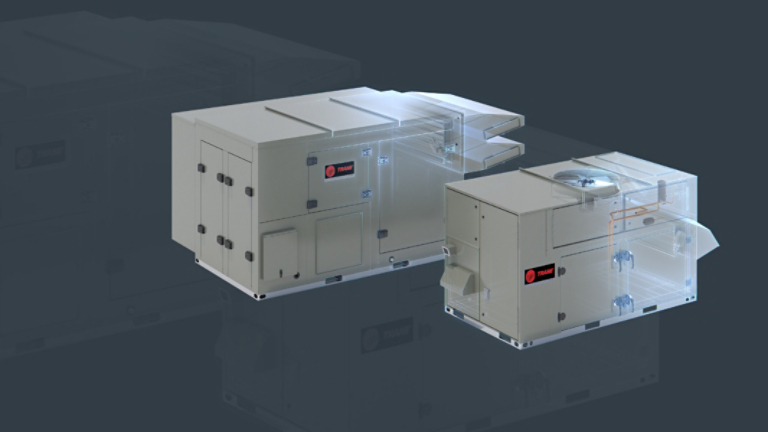
What Is a Commercial Dehumidifier?
A dehumidifier is a device that removes moisture (water vapor) from air to control indoor humidity. In commercial HVAC, a dehumidifier is used to meet comfort, health, or process requirements that standard space cooling alone may not reliably satisfy. Commercial-grade dehumidifiers are robustly built for larger areas and are designed to run for extended periods, making them ideal for business applications.
How Does Dehumidification Work?
Commercial dehumidifiers primarily use one of two methods to remove moisture:
- Refrigerant dehumidifiers: The process starts when air enters the unit and passes over a set of cold evaporator coils. As the air cools, water vapor condenses into liquid and collects in a drain pan or is removed through a drainage line. The drier air is then reheated and circulated back into the space.
- Desiccant dehumidifiers: These dehumidifiers use a moisture-absorbing desiccant material to remove humidity from the air. They are highly effective for low humidity applications such as pharmaceutical manufacturing, food processing, and data centers.
The desired relative humidity (RH) level or dewpoint is input into the commercial dehumidifier's advanced control system. Air is then passed through the unit, removing moisture. The RH or dewpoint is monitored by the control system so that when it reaches the ideal humidity, the dehumidifier automatically shuts off or unloads.
When Does Incorporating a Dehumidifier into an HVAC System Make Sense?
Dehumidifiers are especially helpful in warm, moist climates and rainy seasons, but there are more reasons a business should consider adding one to its HVAC system:
- Improved indoor air quality (IAQ) and comfort: By maintaining optimal humidity levels, typically between 30% and 50%, dehumidifiers inhibit the growth of common allergens like mold, mildew, and dust mites, creating a healthier environment for employees and customers. This is especially important for individuals with asthma or allergies. A less humid environment also feels more comfortable, which can lead to increased productivity.
- Protection of assets and inventory: Excess moisture can wreak havoc on a building and its contents. High humidity can cause wood to warp, metal to corrode, and can damage sensitive electronics and machinery. By controlling humidity, businesses can protect their valuable equipment and inventory from moisture-related damage and deterioration.
- Prevention of structural damage: Persistent high humidity can lead to long-term structural damage to a building, including the degradation of insulation and drywall. A commercial dehumidifier helps to prevent such issues, preserving the integrity of the building.
- Enhanced energy efficiency: When humidity is high, air-conditioning systems must work harder to cool the air and remove moisture, leading to increased energy consumption. By working in tandem with the HVAC system to control humidity, a dehumidifier can reduce the overall workload on the air conditioner, leading to lower energy costs.
- Meeting industry standards: Many industries have specific regulations regarding humidity levels to ensure product quality and safety. This is particularly true for sectors like food processing, pharmaceuticals, and manufacturing, where precise environmental control is critical.
Considerations for Adding Dehumidification
When selecting a commercial dehumidifier, several factors should be considered to ensure the right fit for your business needs:
- Sizing and capacity: The dehumidifier's capacity, often measured in pints of moisture removed per day, is key. An undersized unit will struggle to control humidity effectively, while an oversized unit will consume unnecessary energy. Factors to consider when determining the right size include the cubic footage of the space, typical humidity levels, and any sources of moisture.
- Operating conditions: The temperature of the space will influence the choice between a refrigerant and a desiccant dehumidifier. Refrigerant models are better for warmer spaces, while desiccant units excel in colder environments.
- Drainage options: Commercial dehumidifiers can have manual collection tanks, gravity drains, or built-in condensate pumps for continuous drainage, which is often necessary in commercial settings.
- Additional features: Modern units may come with features like built-in humidistats for precise humidity control, automatic shut-off functions, and air filtration capabilities to further improve indoor air quality.
A dehumidifier actively controls moisture independent of temperature. In many commercial buildings, it’s the only reliable way to maintain target humidity, protect the facility and its contents, and meet comfort, IAQ, and compliance goals efficiently. To discover the best dehumidification system for your building, contact your local Trane representative today.