
Customer Story & Case Study
Pioneering Sustainable Mixed-Use Development
A bold vision, innovative design, and deep collaboration turned a complex commercial project into a success story that is redefining what’s possible in sustainable construction.
Quick Facts
- Location
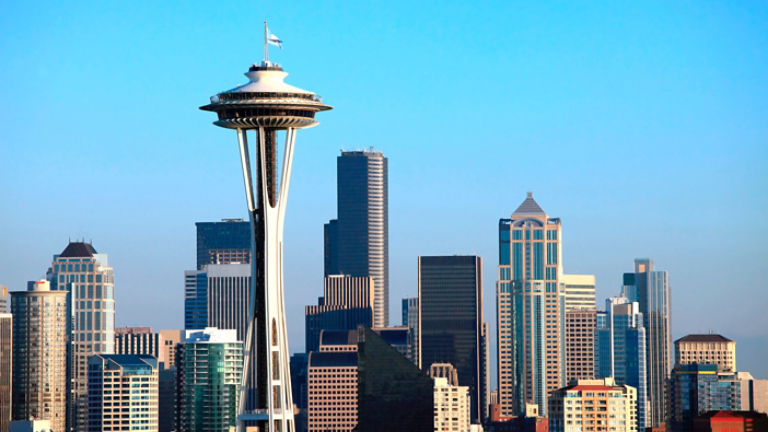
- Seattle, Washington
- Products
- ACX • RTWD
- Topics
- Sustainability • Electrification • Energy Efficiency
- Services
- HVAC Controls
Results
- 25% Reduction in Energy Use
- 2 Additional Floors Of Space Gained Through Performance Incentives
- 1st Design-of-Its-Kind In Washington State
Highlights
- Innovative, fully-electric HVAC system delivers both heating and cooling from one integrated platform.
- Project recognized as an NAIOP Sustainability Award finalist.
- Trane’s first Living Building Petal Certified project in the region.
The Challenge
Seattle is known for setting some of the nation’s most ambitious building performance standards, designed to drive measurable progress toward the city’s climate goals. When plans for a large-scale, sustainable mixed-use development project began, the team saw an opportunity to go beyond compliance and demonstrate what true sustainability could look like.
The goal was for the five-story, 103,000 square foot office building to be capable of meeting requirements defined by Seattle’s Living Building Challenge, one of the city’s highest benchmarks for sustainability and environmental performance.
MacDonald Miller Facility Solutions, the mechanical partner on this project, turned to Trane to deliver an all-electric HVAC system; the first of its kind in Washington State. Working alongside the developer, architect, engineer, and contractor, the team created a high-performing, all-electric building that would meet the city’s strict standards and set a new precedent for sustainable mixed-use development in Seattle.
The Solution
Building on Trust and Innovation
MacDonald Miller’s longstanding relationship with Trane was built on a foundation of open communication, trust, and a shared focus on innovation. Trane engineers recommended an innovative configuration that combined a Trane ACX air to water heat pump with a Trane RTWD heat recovery chiller, creating a unified platform capable of delivering simultaneous heating and cooling as they worked toward the rigorous Living Building Challenge certification requirements. The air source heat pump, installed on the roof to free up valuable space, worked in tandem with the indoor chiller to provide comfort throughout the building year-round while eliminating fossil fuel use. In addition to being efficient, the solution demonstrated that fully electric systems could perform reliably in the Pacific Northwest’s mild but variable climate.
Commitment to Transparency
Living Building Challenge certification requires detailed documentation of every component used within the HVAC system. Trane’s engineering and product management teams worked closely with MacDonald Miller to trace materials through a complex supply chain and verify compliance at every level. Avoiding Red List chemicals was a critical part of that process. These substances are commonly found in building materials and can pose risks to human health and the environment. As Marisa Zylkowski, Sustainable Design Manager at MacDonald Miller, explained, “Trane’s transparency and responsiveness made it possible to achieve a level of documentation that had never been attempted before.” This coordinated effort across disciplines ensured that performance, materials, and documentation goals aligned, helping the project meet multiple Living Building Challenge requirements while maintaining architectural integrity and cost effectiveness.
Working Together Toward a Common Goal
Consistent coordination among MacDonald Miller, Trane, and the design and construction teams ensured that every decision helped move the team toward their shared goal. By meeting various Living Building Challenge standards, the developer qualified for two additional floors of rentable space without expanding the footprint. That incentive not only offset costs but also demonstrated that sustainability can drive business performance. The completed building incorporates biophilic design elements that enhance occupant well-being and a 250,000-gallon rainwater collection system. The building envelope, architectural design, and mechanical systems all work together as a single ecosystem that reflects the Living Building Challenge philosophy of creating structures that help make the world a better place.
The Results
The project achieved a 25% reduction in energy use and full compliance with materials standards, officially becoming Trane’s first Living Building Petal Certified project in the region. The outcome validated the technical and collaborative approach taken by the entire team. The cutting-edge, fully electric, integrated Trane system has since become the regional standard for high performance with the same configuration replicated in multiple developments across the Pacific Northwest, proving both its scalability and reliability.
The project won the prestigious Seattle/Bellevue WA 2030 District Vision Award for Water Vision in 2026, was recognized as a NAIOP Sustainability Award finalist, and continues to influence policy conversations about how local incentive programs can accelerate electrification and materials transparency. Stephen Forner, Trane Account Manager, reflected, “This effort transformed what once seemed experimental into the everyday expectation for sustainable design.” The lessons learned through this project are now shaping how design teams across the region pursue decarbonization initiatives, while showing that determination, collaboration, and transparency can turn ambitious goals into measurable progress.