Skip to content
Select Your Language

Selecting a language changes the language and content on the Trane site.

  • United States English
  • Canada English French
  • Argentina Spanish
  • Mexico Spanish
  • Brazil Portuguese
  • Aruba English
  • Bahamas English
  • Belize English
  • Bermuda English
  • Bolivia Spanish
  • Bonaire English
  • Chile Spanish
  • Colombia Spanish
  • Costa Rica Spanish
  • Dominican Republic Spanish
  • Ecuador Spanish
  • El Salvador Spanish
  • Grenada English
  • Guadeloupe English
  • Guatemala Spanish
  • Guyana English
  • Haiti English
  • Jamaica English
  • Martinique English
  • Netherland Antilles English
  • Nicaragua Spanish
  • Panama Spanish
  • Paraguay Spanish
  • Peru Spanish
  • Puerto Rico Spanish
  • Saint Lucia English
  • St. Vincent & Grenadines English
  • Suriname English
  • Trinidad & Tobago English
  • Venezuela Spanish
  • Armenia English
  • Austria German
  • Azerbaijan English
  • Belgium French Dutch English
  • Croatia Croatian
  • Czech Republic Czech
  • Denmark English
  • Estonia English
  • Finland English
  • France French
  • Georgia English
  • Germany German
  • Greece Greek
  • Hungary Hungarian
  • Israel English Hebrew
  • Ireland English
  • Italy Italian
  • Kazakhstan English
  • Kyrgyzstan Russian
  • Latvia English
  • Lithuania English
  • Luxembourg French German
  • The Netherlands Dutch
  • Norway English
  • Poland Polish
  • Portugal Portuguese
  • Romania Romanian
  • Serbia English
  • Slovakia Czech
  • Slovenia English
  • Spain Spanish
  • Sweden Swedish
  • Switzerland French German Italian
  • Turkey Turkish
  • Ukraine English
  • United Kingdom English
  • Tajikistan Russian
  • Turkmenistan Russian
  • Uzbekistan Russian
  • United Arab Emirates English
  • Qatar English
  • Kuwait English
  • Egypt English
  • Lebanon English
  • China Simplified Chinese English
  • Korea, Republic of (South Korea) Korean English
  • Vietnam Vietnamese English
  • India English
  • Australia English
  • Japan Japanese
  • Guam English
  • Thailand Thai English
  • Taiwan Traditional Chinese English
  • Hong Kong SAR English
  • Indonesia English
  • Malaysia English
  • Philippines English
  • Singapore English
  • New Zealand English

ComfortSite Login

Trane ComfortSite is an extranet site designed to save you time. With your secure login, you can:

  • Order Equipment, Parts, Literature and track Order Status
  • View product literature
  • Register for Training programs
  • Complete Warranty requirements online
  • Search for specific Product Information
  • Use interactive Product Support functions
  • View and print invoices through Account Track Online
  • and More
Log In

Trane Connect

This is the login for Trane® Connect™ and other Trane® commercial applications. Trane® Connect™ is our secure, cloud-based customer portal to access your building systems to remotely monitor and manage building systems, and conduct routine maintenance.

Log In
Trane Commercial
  • Products
    • Products

    • Air Handling
      • Air Handling
      • Performance Air Handlers
      • Air Handlers for Data Centers
      • Variable-Air-Volume Units
      • Terminal Units
      • Air Rotation Units
      • Terminal Units
      • Unit Heaters
    • Chillers
      • Chillers
      • Air-Cooled Chillers
      • Chiller Heaters
      • Modular Chillers
      • Process Chillers
      • Water-Cooled Chillers
    • Design & Analysis Software
      • Design & Analysis Software
      • TRACE®
      • Trane® Design Assist™
      • myC02e™
      • myPLV®
      • Trane® Select Assist™
      • System Analyzer
    • Heat Pumps
      • Heat Pumps
      • Heat Pump Chillers
      • Domestic Hot Water Heat Pump
    • Liquid Cooling Systems
      • Liquid Cooling Systems
      • Coolant Distribution Unit (CDU)
    • Packaged Units & Split Systems
      • Packaged Units & Split Systems
      • Dedicated Outdoor Air Units
      • Rooftop Units
      • Self-Contained Units
      • Split Systems
      • Water Source Heat Pumps
    • Thermal Energy Storage
      • Thermal Energy Storage
      • Thermal Battery Systems
      • Thermal Energy Storage Solutions
    • Trane Drives
      • Trane Drives
      • TR200 Variable Frequency Drive
    • Smart Buildings
      • Smart Buildings
      • AI Solutions
      • Building Control Solutions
      • Cybersecurity
      • Digital Technology
      • Equipment Controls
      • Systems Integration
    • Systems
      • Systems
      • Comprehensive Heat Pump Chiller Systems
      • Comprehensive Chilled Water Systems
      • CoolSense Systems
      • Geothermal Systems
      • Indoor Agriculture System
      • Intelligent VAV Systems
      • Thermal Battery Systems
      • VRF Systems
      • Zoned Rooftop Systems
  • Services
    • Services

    • Optimization
      • Optimization
      • Energy Efficiency
      • Controls Upgrades
      • HVAC Upgrades
    • Repair & Maintain
      • Repair & Maintain
      • Controls System Maintenance
      • HVAC Maintenance
      • HVAC System Repair
      • Warranty
    • Rentals
    • Sustainability & Resiliency
      • Sustainability & Resiliency
      • Decarbonization Solutions
      • Resiliency Solutions
    • Whole Building Solutions
      • Whole Building Solutions
      • Building Modernization
      • Energy Services
  • Education & Training
    • Education & Training

    • Education & Training
      • Education & Training
      • Trane University
      • Design & Analysis Tools Training
      • Engineers Newsletters & Engineers Newsletters Live!
    • Roles
      • Roles
      • Engineers
      • Contractors
      • Facility Managers
  • Industries
    • Industries

    • Commercial Real Estate
    • Data Centers
    • High Tech
    • Industrial
    • National Accounts
  • About
    • About

    • About Us
    • Contact Us
    • Locate a Sales Office
    • Trane Newsroom
    • Customer Stories
    • Trane Blog
    • Events & Webinars
    • Press Releases
    • ComfortSite Login
    • Trane Connect
      • North America

      • United States English
      • Canada English French
      • Latin America

      • Argentina Spanish
      • Mexico Spanish
      • Brazil Portuguese
      • Aruba English
      • Bahamas English
      • Belize English
      • Bermuda English
      • Bolivia Spanish
      • Bonaire English
      • Chile Spanish
      • Colombia Spanish
      • Costa Rica Spanish
      • Dominican Republic Spanish
      • Ecuador Spanish
      • El Salvador Spanish
      • Grenada English
      • Guadeloupe English
      • Guatemala Spanish
      • Guyana English
      • Haiti English
      • Jamaica English
      • Martinique English
      • Netherland Antilles English
      • Nicaragua Spanish
      • Panama Spanish
      • Paraguay Spanish
      • Peru Spanish
      • Puerto Rico Spanish
      • Saint Lucia English
      • St. Vincent & Grenadines English
      • Suriname English
      • Trinidad & Tobago English
      • Venezuela Spanish
      • Europe

      • Armenia English
      • Austria German
      • Azerbaijan English
      • Belgium French Dutch English
      • Croatia Croatian
      • Czech Republic Czech
      • Denmark English
      • Estonia English
      • Finland English
      • France French
      • Georgia English
      • Germany German
      • Greece Greek
      • Hungary Hungarian
      • Israel English Hebrew
      • Ireland English
      • Italy Italian
      • Kazakhstan English
      • Kyrgyzstan Russian
      • Latvia English
      • Lithuania English
      • Luxembourg French German
      • The Netherlands Dutch
      • Norway English
      • Poland Polish
      • Portugal Portuguese
      • Romania Romanian
      • Serbia English
      • Slovakia Czech
      • Slovenia English
      • Spain Spanish
      • Sweden Swedish
      • Switzerland French German Italian
      • Turkey Turkish
      • Ukraine English
      • United Kingdom English
      • Tajikistan Russian
      • Turkmenistan Russian
      • Uzbekistan Russian
      • Middle East

      • United Arab Emirates English
      • Qatar English
      • Kuwait English
      • Egypt English
      • Lebanon English
      • Asia Pacific

      • China Simplified Chinese English
      • Korea, Republic of (South Korea) Korean English
      • Vietnam Vietnamese English
      • India English
      • Australia English
      • Japan Japanese
      • Guam English
      • Thailand Thai English
      • Taiwan Traditional Chinese English
      • Hong Kong SAR English
      • Indonesia English
      • Malaysia English
      • Philippines English
      • Singapore English
      • New Zealand English
  • Air Handling
  • Performance Air Handlers
  • Air Handlers for Data Centers
  • Variable-Air-Volume Units
  • Terminal Units
  • Air Rotation Units
  • Terminal Units
  • Unit Heaters
  • Chillers
  • Air-Cooled Chillers
  • Chiller Heaters
  • Modular Chillers
  • Process Chillers
  • Water-Cooled Chillers
  • Heat Pumps
  • Heat Pump Chillers
  • Domestic Hot Water Heat Pump
  • Thermal Energy Storage
  • Thermal Battery Systems
  • Thermal Energy Storage Solutions
  • Packaged Units & Split Systems
  • Dedicated Outdoor Air Units
  • Rooftop Units
  • Self-Contained Units
  • Split Systems
  • Water Source Heat Pumps
  • Trane Drives
  • TR200 Variable Frequency Drive
  • Systems
  • Comprehensive Heat Pump Chiller Systems
  • Comprehensive Chilled Water Systems
  • CoolSense Systems
  • Geothermal Systems
  • Indoor Agriculture System
  • Intelligent VAV Systems
  • Thermal Battery Systems
  • VRF Systems
  • Zoned Rooftop Systems
  • Design & Analysis Software
  • TRACE®
  • Trane® Design Assist™
  • myC02e™
  • myPLV®
  • Trane® Select Assist™
  • System Analyzer
  • Liquid Cooling Systems
  • Coolant Distribution Unit (CDU)
  • Smart Buildings
  • AI Solutions
  • Building Control Solutions
  • Cybersecurity
  • Digital Technology
  • Equipment Controls
  • Systems Integration
  • Optimization
  • Energy Efficiency
  • Controls Upgrades
  • HVAC Upgrades
  • Sustainability & Resiliency
  • Decarbonization Solutions
  • Resiliency Solutions
  • Repair & Maintain
  • Controls System Maintenance
  • HVAC Maintenance
  • HVAC System Repair
  • Warranty
  • Whole Building Solutions
  • Building Modernization
  • Energy Services
  • Rentals
  • Education & Training
  • Trane University
  • Design & Analysis Tools Training
  • Engineers Newsletters & Engineers Newsletters Live!
  • Roles
  • Engineers
  • Contractors
  • Facility Managers
  • Commercial Real Estate
  • Data Centers
  • High Tech
  • Industrial
  • National Accounts
  • About Us
  • Contact Us
  • Locate a Sales Office
  • Trane Newsroom
  • Customer Stories
  • Trane Blog
  • Events & Webinars
  • Press Releases
Find Trane Rep

Blog

Published: February 27, 2017

New York Releases Plan for Distributed Resources

In late January, the New York Independent Service Operator (NYISO) released its updated Distributed Energy Roadmap. This document aims to address many of the concerns around...

New York Releases Plan for Distributed Resources

By: Trevor Sutherland

February 27, 2017

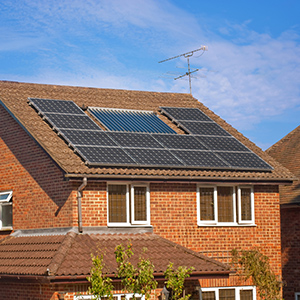
Solar panels on house roof

In late January, the New York Independent Service Operator (NYISO) released its updated Distributed Energy Roadmap.  This document aims to address many of the concerns around distributed energy resources (DER) and explain how it sees their incorporation into the wholesale electricity market.  Given the growth of renewable resources and micro-grids, NYISO sees distributed resources as an essential part of the power system that still is not addressed in current rules.

What are DER?

DER are small resources that can be aggregated to provide power and load to the larger energy infrastructure. NYISO sees them mainly as “behind-the-meter generation,” though Community Distributed Generation is also a priority.  Behind-the-meter generation references factories and buildings that can produce some or all of their own energy needs, while Community Distributed Generation encompasses small, neighborhood level micro-grids.

DER are not by definition renewable, but low-cost solar panels are driving both the need-for and capability-of distributed systems.  That said, much of the Roadmap deals with “dispatchable DER,” meaning resources that can be called upon by system operators to provide services to the larger power system as needed.  The rational for this is twofold: the presence of small-scale dispatchable resources like diesel generators and low-cost energy storage like batteries and thermal storage.

What do DER do?

The Roadmap classifies DER products into three categories, similar to traditional generators: energy, ancillary services, and capacity.  Energy provides power for the system, ancillary services provide the underlying support needed to transmit that power, and capacity provides extra power in times of extremely high load.

Under the NYISO system, there would be no minimum size of an individual distributed resource, though to participate in the wholesale markets, resources must be aggregated into blocks of at least 100 kW.  Aggregations of between 100 kW and 1 MW (1,000 kW) generation capability would only be allowed to sell energy, while those larger than 1 MW would be allowed to sell energy as well as capacity and ancillary services.

Why are DER complicated?

Historically, utilities functioned as closed systems not only for financial reasons but also because that was the most reliable way to operate.  As technology advanced, it allowed for the creation of the market-based distribution system that provides power for many Americans.  When this integration occurred, coordination and communication between peers and those around you in the distribution system became essential.  Independent service operators (ISOs) were created to supervise this system as a neutral operator.

To run their grid, an ISO must know the status of every part of the system at any given time.  The voltage on every wire, output of every generator, and the amount of load going to every point must be known to maintain reliability.  This information is then used to make real-time decisions and a network of computer pulses, internet interfaces, and phone calls make adjustments and distribute information to other parties.  DER complicate this system.

First, the number of resources goes up exponentially.  More non-dispatchable resources create the need for more resources that can either dynamically increase their load or store this excess energy as surges occur until more traditional generators can be adjusted to accommodate the new conditions.  These devices then must be managed as well as those that necessitated their build out.

Second, our current power grid is not set up for distributed resources.  How substations are thought of, modeled, and set up will have to be changed.  Also, how we pay for electricity will have to change, because with distributed resources the fixed costs of the power system (physical wires and human capital) will become more important than the power delivered.

Third and lastly, restarting the system after a blackout becomes more complex.  The current practice is to maintain regional generators that require no input power to restart local systems. From there the ISO will coordinate a series of rehearsed actions in which loads and generation facilities are balanced as they are brought online.  Distributed resources create more moving pieces. Even though smaller areas may be re-energized sooner, they are harder to synchronize to the larger system.

What does a DER based system look like?

In the Distributed Energy Resources Roadmap, NYISO tries to address the complications that will inevitably arise and create an open discussion around them.  As this is its second iteration, the current version of the roadmap represents an evolution of thinking about how we structure a power grid, though what is emerging is a system that is similar to the one we have today.

Complexity is managed through several mechanisms.  First, by setting minimum aggregate levels and only allowing those aggregate resources (called DER Co-ordination Entities, or DCEs) to directly participate in the market, the number of resources is controlled.  It also sets minimum standards of monitoring equipment that will be needed at each site to ensure that the ISO accurately understands current operating conditions.  Implied in these measures is that a similar level of training to other stakeholders will be required and provided for these DCEs, as they will be active market participants.

Second, NYISO creates a category of DER that is only capable of providing dynamic load.  This is a similar in concept to demand response, a service in which buildings are paid for either increasing or decreasing their load in accordance with the needs of the system.  As load can be adjusted faster than generation, dynamic load will be just as important as generation in a distributed system.  Additionally this is also why the Roadmap addresses “distributed resources” and not “distributed generation”; both are needed.

Third, the Roadmap tries to envision what the infrastructure that would support a distributed system would look like.  This will likely guide investments made in the coming years in the transmission and distribution sectors, especially in substation designs.  Once these designs become more discussed and refined, the conversations on system restoration can begin.

Conclusions

Distributed power systems are possible given current technology and economics but proper implementation will require thorough planning and flexibility to try new ideas.  By releasing the Roadmap, NYISO is putting itself in front of this conversation.  Though it is admittedly a work-in-progress, by creating a planned transition New York hopes to create a system that fosters innovation and efficiency. 

Looking For Parts?

Visit Trane Supply

For General and Corporate Questions:

Contact Us
  • Energy and Building Services
  • Products and Systems
  • Education & Training
  • Newsroom
  • About Us
  • Contact Us
  • Indoor Environmental Quality
  • Locate a Sales Office
  • Engineering Support
  • Contractor Support
  • Careers
  • Environmental Compliance
  • Quality
  • Ethical Business Conduct
  • Supplier Terms
  • Safety Data Sheets
  • LinkedIn
  • YouTube

Privacy Policy English | French 
Terms of Use English | French

All trademarks referenced are the trademarks of their respective owners.

© 2025 Trane. All Rights Reserved.

Trane Technologies