Your Top Home Heating and Cooling Questions, Answered
Key takeaways:
• For many common questions, the answer depends on you and your priorities.
• Understanding HVAC efficiency metrics can help you understand replacement options.
• Working with a licensed and trusted local HVAC company can bring peace of mind.
By Anne Fonda
What does HVAC stand for?
HVAC is the acronym for Heating, Ventilation, and Air Conditioning. A residential HVAC system can be a:
- Split system with an indoor unit paired with an outdoor unit
- Packaged system with the heating and cooling elements in one outdoor packaged unit.
- A ductless mini-split system.
Further reading:
How often should you change your furnace filter?
In general, you should replace your furnace filter/HVAC filter every 30-90 days. How often you should replace it will depend on the quality of the filter, if you have pets, if it’s pollen season, and more.
Further reading:
- HVAC Filter Maintenance Guide
- Furnace Filter Replacement Tips
- Filters by Number: MERV8 vs MERV11 vs MERV13
- 8 HVAC Air Filter Myths, Debunked
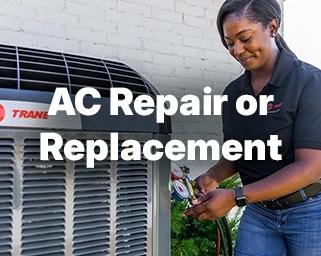
Is HVAC repair or HVAC replacement the right choice?
The right choice for you may not be the right choice for your neighbor. Making the repair vs replacement choice depends on several factors, including:
- The age and condition of the system
- The cost of the proposed repair
- Whether repairs have become more frequent and more costly
- Your financial situation
- And more
“My advice to anyone who may have an aging system that requires frequent repairs is to consider replacing the whole system versus just one component. Typically, with an older system, the technology has become obsolete, and new parts are not completely compatible with older systems.”
-Kimberly Sexton, Senior Systems Engineer, Trane Technologies
Get some tips on making this decision in our Repair or Replace Guide. We would also recommend getting multiple estimates/second and third opinions if an HVAC technician pressures you to replace your system. We know you want to get the most life you can out of your current system.
Further reading:
- HVAC Repair Resource Guide
- HVAC Replacement Resource Guide
- 4 Signs It May Be Time for AC Replacement
- 5 Warning Signs It May Be Time for Heat Pump Replacement
- 5 Warning Signs It’s Time for Furnace Replacement
How long do HVAC systems last?
Here’s the general answer.
- Central air conditioners should last +/- 15 years.
- Heat pumps should last +/-15 years.
- Furnaces should last +/-20 years
Those plus or minus marks have to do with maintenance and installation. A correctly installed and well-maintained system can last longer than average, while a poorly installed and poorly maintained system can have a shorter than average lifespan.
A system that runs hard in extreme temperatures can also have a shortened lifespan.
What is SEER2?
SEER2 stands for Seasonal Energy Efficiency Ratio. It measures how efficient an air conditioner or heat pump is at cooling your home over an entire season. The higher the SEER2 rating, the more efficient the air conditioning system is at cooling and dehumidifying your home.
Further reading:
What is HSPF2?
HSPF2 stands for Heating Seasonal Performance Factor. It’s a heat pump efficiency metric that measures a heat pump’s effectiveness at heating your home. The higher the HSPF2, the more efficient the unit is at heating.
Further reading:
What is AFUE?
AFUE stands for Annual Fuel Utilization Efficiency. It measures how efficient a furnace is at turning fuel (most commonly natural gas) into heat. The higher the AFUE rating, the more efficient the furnace is.
“A high-efficiency furnace makes sense in regions with colder climates and higher utility costs. These furnaces use less gas to produce the same amount of heat, which translates to lower energy bills for homeowners.”
-Amy Gulas, Senior Furnace Product Manager
Further reading:
Are energy-efficient HVAC systems worth the extra cost?
Again, there is no one-size-fits-all answer. Multi-speed or variable speed HVAC units with higher SEER2, HSPF2, or AFUE ratings will come with a higher upfront price tag than their less efficient counterparts. However, they will have lower long-term operating costs when compared to lower efficiency single-stage units.
That’s because single-stage units are either running at 100% or they’re off. This can result in hot or cold spots and humidity issues. Multi-speed and variable speed units run at lower speeds for longer, offering better comfort control and energy efficiency.
Whether enhanced comfort and lower energy costs in the future are worth the extra cost upfront is a personal decision.
Further reading:
- 3 Ways Energy-Efficient AC Systems Keep You Cool and Save You Money
- Is a High-Efficiency Furnace Worth the Cost?
- Variable Speed vs Multi-Speed vs Two-Stage vs Single-Stage
What size HVAC system do I need?
Every home is different. And if you’ve made energy-efficient home improvements such as insulating or replacing windows, the new HVAC system you need may not be the same size as your existing system. This is why it is so important that any HVAC contractor interested in replacing your HVAC system should perform a load calculation for proper system sizing.
“Beware of dealers who don’t perform load calculations and rely either on very basic rules of thumb or just want to replace your system with whatever you currently have. Those are usually signs that you should find a better dealer.”
- Mark Woodruff, Senior Product Manager, Air Conditioners
They should also check out your existing ductwork to see if it needs to be repaired, replaced, or modified to enhance the efficiency of your new system.
What does a new HVAC system cost?
The cost to install a new HVAC system can range from approximately $10,000 to $40,000. More efficient systems with a larger capacity will cost more than a less efficient, smaller capacity system. Your cost may be slightly less than the base price, depending on the system you choose and where you live. Your cost will be higher if you need to replace or upgrade your ductwork.
Your best bet to get accurate pricing information for your home is to get three estimates from local HVAC companies. See our recently updated Pricing Guide for information on the cost of a Trane HVAC system.
Further reading:
- HVAC Replacement: A Homeowner’s Guide
- AC Replacement: A Buying Guide
- Heat Pump Replacement: A Buying Guide
- Furnace Replacement: A Buying Guide
- How Does HVAC Financing Work?
How do I find the best HVAC company near me?
Finding the right HVAC company is like finding the right mechanic or roofing contractor. You need to do your homework, ask for recommendations, tips on who to avoid, read reviews, compare services, compare pricing, and more. Read our blog How to Find the Best HVAC Service Near Me for some tips.
Make an informed decision
Whether you are investigating HVAC repair, HVAC replacement, or HVAC maintenance, it pays to do your research before hiring an HVAC company. Our goal is to help educate homeowners on various home heating and cooling topics so that you can make the best decision for your home comfort and budget.
You can find answers to more common questions by visiting our Learning HVAC hub.
Work with trained and experienced HVAC professionals
Your local Trane dealer has specialized training in HVAC system design, HVAC installation, HVAC repair, and HVAC maintenance of Trane systems, as well as maintenance and repair of other brands. Reach out today for help.
Anne Fonda, Content Writer
A Content Writer with Trane Technologies, Anne Fonda researches topics and writes for Trane® and associated residential HVAC brands. She works in collaboration with Trane Technologies subject matter experts, offering easy-to-understand, informative content on complex topics. Her goal is to help consumers make informed decisions on the products and services they need.
She has written for HVAC and other service provider websites for over 16 years. Before transitioning to web content writing, Anne had a 14-year stint as an award-winning journalist. She graduated cum laude from the University of Missouri-Columbia School of Journalism.
When she’s not working, Anne enjoys playing word games, reading, gardening, spending time with family, and visiting gardens and museums.
Expert review by Mark Woodruff, Senior Product Manager, Air Conditioners; and Kimberly Sexton, Senior Systems Engineer
Related Articles