Heat Pump Installation Guide for Homeowners
By Anne Fonda with expert review by Chelsea Hudson, Product Manager, Ducted Heat Pumps
Summary: With proper system sizing and quality installation, an energy-efficient heat pump system can keep your home comfortable and save you money on heating and cooling costs for years to come.
How does the heat pump installation process work?
A successful heat pump installation requires careful planning well before installation day. Important considerations include:
- Size and capacity: A heat pump that's too small or too large can lead to inefficient operation and decreased comfort. Proper sizing is crucial for system performance.
- Energy efficiency: Look for high SEER2 and HSPF2 ratings to provide energy-efficient heating and cooling.
- Climate: Your climate will determine the type of heat pump best suited for heating and cooling your home. Learn about cold climate heat pumps.
- Electrical system: Heat pumps may require a dedicated electrical circuit or circuit panel upgrades, depending on what you have now.
- Ductwork: Your HVAC contractor should assess your existing ductworkfor leaks, sizing, and heat pump compatibility. In some cases, modifications may be needed.
- Installation location: Proper placement of indoor and outdoor units is essential for performance and maintenance access.
- Noise level: If the heat pump will be installed under a bedroom window or near a deck or patio, selecting a quieter model may be a priority.
- Installation costs: Factors like system type, labor, and needed upgrades can influence total installation cost.
- Incentives and rebates: You may qualify for savings that help offset installation costs. Explore savings.
- HVAC financing: Flexible financing plans help make a new system more affordable.
“Choosing the right heat pump is like picking the perfect pair of shoes – look for one that fits your home’s size, climate, and comfort needs. The best heat pump keeps you cozy when it’s cold, cool when it’s hot, and helps save energy all year long. If you’re not sure which features matter most, lean on your local Trane Dealer for guidance!”
-Chelsea Hudson, Product Manager Variable Speed Outdoor
Heat pump installation process from beginning to end
What size heat pump do I need?
Let’s turn to one of our experts, Mark Woodruff, Senior Product Manager, Ducted Air Conditioners.
“The only way to know for sure is to have a load calculation performed on your home, which is a process done by an HVAC installer. The load calculation will take into account your home’s construction, the amount of insulation that you have, window efficiency (for example, single pane windows vs double pane), square footage, and your local weather to figure out what size system you need.”
-Mark Woodruff, Senior Product Manager, Ducted Air Conditioners
He also cautioned against working with a dealer who cuts corners. “Beware of dealers who don’t perform load calculations and rely either on very basic rules of thumb or just want to replace your system with whatever you currently have. Those are usually signs that you should find a better dealer.”
What energy efficiency ratings should I look for?
Heat pumps have separate efficiency ratings for heating and cooling.
For cooling, look for a high Seasonal Energy Efficiency Ratio (SEER2) rating. SEER2 measures the unit’s cooling efficiency over a range of temperatures during the entire cooling season. If you live in an area with hot summers and a mild winter, the SEER2 rating may be most important.
For heating, look for a high Heating Seasonal Performance Factor (HSPF2). HSPF2 measures the heat pump’s heating efficiency. If you live in an area with colder winters and milder summers, the heat pump’s HSPF2 rating may be more important.
How do I choose the right heat pump?
By working closely with your dealer. After assessing your home and performing a load calculation, assessing your ductwork and electrical systems, and speaking with you about your home comfort needs and any existing pain points, they will recommend several solutions. They should also explain the pros and cons of each.
What does heat pump installation cost?
Heat pump installation prices will vary depending on several factors, including:
- Heat pump efficiency
- Number of compressor speeds (single-stage, multi-speed, variable speed)
- If it’s a standard heat pump or cold climate heat pump
- Whether you pair it with an air handler or gas furnace
- If you have leaky ductwork that needs to be repaired or replaced
- Complexity of the installation (simple heat pump replacement or conversion)
- If you qualify for heat pump rebates
Keep in mind that the more efficient a heat pump is, the more it will cost upfront. But it can also mean long-term savings on your heating and cooling bills.
Every home is different. The best way to get firm numbers for your heat pump installation is to get multiple estimates. Visit our Pricing Guide for more details on Trane heat pump installation. In addition, explore your HVAC financing options.
What is included in heat pump installation?
Trane heat pump installation will typically include:
- Delivery and labor costs
- Removal and disposal of the old HVAC unit(s)
- New thermostat
- Refrigerant line flush or new line set installation
- Electrical work
- New condenser pad
Any ductwork repair or new installation will be a separate cost.
How long does heat pump installation take?
Generally, installing a heat pump can be accomplished by an experienced HVAC technician in 4-8 hours. A few factors that can affect how long your installation takes include:
- Type of System: An all-electric heat pump system replacement may be faster to install than a dual-fuel heat pump system with a gas furnace.
- Existing Ductwork: If you need ductwork repair, ductwork replacement, or additional ductwork, it can add time to the installation. An HVAC company might send more than one technician to your home.
- Weather: Severe weather conditions, such as a thunderstorm or heavy snow, can impact the outdoor work and potentially delay the installation process.
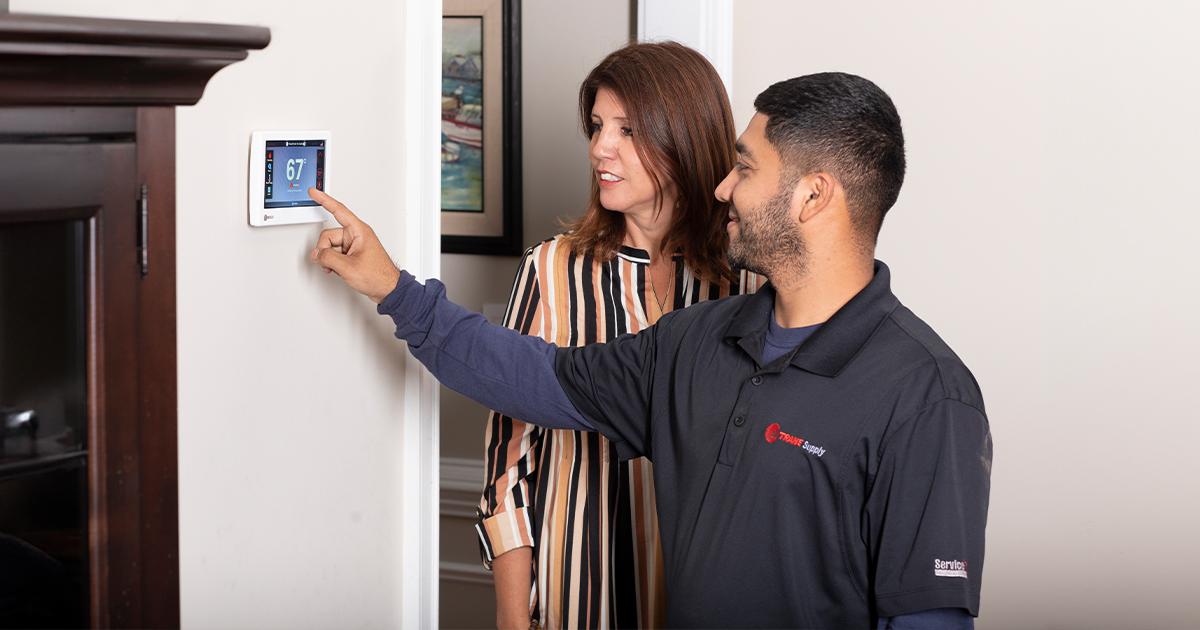
Step 3: Owner education and ongoing maintenance
Before they leave your home, the HVAC technician will discuss your new system with you, show you how to use your new thermostat, and go over what you can expect from your heat pump system. If you are new to heat pumps, you may want to visit our Electrification Hub for some general information.
How do I know if my heat pump was installed correctly?
A flawless installation should provide you with:
- Even heating and cooling throughout your home
- Quiet operation
- Energy savings
If you experience uneven heating or cooling, hear strange noises from the unit, have unexpectedly high energy bills, or experience other negative results, you’ll need to call the heat pump installer back to fix the problem. You can help ensure proper installation by working with a factory-certified Trane dealer. Technicians also now have access to the Technician App, which provides step-by-step installation and commissioning.
You should know that regular heat pump maintenance will help keep your new system operating at peak performance. Ask your installer if they have an HVAC maintenance plan, and what it includes. Most plans can help you save money on maintenance and repair costs.
Why choose a Trane heat pump?
“Everything you’ve heard as a negative about heat pumps – we’ve fixed them and made them better. We have intelligence in our systems so that we can control the delivered air to always keep it in the comfort range.”
-Jason LeRoy, Director of Advanced Technology, Trane Residential
- Trane is an industry leader with 60 years of experience making heat pumps a reliable heating and cooling solution.
- Earned America’s Most Trusted® HVAC Brand title 12 years in a row.
- Recognized by Good Housekeeping for performance, efficiency, and reduced energy costs.
- The majority of homeowners who have recently purchased a Trane heat pump would recommend it to others. (Check out the reviews on each product page for details.)
Why choose a Trane dealer to install your heat pump system?
Trane Comfort Specialists are experienced, factory-authorized independent dealers who are experts in sizing, installing, and maintaining Trane HVAC systems. They are committed to customer satisfaction.
What steps should I take on installation day?
STEP 1
Prep your space
- Keep your pets confined.
- Clear the entryway of rugs, artwork on the walls, etc.
- Clear away boxes or other items from the indoor unit.
STEP 2
Be responsive
- Toggle off the Unknown Callers feature on your phone.
- Answer calls from unknown numbers. It may be the HVAC tech telling you they’re on the way.
- Plan to be home for the duration of installation and system testing.
STEP 3
Ask questions
- The heat pump installers will show you how to use the thermostat for your new heat pump system.
- Ask questions to make sure you understand everything before they pack up and leave.
- Consider signing up for a maintenance plan.
Related Articles


Anne Fonda, Content Writer
A Content Writer with Trane Technologies, Anne Fonda researches topics and writes for Trane® and associated residential HVAC brands. She works in collaboration with Trane Technologies subject matter experts, offering easy-to-understand, informative content on complex topics. Her goal is to help consumers make informed decisions on the products and services they need.
She has written for HVAC and other service provider websites for over 16 years. Before transitioning to web content writing, Anne had a 14-year stint as an award-winning journalist. She graduated cum laude from the University of Missouri-Columbia School of Journalism.
When she’s not working, Anne enjoys playing word games, reading, gardening, spending time with family, and visiting gardens and museums.