Is This Normal? HVAC Smells and Sounds, Explained
Key takeaways:
• Strange HVAC smells could be normal, but are more likely a sign of trouble.
• Loud and unusual HVAC noises usually indicate you need HVAC repair.
• While you can troubleshoot an issue, only an HVAC professional should perform HVAC repair.
By Anne Fonda
During normal operation, your heating and air conditioning system should neither smell nor make odd noises beyond the humming or normal startup and shutdown sounds. In this article, we’ll go over some of the odors you might smell and the sounds you might hear, and what they might indicate.
As always, work with an HVAC professional to pinpoint a problem and provide the solution.
HVAC smells
“Any time your HVAC system produces an unusual smell or sound, it’s your system’s way of signaling that something isn’t right. Many of these issues involve electrical components, gas connections, or refrigerant; all of which can create safety hazards if handled incorrectly. ”
- Kimberly Sexton, Senior Systems Engineer

A trained HVAC professional has the tools and expertise to diagnose the problem safely and prevent further damage or risk to your home.
A musty smell, burning smell, rotten egg smell, and a skunk-like smell are common issues. Learn more below.
1. Your HVAC smells musty
When your HVAC system is running, and you smell a musty odor from the vents, that’s not normal. Also known as Dirty Sock Syndrome, this smell can be caused by mold and mildew buildup in your ductwork or on your evaporator coil, or in another area of your HVAC system. Some people think it smells like vinegar.
The first thing you should do is check your air filter. If it’s dirty or wet, change it. You’ll need to consult with an HVAC professional to get to the root of the problem. Solutions might include duct cleaning, cleaning the indoor coil, checking the condensate line and drain pan, and more.
Learn about how to prevent mold in your HVAC system.
2. There’s a burning smell from the HVAC system
If your HVAC smells like burning toast the first time you turn on the heating system, it is most likely simply accumulated dust and debris burning off, and the smell should go away in 10-15 minutes.
However, if you smell a burning electrical smell or a burning plastic smell at the indoor or outdoor unit, shut off your HVAC system and call for repairs.
3. HVAC smells like rotten eggs
This could indicate a natural gas leak. Natural gas is odorless. For safety reasons, gas companies add a chemical called mercaptan to give it a pungent, unpleasant smell. If you smell rotten eggs near your furnace or elsewhere in your home, you likely have a gas leak. Leave immediately. Call the gas company from outside.
They will turn off the gas to your home, locate the leak, and tell you what needs to be done. A gas leak could be traced to your gas furnace, gas water heater, gas fireplace, or gas stove.
4. HVAC smells like skunk
If you smell something like a skunk smell coming from your HVAC system, beware. Causes of this smell can include:
- Gas leak. Natural gas is odorless, but gas companies add a chemical to make it smell like sulfur or rotten eggs. Some people say it smells like skunk. If you suspect a gas leak, leave your house immediately and call the gas company.
- Dead animal. Sometimes, small animals such as rats, mice, and squirrels can make their way into your duct system, and then they can’t get out. A dead animal in your ductwork can cause an awful stench even when your HVAC system isn’t running. If you don’t have a chimney cap, animals can also get stuck in your gas hot water heater exhaust pipe.
- Marijuana/Weed. Some marijuana strains can smell somewhat like skunk. This is because they have a shared chemical composition with the defensive spray of skunks. If someone is smoking a certain cannabis strain in your home, the smell can get pulled into the return air vent system and come back at you via the supply registers.
The solution to the offensive smell will depend on the cause.
5. What’s that metallic smell coming from my furnace?
This one is serious. If you have a pungent, metallic smell coming from your furnace, it could be a warning sign of a cracked heat exchanger. It’s more likely to happen if your furnace is 15+ years old.
If you notice other issues like short cycling, banging sounds, or soot buildup around the furnace or flue pipe, it’s time to call for furnace repair. Shut off your furnace in the meantime to help prevent carbon monoxide and flue gases from entering your home.
HVAC noises
If you’ve been in your home for any length of time, you know what the normal sounds are. You may hear the furnace kick in, your ductwork pinging as it expands and contracts, or the whir of the outdoor unit.
Pay attention to sounds that are out of the ordinary. They can indicate a problem with your system. In many cases, the noise is associated with another problem with heating or cooling. Let’s explore some common questions and their answers.
"Heat pumps naturally get louder when they enter a defrost cycle, especially in colder weather. The sound should settle back down in a few minutes. If it doesn’t, or if loud noises occur outside of the defrost mode, something in the system may need attention.
Some outdoor units are designed with a strong startup or shutdown sound, but changes in those sounds are important. When a unit becomes noticeably louder than usual, it often points to a failing capacitor or compressor; both of which should be checked to prevent bigger repairs.”
- Kimberly Sexton, Senior Systems Engineer
Why is my HVAC making loud noises?
Whether this is normal or not depends on the type of system and if it’s always noisy. If your normally quiet indoor or outdoor unit suddenly starts making a loud noise, shut the system off and call for HVAC repair.
Why does my HVAC make a loud noise when starting and stopping?
Some brands of heat pumps and air conditioners are naturally loud when starting and stopping. There are kits to help reduce the noise. However, if this issue just started for you, there may be a problem with the capacitor or compressor. Call for HVAC service.
A furnace shouldn’t make any loud noises. When it’s running at full capacity, you may hear it more than when it’s running at a lower capacity.
Why is my HVAC making a loud humming noise?
If it’s your indoor unit, a loud humming could be caused by a problem with the blower motor or inducer motor. If it’s your outdoor unit, it could be an issue with the capacitor, contactor, or fan motor, or something else. Your best course of action is to call for HVAC repair. An HVAC technician will troubleshoot and recommend a fix.
Humming noise caveat: During defrost mode, a heat pump will make a humming noise while the fan is stopped. This is normal. The heat pump switches to cooling mode to heat the outdoor coil and melt any ice that has formed. Once it’s thawed, the heat pump switches back to heating mode.
Why is my HVAC making a rattling noise?
A rattling noise can be accompanied by excessive vibration. This is not normal. Depending on the unit, it could be a problem with the blower wheel, a fan, fan motor, the compressor, a loose screw or bolt allowing movement of an internal component, or even an unlevel outdoor unit. Contact your HVAC provider for a service call.
Why is my HVAC making a high-pitched noise?
With a furnace, a high-pitched sound could be caused by an issue with a valve, the inducer motor, or even a dirty or too-restrictive filter. If you remove the filter and the noise stops, change the filter. If that doesn’t resolve the issue, call for repairs.
With an outdoor unit, a high-pitched noise could be the result of something simple like a loose screw, but it could also be related to the fan motor, capacitor, or compressor. Turn the unit off to avoid damage, and call for HVAC service.
Why is my HVAC making a clicking noise?
A clicking noise at the indoor unit may indicate a faulty control board, a loose connection, or a safety switch. Outside, it could be related to a capacitor or contactor, among other things. The clicking may also be related to a faulty thermostat. Make note of when the clicking happens – at startup, at shutdown, or continuously while running.
If you notice other issues with heating and cooling, make note of those as well. When you call for HVAC repair, the more information you can give them, the better.
Why is my HVAC making a beeping noise?
This is the system’s way of telling you something is wrong. Listen to the beeping, and count the beeps, whether they’re short, long, how many beeps in a row, etc. You can then check your owner’s manual troubleshooting section. The beeping may be to alert you to a maintenance need or could be related to a faulty sensor or other issue. The fix may be something simple, but you may need to schedule HVAC repair.
Why is my HVAC making a hissing sound?
Hissing is not a normal sound. If you hear a hissing sound near your furnace, you may have a gas leak. If you can also smell rotten eggs or a skunk smell, leave your home and call the gas company.
If you hear a hissing sound near the indoor coil or outdoor refrigerant lines, you may have a large refrigerant leak. Shut off the system and call for HVAC repair.
If your outdoor unit is running and you hear a hissing sound underneath the sound of the normal sound of the unit, you may have compressor or electrical issues. Shut off the system and schedule a service call.
Who to call for repairs?
If your system was recently installed, call the HVAC installer. Parts should be covered under the manufacturer’s warranty, and labor should be covered for at least the first year. If they can’t solve the problem, call around for a second opinion.
Any HVAC company can work on your system if it’s still under warranty. If you have a Trane system, we recommend working with a Trane dealer for the best results. They know these systems inside and out.
Prevent problems with regular maintenance
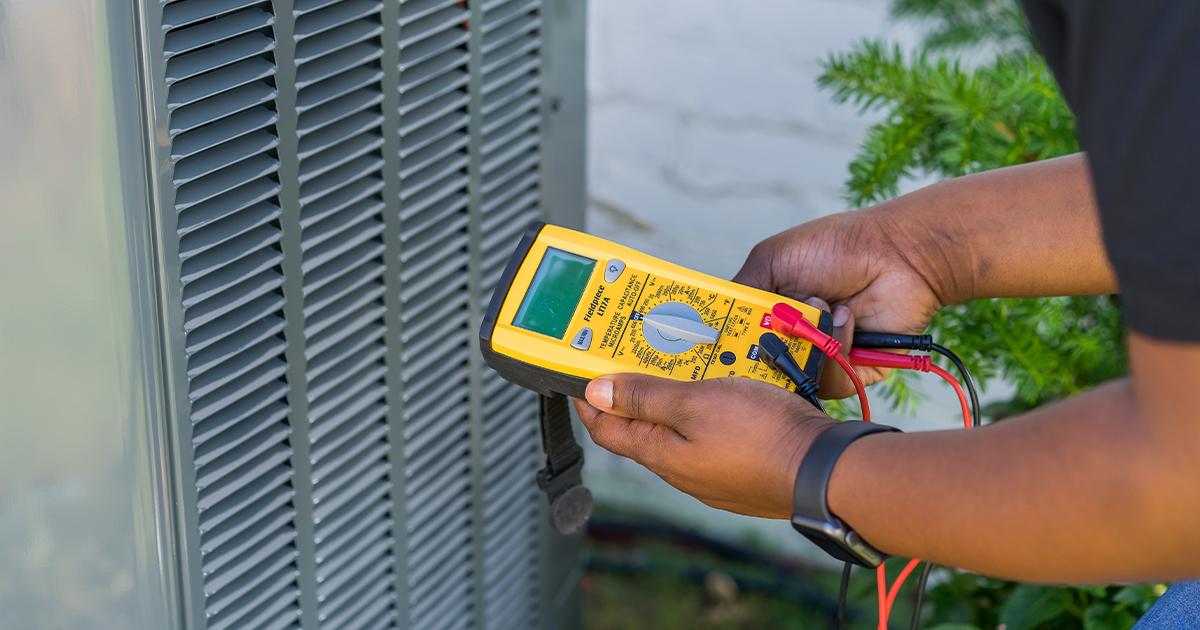
“Regular maintenance is one of the simplest ways to keep your HVAC system running safely and efficiently. If you are set up on a regular maintenance program with your local HVAC dealer, they can spot early warning signs and prevent more expensive repairs later. A well-maintained system lasts longer, performs better, and delivers more reliable comfort.”
- Kimberly Sexton, Senior Systems Engineer
You can prevent a lot of problems, save money on repairs, and even prolong the life of your system with regular maintenance. On the flip side, you can shorten the life of your system by not taking care of it.
DIY maintenance
You should change the HVAC air filter every 30-90 days. If your thermostat doesn’t have filter reminders, set an alert in your phone calendar to at least check the filter. Clogged filters can cause discomfort as well as big problems, such as frozen evaporator coils and a complete system shutdown. Learn more about HVAC filter maintenance.
Maintain proper airflow by ensuring indoor air vents and registers aren’t blocked by furniture or drapes. Outside, keep the area around the AC unit or heat pump clear for two feet all around. In the winter, clear snow from the top of the unit.
Professional maintenance
For optimal performance and to catch problems while they’re small, schedule regular HVAC maintenance with your preferred HVAC service provider. This should be once in the spring before cooling season begins, and once in the fall before heating season begins. Consider signing up for an HVAC maintenance plan for convenience and some money-saving offers.
Consider the benefits of remote monitoring and HVAC diagnostics
Did you know that if you have a Trane smart thermostat, you can allow your local Trane dealer to monitor your system remotely and even potentially fix a problem without stepping inside your home? By enabling Trane Diagnostics via the Home App, your HVAC dealer can spot small issues before they become big problems.
This can give you peace of mind with an aging system and can save both you and the dealer time and money.
Schedule HVAC repair now
If your HVAC system is giving off weird smells or making strange noises, contact your local Trane dealer for help. Many of our dealers provide emergency HVAC repair, 24/7.
Anne Fonda, Content Writer
A Content Writer with Trane Technologies, Anne Fonda researches topics and writes for Trane® and associated residential HVAC brands. She works in collaboration with Trane Technologies subject matter experts, offering easy-to-understand, informative content on complex topics. Her goal is to help consumers make informed decisions on the products and services they need.
She has written for HVAC and other service provider websites for over 16 years. Before transitioning to web content writing, Anne had a 14-year stint as an award-winning journalist. She graduated cum laude from the University of Missouri-Columbia School of Journalism.
When she’s not working, Anne enjoys playing word games, reading, gardening, spending time with family, and visiting gardens and museums.
Expert review by Kimberly Sexton, Senior Systems Engineer
Related Articles