There are no products that meet this criteria; please broaden your filters to see products
We use cookies to enhance your experience on our website. By clicking '' or by continuing to use our website, you are agreeing to our use of cookies. You can change your cookie settings at any time.
Whole House Dehumidifiers
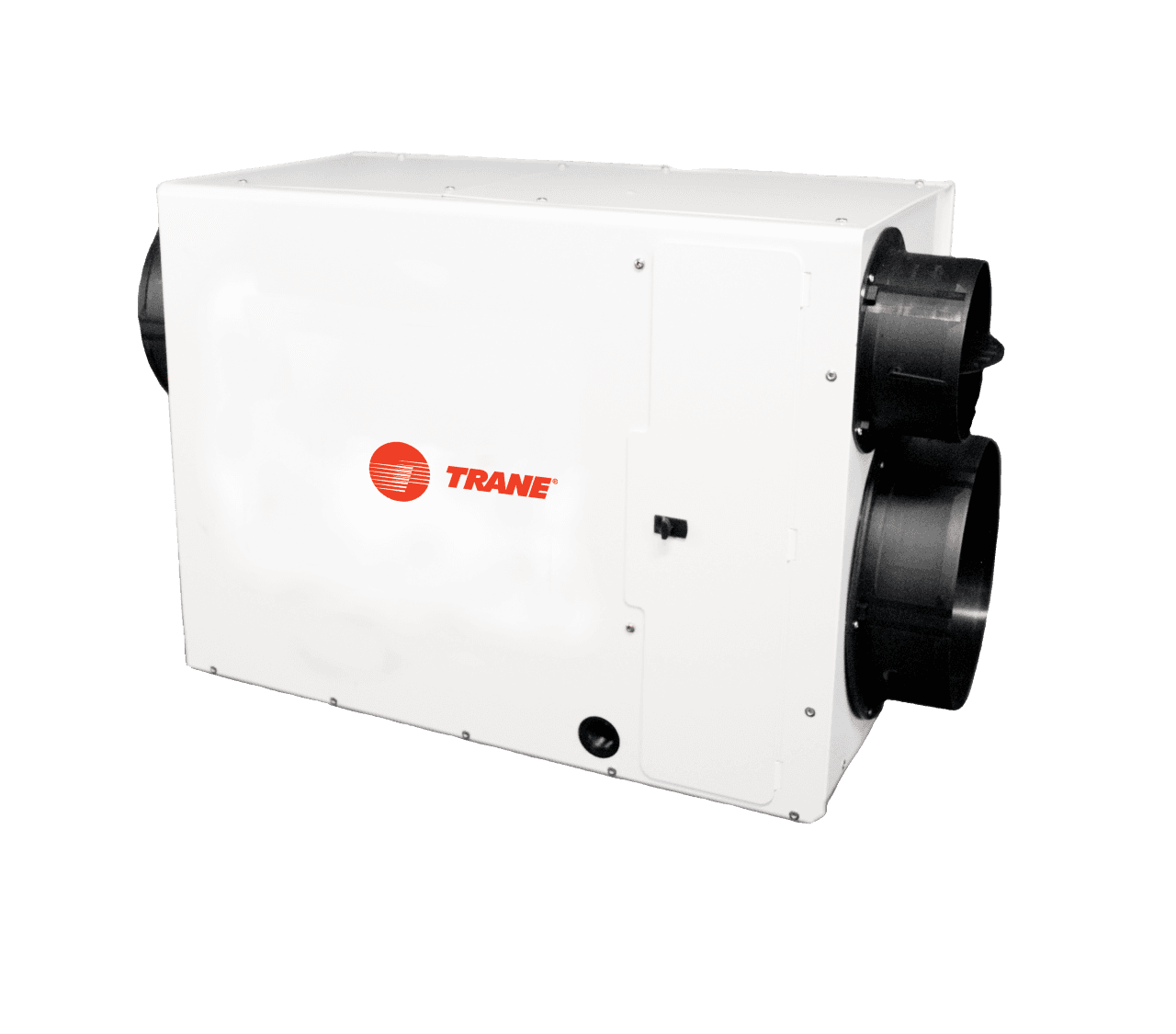
Discover Trane’s best whole house dehumidifier to deliver whole-house dehumidification or ventilation. Use as a stand-alone unit or connect to your existing ductwork to use with your HVAC system fan. This dehumidifier system operates with most HVAC systems to remove moisture and create the perfect humidity level for your home.
What to look for: home size, how much water is removed in a day, and special features
Showing results for
Protect your home from unseen pollutants
Air filters play an important role in maintaining the health of your family and your HVAC system. By capturing common household irritants like dust, dust mites, pollen, certain viruses, and pet dander, home comfort reaches the next level.
Enhance efficiency and eliminate irritants

Enhance
Changing your air filter as directed by your local Trane dealer can lower energy consumption by 5-15%, while enhancing your HVAC systems performance.

Protect
Air filters with MERV9 ratings can remove particles down to 1 to 3 microns in size from the air; protecting you from small, harmful irritants.

Maintain
Replacing air filters at least once every 90 days is crucial for properly maintaining an HVAC system as filters prevent dirt and debris from entering the system.
Support Resources
Find guides to help you set up and use your smart thermostat and Trane Home account.
Getting Started Guide
Learn helpful HVAC tips and tricks before you purchase your system.
Owner’s Manuals
Learn more about your product, like its technical specs and innovative technology.

Get helpful HVAC tips in our newsletter
Sign up for our email newsletter to learn helpful HVAC tips and tricks before your purchase your system.Why choose a Trane whole-house dehumidifier
If your home feels damp and musty, you likely have high indoor humidity. This can lead to discomfort, higher energy bills, mold growth, and a host of other problems. A Trane whole-house dehumidifier can help make your home comfortable again, help lower your energy bills, and help prevent mold and mildew growth.
“A whole-home dehumidifier is an ideal option for homeowners in climates with higher relative humidities in the south, along the coastlines, etc. Though your traditional HVAC equipment can solve most of the humidity problem in the home, the extra boost from a whole-home dehumidifier complements the homeowners’ journey toward a more comfortable space.”
Sean Goddard, Product Manager, Coils & Indoor Air Quality
A Trane whole-home dehumidifier offers superior humidity control
Our energy-efficient dehumidifier continually removes moisture from the air – up to 120 pints (15 gallons) of water per day. This will keep your humidity level in a healthy and comfortable range, between 30% and 50%.
In addition, this unit can dehumidify a home up to 3,000 square feet.
Air filtration and optional ventilation
Each dehumidifier is equipped with a MERV 13 filter for improved indoor air quality and provides optional ventilation for cleaner, fresher air.
Unobtrusive
Instead of a big, ugly portable unit, a whole-house dehumidifier installs unobtrusively in a basement, crawl space, attic, closet, or other space. It can be installed as a standalone unit or connected to your existing ductwork to use with your HVAC system fan.
Low maintenance
If you’ve ever used a portable dehumidifier, you're familiar with the need to manually empty the reservoir at least daily or attach an unsightly drain hose. You also have to clean the unit weekly to prevent mold growth.
With our whole-house dehumidifier, drainage happens automatically and is part of standard installation. You or an HVAC technician will need to change the filter every 3-6 months.
Learn more about dehumidifiers
- What Is a Dehumidifier?
- When to Use a Dehumidifier in Your Home
- Trane’s Best Humidifiers and Dehumidifiers
- Ideal Temperature for Humidity and Sleep
- How to Change Indoor Humidity Levels
- Breathe Easier with the Awair Indoor Air Quality Monitor
- HVAC Air Quality Troubleshooting
- HVAC Air Quality Component Maintenance
Dehumidifier FAQs
Humidity is the amount of water vapor in the air - whether you are indoors or outdoors. Higher humidity can make you feel hot and sticky, while lower humidity can make your skin, lips, and eyes feel dry.
Among other things, the American Society of Heating, Refrigeration, and Air-Conditioning Engineers (ASHRAE) sets indoor humidity standards and guidelines. They say that anything above 60% is considered high indoor humidity.
The Environmental Protection Agency (EPA) recommends indoor humidity levels between 30-50% for optimal comfort. Between 30-45% in the winter should keep you warm and comfortable while between 40-50% in the summer should provide a comfortable home.
Humidity levels that are outside the optimal range can potentially negatively impact your home, your health, and your indoor air quality (IAQ). High humidity can provide an environment for mold, mildew, and dust mites to thrive. This can exacerbate allergies and make it harder for people with asthma to breathe.
By contrast, low humidity can allow bacteria, viruses, and other pollutants to move more freely in the air. Keeping the indoor humidity levels between 40-50% can help prevent respiratory infections caused by bacteria and viruses.
The best way to achieve the ideal indoor humidity at home is by investing in a whole-house humidifier or dehumidifier, depending on the issues you are experiencing. Humidifiers and dehumidifiers work behind the scenes to keep your home at optimal humidity levels, so you don't have to think about your home's humidity.
You can measure and monitor their indoor humidity levels with a digital humidity meter (hygrometer) which you can find at most hardware stores.
A dehumidifier removes excess humidity from the air in your home. It can boost the effectiveness of an older air conditioner, and reduce humidity levels year-round, even when you don’t need the cooling from your AC.
A whole-house dehumidifier works sort of like your air conditioner, in that it cools the air to remove moisture. It draws warm, moist air over an evaporator coil. The coil contains refrigerant to help cool the air. As the air cools, it produces condensation, which collects at the bottom of the coil and eventually drains into a reservoir, and eventually drains out of your home through a drain line.
Your home could likely benefit from the installation of a whole-home dehumidifier if any of the following are true.
- Your house feels damp and sticky - not just the basement.
- Your home smells musty.
- You have problems with mold and mildew growth.
- Wood warps and metal rusts easily.
- You have a lot of spiders and creepy crawlies.
- Allergies and asthma are exacerbated.
- Your single-stage air conditioner runs constantly but the humidity is still high.
- You have condensation on the inside of your windows.
- You live in a humid climate.



Contact a local dealer
Dealers can answer questions, help you find the right products for your home, and repair your system.
We’re here to help
Connect with our Customer Care team about your products, warranties, and dealer concerns.
Available Monday – Friday from 7am to 5pm CST
A phone