Saving Energy in Your Home Starts with Your HVAC System
Key takeaways:
• Heating and cooling your home can account for 50% of your energy costs.
• Replacing a failing and inefficient HVAC system with a new energy-efficient system can save you 20% or more on heating and cooling bills.
• Your actual energy savings will vary based on your climate, usage, and the efficiency ratings of your new system.
By Anne Fonda
With summers getting hotter and lasting longer and the cost of energy skyrocketing, we’re all looking for ways to save money on our energy bills. One of the biggest ways to do that is by replacing your old HVAC system.
If your system finally failed and replacing it is a more cost-effective solution than trying to repair it, or you’re planning ahead and want to replace your system before it dies during a heat wave, opting for a more energy-efficient HVAC system is a smart decision.
According to the Department of Energy (DOE), replacing an old and inefficient HVAC system can cut your heating and cooling energy use by 20-50%.
Higher-efficiency systems will cost more upfront, but an energy-saving AC unit or heat pump can help reduce your energy consumption for years to come. Replacing an old furnace with a new high-efficiency furnace can reduce your winter heating bills and reduce carbon emissions.
What energy efficiency ratings should I look for?
When it’s time to replace your HVAC system, there are 3 main HVAC energy efficiency metrics to learn about.
#1: Seasonal Energy Efficiency Ratio (SEER2)
Air conditioners and heat pumps have a Seasonal Energy Efficiency Ratio (SEER2). This rating measures the cooling efficiency over an entire cooling season, in temperatures ranging from 65°F to 104°F. The higher the SEER2 rating, the more efficient the unit is.
Each 1-point increase in SEER2 improves cooling efficiency by roughly 7%. A higher SEER2 rating can be a big deal if you run your air conditioning from March through September.
#2: Heating Seasonal Performance Factor (HSPF2)
A heat pump’s heating efficiency is represented by its Heating Seasonal Performance Factor (HSPF2). The higher the HSPF2, the more efficient the heat pump is. Check out our blog on HSPF2 ratings for more details.
#3: Annual Fuel Utilization Efficiency (AFUE)
This metric applies to gas furnaces. The Annual Fuel Utilization Efficiency (AFUE) of a gas furnace measures the percentage of fuel it burns that goes to generate heat for your home, vs the percentage that leaves your home as flue gas.
For example, a standard-efficiency furnace with an AFUE of 80% returns 80 cents to the dollar you put into it as heat. 20 cents goes up the chimney as flue gas. A high-efficiency furnace with a 97% AFUE returns 97 cents as money spent on heat. So, you get 17 cents more heat for every dollar you spend.
If you live in an area with extremely cold winters, a higher AFUE rating = savings.
Does a variable speed or multi-speed system really save energy?
Yes. Variable-speed and multi-speed air conditioners and heat pumps operate more efficiently than a traditional single-stage or two-stage unit.
Heat pumps and central air conditioners are available in several types.
- Single stage – either on or off, which can use a lot of energy.
- Two-stage – have a low speed and a high speed.
- Multi-speed – mid-range option with more speeds for better energy savings and comfort.
- Variable speed – longer run times at lower speeds, using less energy.
“The number of speeds or stages typically translates to better energy efficiency and better comfort… so the more variability or number of stages, the more efficient the equipment will operate and the better temperature and humidity control the system can deliver to your home.”
- Mark Woodruff, Senior Product Manager, Air Conditioners

A note about humidity control – multi-speed and variable speed units are more effective at removing moisture from the air. This makes your home feel cooler and enables you to set a higher temperature on the thermostat without sacrificing comfort.
As you would expect, more efficient ENERGY STAR units come with a higher upfront price tag. However, the reduced energy consumption from a multi-speed or variable-speed system can mean lower operating costs for years to come. Regular maintenance is essential to getting the best performance.
How to use smart thermostats for energy savings
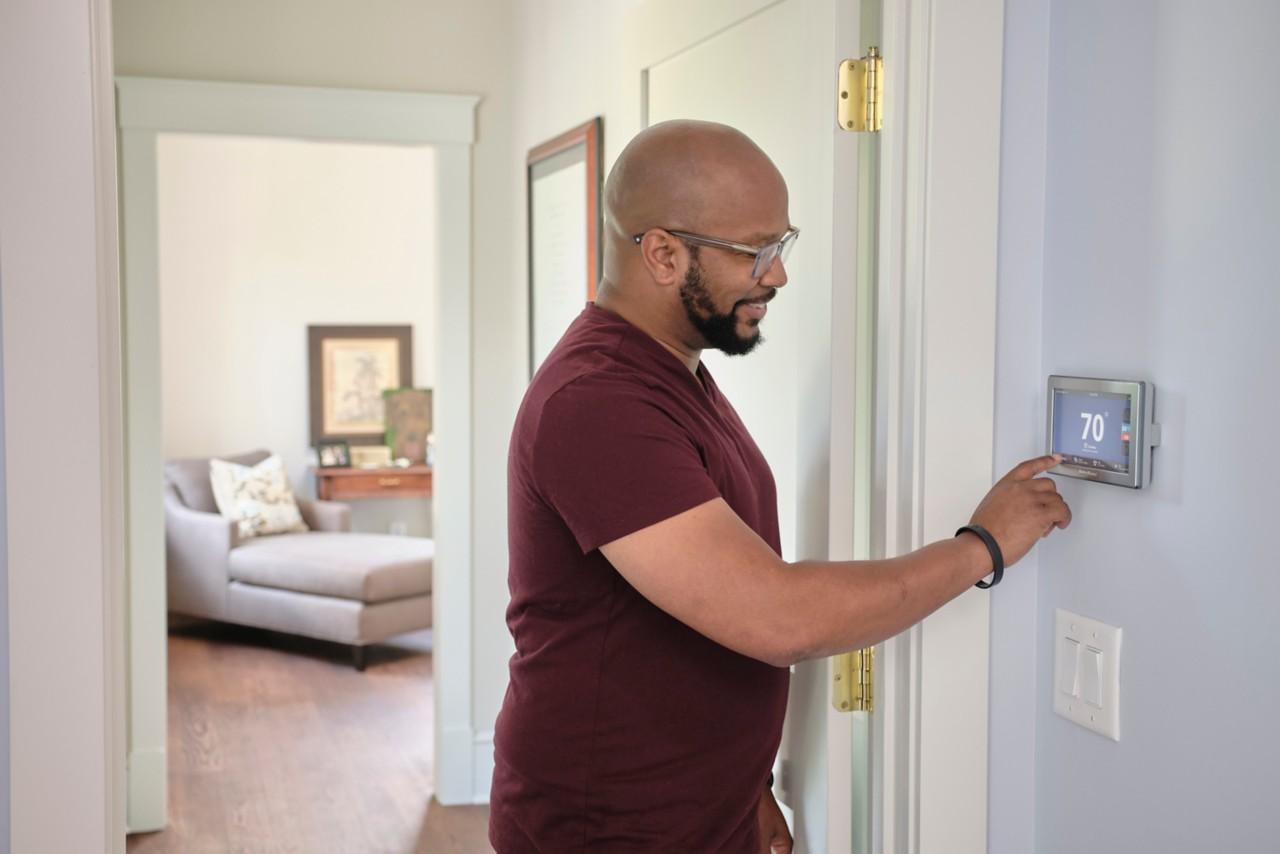
A smart thermostat can save you money if you take advantage of all it has to offer. Use the Trane Home App to control your Trane smart thermostat from anywhere. Raise or lower the temperature while you’re away, and have it adjust back to your comfort level before you get home. Enable geofencing and the smart thermostat will adjust automatically when you leave and when you’re nearing home.
We help you save energy and save money
Trane is committed to providing energy-efficient, sustainable HVAC equipment for homeowners that will help you save money on your energy bills and reduce your carbon footprint.
“Our solutions are good for the environment and good for our customers’ bottom line.”
- Dave Regnery, Chair and CEO, Trane Technologies

To save even more money on your utility bills, check out our Green Guide, which is filled with our best energy-saving tips.
Work with your local Trane dealer to find your perfect system
If this is the first time you’ve purchased a new HVAC system, the process can feel overwhelming. But it doesn’t have to be that way. Your local Trane dealer will talk with you about problems you’re having with your existing heating and cooling system, assess your home, perform a load calculation, and come up with system recommendations that will increase your comfort and help you save energy.
Anne Fonda, Content Writer
A Content Writer with Trane Technologies, Anne Fonda researches topics and writes for Trane® and associated residential HVAC brands. She works in collaboration with Trane Technologies subject matter experts, offering easy-to-understand, informative content on complex topics. Her goal is to help consumers make informed decisions on the products and services they need.
She has written for HVAC and other service provider websites for over 16 years. Before transitioning to web content writing, Anne had a 14-year stint as an award-winning journalist. She graduated cum laude from the University of Missouri-Columbia School of Journalism.
When she’s not working, Anne enjoys playing word games, reading, gardening, spending time with family, and visiting gardens and museums.
Expert review by Mark Woodruff, Senior Product Manager, Air Conditioners
Related Articles