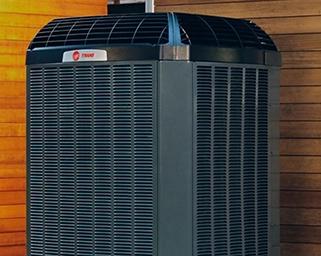
Introducing Our Most Efficient Cold Climate Heat Pump
Key takeaways:
• The 20 TruComfort™ Variable Speed Cold Climate Heat Pump with WeatherGuard™ has been years in the making.
• Depending on size, it can deliver 100% to 107% of rated heating capacity at 5°F and still provide substantial capacity at -20°F.
• It can keep your northern home cool and comfortable in the summer, too.
By Anne Fonda
Engineered to provide advanced heating in extreme cold
Cold climate heat pumps (CCHPs) are specially designed to perform in cold climates. The 20 TruComfort Variable Speed Cold Climate Heat Pump with WeatherGuard™ has been in the works for years. It’s the latest in a long line of products designed to bring energy-efficient electric heat pump heating and cooling to all corners of the United States.
In this article, you’ll learn about:
- Why this CCHP is special
- The development and testing process
- Why nominal heating vs nominal cooling matters
- What CCHP heat pump sizes are available
- Cold weather performance metrics
- Where it’s best suited
- Whether you need to pair it with a furnace or air handler
We recently sat down with the product manager and some of the engineers behind this achievement for some Q and A. Buckle up, because these folks know their stuff and gave us detailed answers. If you’re interested in a high-efficiency cold-climate heat pump system to help you transition away from fossil fuels, it’s well worth the read.
Let’s get started.
Why is this heat pump for cold climates so special?
“What makes this product special is simple: it was designed to keep homes comfortable in real winter conditions that traditionally made people think, ‘a heat pump can’t handle that,’” said Chelsea Hudson, Product Manager, Heat Pumps and System Ratings.
“Most people hear “heat pump” and think of mild climates. This product changes that conversation. We developed it specifically for colder regions, with a heating-focused design that allows it to deliver strong heat output at very low outdoor temperatures.”
- Chelsea Hudson, Product Manager, Heat Pumps and System Ratings

“Simply put, that means:
- It keeps producing meaningful heat when temperatures drop well below freezing
- It can continue operating down to -20°F
- Depending on size, it can deliver 100% to 107% of rated heating capacity at 5°F and still provide substantial capacity at -20°F
That matters because homeowners in cold climates do not want a system that gives up when winter gets serious. They want comfort, confidence, and lower reliance on supplemental heat. That is exactly what this product was built to do.
From a product perspective, this launch represents a major step forward in controls, refrigeration system design, diagnostics, and low-ambient performance. It is one of the clearest examples I can point to of Trane Technologies' engineering teams pushing beyond what our prior residential heat pumps were designed to do,” Hudson concluded.
How long did it take to develop this new CCHP?
“The new product development (NPD) project for this CCHP formally started in 2023, but the innovation began before then. With projects that have new technology to the extent that the CCHP does, a new technology project (NTP) typically precedes it to investigate technology options and recommend the most promising technology to the NPD.”
- Yisarai Valbuena Sanchez, Senior Engineer, New Product Development

“In the case of this CCHP, the NTP project had a dual purpose of supporting the NPD and developing a prototype that would compete in the Department of Energy's (DOE) Residential Cold Climate Heat Pump Challenge, which aimed to encourage manufacturers to develop a CCHP that could support heating loads in cold climates and reduce the usage of supplemental heat.
Trane Technologies' prototype exceeded the challenge specifications of operating down to -15°F, and stayed online at -23°F,” Valbuena Sanchez added.
Ray Rite, Principal Engineer for the Advanced Technology team, led the NTP project, and gives us a timeline.
- The CCHP DOE Challenge kicked off in November of 2021, and the design was completed and tested in-house in the first quarter of 2022.
- Performance was independently confirmed at Oak Ridge National Labs in November of 2022.
- A field trial in Boise, Idaho, was commissioned in December 2022 and ran until July 2024 with no major issues.
- With the learnings of the NTP, the NPD kicked off in 2023 and has been full force.
“We took the prototype and continued to innovate on the design as we considered serviceability, manufacturability, and expanded product requirements. In these past couple of years, we have been designing and validating the CCHP through extreme low ambient and frost testing in our labs, as well as field trial testing in locations with negative temperatures, icy winters, and heavy snowfall.”
- Yisarai Valbuena Sanchez, Senior Engineer, New Product Development
The final design can achieve a capacity up to 107% at 5°F, meeting the original challenge specification, and as high as 85% capacity at -20F, dramatically reducing the usage of supplemental heat at low temperatures.
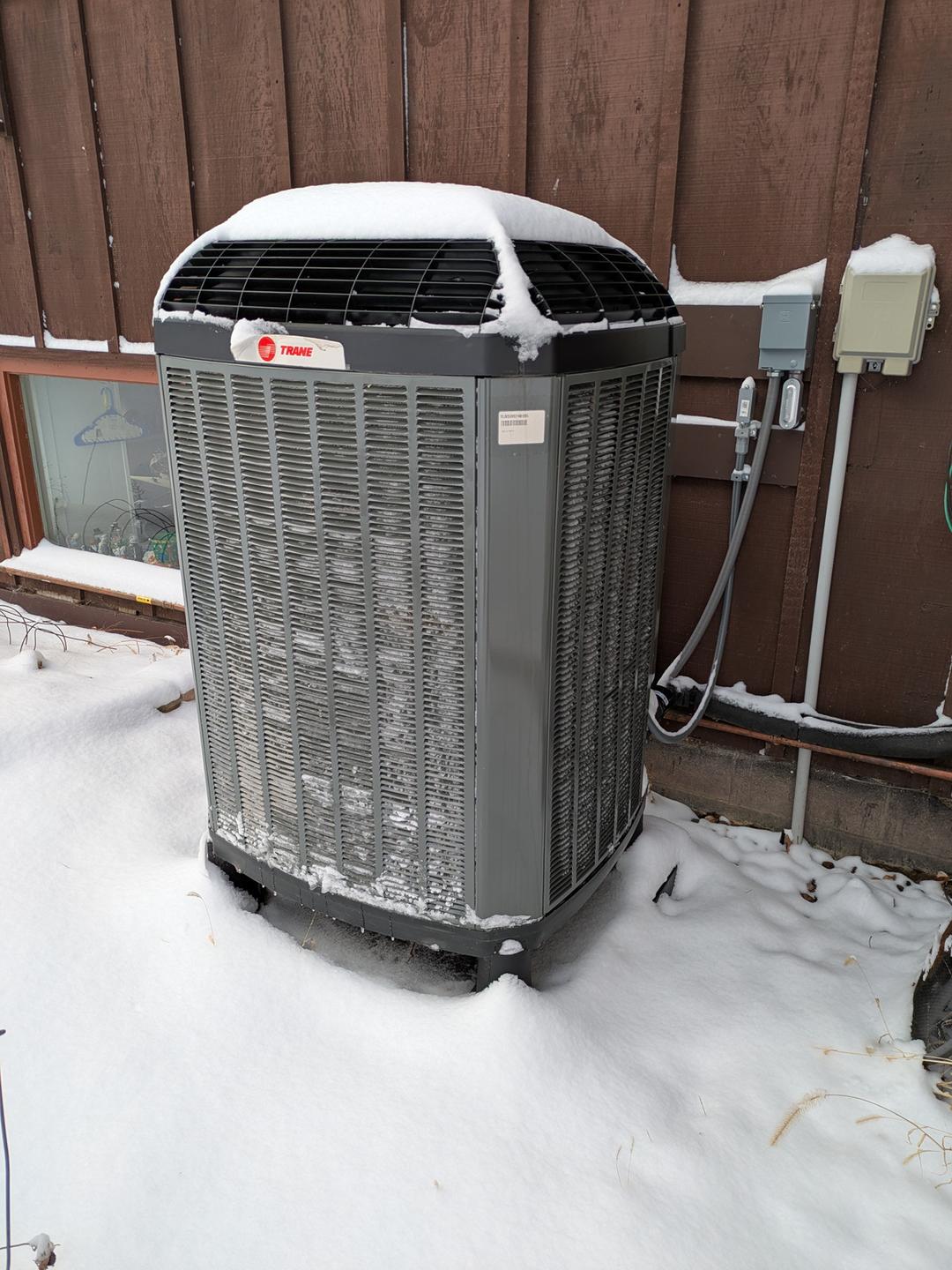
Where was this cold climate heat pump field-tested?
- 9 units in the field in Minnesota, Montana, New York, Pennsylvania, Wisconsin,
- Field trials have ran for 2 winters and recently finished their second summer
- 36,900+ hrs. runtime (18,300+ heating mode)
- Minimum ambient temperatures range from -21° F to 5° F
Notable field trial successes during the January 2026 cold front
- 5TCV0X60A1: heating mode operation meeting customer setpoint, with no supplemental heat as low as -21° F in La Crosse, WI, with a 30-degree delta between return and supply air temperature
- 5TCV0X61A1: heating mode operation, meeting customer setpoint, with no supplemental heat as low as -10° F in La Crosse, WI (after -10°F, the heat pump stayed online providing heating capacity, but supplemental heat also kicked on)
“Even in harsh Wisconsin winters, my Trane cold climate heat pump operates at temperatures below -20° F without requiring electric backup heating—very impressive!”
- Keith Novak, Compressor Engineer IV, Corporate Engineering
Another Trane Technologies employee was impressed that even when temperatures fell below -13°F, the compressor continued to run to provide the primary source of heat, with no loss of comfort. As a bonus, they also noticed fewer problems with dry skin and chapped lips versus their old natural gas furnace. They had previously had a gas furnace system but converted to a fully electric system with the CCHP and an air handler.
Units were field-tested at the homes of Trane Technologies employees and in-network dealer partners to allow our engineering teams full access to real-world data. This allowed us to validate our design with real customer feedback and data.
In layman’s terms, explain why the higher nominal heating capacity vs cooling capacity matters.
“In colder parts of the country, homes usually need more heating than cooling. So, for this product, we intentionally designed it to be heating-focused.
What that means in practical terms is that instead of sizing the system around summer cooling alone, we gave it more nominal heating capacity relative to its nominal cooling capacity. That helps the product better match what the home actually needs in a cold climate,” Hudson said.
Valbuena Sanchez emphasized this. “When considering the CCHP, I recommend sizing the CCHP for your heating load. On the CCHP, the nominal cooling capacity will be lower, but this is appropriate for the application and the best solution for you as a homeowner. You may think that it ‘doesn't hurt’ to have added cooling capacity ‘just in case’, but with a non-CCHP, an oversized cooling system can result in comfort issues like short cycling and poor humidity control. This CCHP was designed to be the best solution for cold climate customers.”
What capacity (in tons) is available?
The 20 TruComfort™ Variable Speed Cold Climate Heat Pump with WeatherGuard™ is available in 3 standard capacities: 3-ton, 4-ton, and 5-ton.
| Named Tonnage Size | ||||
|---|---|---|---|---|
| CCHP Model# 5TCV0X36A1000A | 3T | 26,200 | 33,200 | 25,600 |
| CCHP Model# 5TCV0X48A1000A | 4T | 36,000 | 45,000 | 45,000 |
| CCHP Model# 5TCV0X60A1000A | 5T | 48,500 | 55,000 | 48,000 |
| CCHP Model# 5TCV0X61A1000A | 5T | 48,000 | 55,500 | 55,500 |
5TCV0X36A1000A
5TCV0X48A1000A
5TCV0X60A1000A
5TCV0X61A1000A
How well does this CCHP perform in extreme cold?
Based on years of psychrometric chamber testing, the following table shows proven results. The percentages below are the capacity at the displayed temperature over the rated capacity at 47°F (in other words, the nominal heating capacity).
Delivered* Capacity at Extreme Low Ambient Temps
| 5°F | 0°F | -5°F | -10°F | -15°F | -20°F | |
|---|---|---|---|---|---|---|
| CCHP X36 | 107% | 105% | 101% | 97% | 91% | 85% |
| CCHP X48 | 100% | 95% | 88% | 81% | 73% | 67% |
| CCHP X60 | 87% | 76% | 70% | 64% | 60% | 53% |
| CCHP X61 | 100% | 99% | 92% | 86% | 76% | 70% |
Keep in mind that older generation heat pumps typically start to drop below 100% heating capacity at 35°F.
Where is this cold climate heat pump best suited?
Hudson says, “This product is best suited for places where the heating load is greater than the cooling load. In other words, climates with longer, colder winters.”
Good examples include states such as:
- Maine
- Michigan
- Minnesota
- Montana
- New Hampshire
- New York
- North Dakota
- Vermont
- Wisconsin
- Wyoming
She says it is also a strong fit in parts of:
- Pennsylvania
- Massachusetts
- Connecticut
- South Dakota
- Idaho
- Colorado
- Iowa
The product’s operating range is -20°F to 115°F, but that does not mean every home in that range is automatically the right application. Proper sizing still matters. The best results come when the installing HVAC pro evaluates:
- Your home’s heating load
- Your home’s cooling load
- Insulation and air leakage
- Duct system
- Local utility economics
Before investing in any new HVAC system, weatherize your home to prevent heat loss. This can include sealing leaky ductwork. Explore your utility company’s website for rebate offers to make your home more energy efficient and help offset the cost.
Do I still need a furnace as a backup or is an air handler right for my home?
“The honest answer is: it depends on the home, local utility costs, climate, and homeowner preferences.
If the question is whether this cold climate heat pump can be paired with an air handler and serve as the primary heating system in a cold climate, the answer is yes! That is exactly the kind of application it was designed to support. In the right home, an all-electric system with an air handler can deliver excellent comfort, even in very cold weather.”
- Chelsea Hudson, Product Manager, Heat Pumps and System Ratings
Hudson has some advice on choosing between all-electric heating and cooling and a dual-fuel heat pump system.
“Some homeowners may decide that a dual fuel, or hybrid, system is the better fit. In a dual-fuel setup, the heat pump handles most of the heating season efficiently, and a furnace provides backup heat only when it makes the most sense based on outdoor temperature, system demand, or energy costs.
An all-electric pairing may be a strong choice when:
- You want an electric heating solution
- Electric rates are favorable
- Your home is well insulated, and the system is properly sized
- You are comfortable using electric supplemental heat only when needed
A dual fuel system may be especially attractive when:
- Winter temperatures regularly fall below 5°F for extended periods
- You want the flexibility of combining electric heat pump performance with furnace backup
- Local energy prices make a hybrid approach more economical at certain temperatures
- Your home already has fuel infrastructure in place, such as natural gas or propane
In those applications, the benefit of dual fuel is flexibility. The system can rely on the heat pump through much of the season, then switch to furnace heat only when that becomes the better comfort or economic choice,” Hudson concluded.
Anything else homeowners should know?
From Hudson: “Yes, a few things. First, homeowners should know that cold climate heat pumps are not the same as older-generation heat pumps. This product was engineered specifically for colder-weather performance, and that distinction matters.
Second, homeowners should know that proper system design is everything. Even the best cold climate heat pump needs to be matched and sized correctly for the home. That includes load calculations, duct evaluation, controls, and the right indoor pairing.
Third, homeowners should know that this product is about more than just surviving cold weather. It is also about:
- More consistent comfort
- Less dependence on supplemental heat
- More modern heating and cooling experience
From Valbuena Sanchez: “Trust me when I say, this new CCHP can keep up with your harsh winter weather and will keep you warm. I recognize that gas and electric heat are tried and true, and homeowners may be skeptical and even nervous to rely on a heat pump for low ambient heating. We have designed this CCHP with harsh cold climates in mind, and our extensive lab and field trial testing has proven that it will do what you need it to.”
Schedule a quote with your local Trane HVAC pro
If you’re looking to replace an aging heating and cooling system with an energy-efficient cold climate heat pump system, reach out to your local Trane HVAC pro today. They’ll assess your home’s sealing, insulation, and ductwork, perform a Manual J load calculation, and discuss any recommendations with you to help ensure you get the system that’s right for your home.
Make sure to ask about 0% HVAC financing, which can help you spread the cost of a new system out over several years.
Anne Fonda, Content Writer
A Content Writer with Trane Technologies, Anne Fonda researches topics and writes for Trane® and associated residential HVAC brands. She works in collaboration with Trane Technologies subject matter experts, offering easy-to-understand, informative content on complex topics. Her goal is to help consumers make informed decisions on the products and services they need.
She has written for HVAC and other service provider websites for over 16 years. Before transitioning to web content writing, Anne had a 14-year stint as an award-winning journalist. She graduated cum laude from the University of Missouri-Columbia School of Journalism.
When she’s not working, Anne enjoys playing word games, reading, gardening, spending time with family, and visiting gardens and museums.
Expert review by Chelsea Hudson, Product Manager, Heat Pumps and System Ratings; Yisarai Valbuena Sanchez, Senior Engineer, New Product Development; Ray Rite, Principal Engineer
Related Articles