8 Air Conditioning Myths That Are Costing You Money
Key takeaways:
• Size matters. An AC unit that is too large or too small (in tons) can cost you money unnecessarily.
• Neglecting maintenance can cost you money in repairs that could be prevented.
• You should not turn off the AC when you’re away from home.
By Anne Fonda
Want to save money on your air conditioning expenses and energy bills? Then don't buy into these common A/C myths.
MYTH #1: The size of your AC unit isn’t important
FACT: The correct size of your HVAC unit depends on the size of your home, as well as multiple other factors. An air conditioning system that’s too small will have to work harder to cool your home and wear down sooner. A system that’s too big will keep turning off and on until it breaks down. When you’re in the market for a new air conditioning system, make sure the HVAC contractors perform a load calculation to ensure proper sizing.
“An incorrectly sized system can cost you money on your utility bills, can cause your home to be uncomfortable, and can potentially lead to expensive system breakdowns and early end-of-life replacement.”
- Mark Woodruff, Senior Product Manager, Air Conditioners
MYTH #2: You should turn the temperature way down for quicker cooling
FACT: Your air conditioning unit works just as hard whether you lower the thermostat temperature by 3 degrees or 15 degrees — getting to the temperature you want is just a matter of time. If you set it lower than you need to and forget about it, you’ll end up with higher energy costs. To help ensure the temperature is what you want, when you want it, use a programmable thermostat or smart thermostat.
MYTH #3: You should turn off the AC when you’re not home
FACT: Will turning off the AC save money? Turning the air conditioner or heat pump off when you leave the house is not a money-saving move. Turning your air conditioning off and on again repeatedly can cost you more money, not less.
By turning the air conditioner off, on warm to hot days, the temperature in your home rises unchecked. This makes your cooling system work longer and harder to lower the temperature to a comfortable level when you come home and turn the system back on.
It can also allow the humidity level to climb above 60%, providing the right environment for mold growth. That’s because your air conditioner (or heat pump in cooling mode) removes moisture from the air as it cools. If it’s not running, it’s not lowering the humidity.
But that doesn’t mean you need to blast cold air while you’re gone. Use a smart thermostat to raise the temperature to 78 degrees or higher while you’re away from home. You can do this from the palm of your hand with the Trane Home App.
Geofencing capabilities can even bring the temperature down to your preferred level if the thermostat senses you’re coming home early, or raise it if it senses no one is home. This is just one way that smart thermostats can save you money on your energy bills
MYTH #4: Ceiling fan direction doesn’t matter
FACT: The ceiling fan direction myth is that the direction your ceiling fan is turning doesn’t matter. It most certainly does! In the summer, set your ceiling fan to turn counterclockwise to create a cool breeze or wind chill effect. Most ceiling fans have a little switch on the motor casing.
Running the ceiling fan in the summer can make you feel up to 5 degrees cooler than the thermostat setting. But ceiling fans don’t actually cool a room, so turn them off when you leave a room to save money.
MYTH #5: You should close vents in unused rooms
FACT: People often ask, “Should you close vents in unused rooms in the summer?” The short answer is no. You may have heard that closing vents in unused rooms can help lower your energy bills.
In reality, it could raise your energy bills and result in unexpected HVAC repair bills. Your HVAC system needs at least 75% of the vents in your home to be open to ensure proper airflow. Blocking or closing supply or return air vents can disrupt the delicate balance in your HVAC system, making it work harder. So keep vents open.
MYTH #6: You don’t need to change the HVAC air filter
FACT: Believe this myth, and you’ll pay for it. It’s important to check your air filter and change it regularly, generally every 30-90 days all year long. A dirty or clogged filter can result in costly AC repairs and even premature system failure.
Air filters are typically inexpensive and can save you money on repair costs and increase the efficiency of your unit in the long run. Read our air filter maintenance guide for some tips.
MYTH #7: Maintenance doesn’t matter
FACT: Struggling air conditioning units are inefficient units, so keep your HVAC system at peak performance. What might seem like a minor issue now could become an expensive one later if you don’t repair it. Regular AC maintenance can help improve performance and even prolong the life of your system.
Your local Trane Comfort Specialist can help you with any issues you might be having with your air conditioning system. Consider purchasing a seasonal HVAC maintenance plan to keep your system in top shape year-round.
MYTH #8: You should run your HVAC system until it quits
FACT: You’ll often hear this myth regarding cars, but it applies to HVAC units, too. Sure, you could run the system until it dies. But you know what? Your aging air conditioner is likely to die in the middle of a heat wave, when everyone else needs AC repair. And if repair costs are so high that replacing the unit is more cost-effective, you may not have much of a choice in inventory.
We get it. You don’t want to replace the system until you absolutely need to. What we would recommend: Start doing your homework if your AC unit is 15+ years old and repairs are needed more often and cost more each time. Explore your HVAC financing options.
Replacing an air conditioner might be a big expense, but an old and inefficient unit is costing you more money every month on your utility bills than a newer unit would. Your comfort level has likely decreased as well. Start saving money on your energy bills sooner by replacing your old unit before it quits on you.
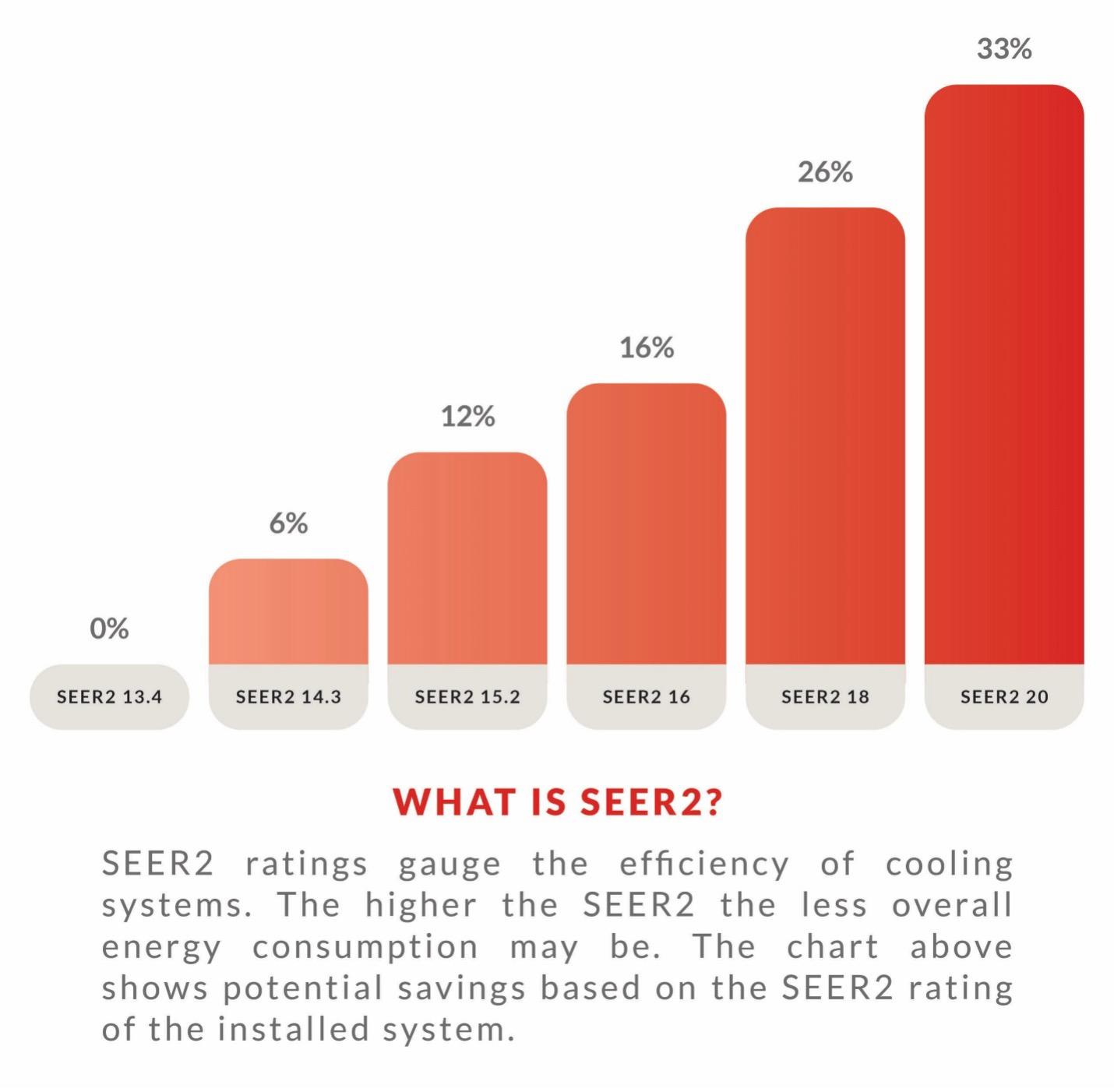
According to the Department of Energy (DOE), investing in a new energy-efficient air conditioner can save you 20-40% on your cooling costs. Your savings will depend on the Seasonal Energy Efficiency Ratio (SEER2) rating of your old unit vs the new unit, the number of cooling speeds/stages, local utility rates, and more.
The infographic below shows the change in energy efficiency with a higher SEER2 rating.
Contact your local Trane dealer today
If you’re thinking about replacing your HVAC system, contact your local Trane dealer(s) today. They’ll ask you about problems with your current system, perform a load calculation, assess your ductwork, and more, before providing you with detailed estimates. They’ll also let you know about potential savings.
Anne Fonda, Content Writer
A Content Writer with Trane Technologies, Anne Fonda researches topics and writes for Trane® and associated residential HVAC brands. She works in collaboration with Trane Technologies subject matter experts, offering easy-to-understand, informative content on complex topics. Her goal is to help consumers make informed decisions on the products and services they need.
She has written for HVAC and other service provider websites for over 16 years. Before transitioning to web content writing, Anne had a 14-year stint as an award-winning journalist. She graduated cum laude from the University of Missouri-Columbia School of Journalism.
When she’s not working, Anne enjoys playing word games, reading, gardening, spending time with family, and visiting gardens and museums.
Expert review by Mark Woodruff, Senior Product Manager, Air Conditioners; and Kimberly Sexton, Senior Systems Engineer
Related Articles