There are no products that meet this criteria; please broaden your filters to see products
We use cookies to enhance your experience on our website. By clicking '' or by continuing to use our website, you are agreeing to our use of cookies. You can change your cookie settings at any time.
Ventilation
Protect your home from airborne pollutants and improve your air quality with whole home air cleaners and filters.
What to look for: filter longevity, performance and what size particles these filters keep out
Showing results for
Protect your home from unseen pollutants
Air filters play an important role in maintaining the health of your family and your HVAC system. By capturing common household irritants like dust, dust mites, pollen, certain viruses, and pet dander, home comfort reaches the next level.
Enhance efficiency and eliminate irritants

Enhance
Changing your air filter as directed by your local Trane dealer can lower energy consumption by 5-15%, while enhancing your HVAC systems performance.

Protect
Air filters with MERV9 ratings can remove particles down to 1 to 3 microns in size from the air; protecting you from small, harmful irritants.

Maintain
Replacing air filters at least once every 90 days is crucial for properly maintaining an HVAC system as filters prevent dirt and debris from entering the system.
Support Resources
Find guides to help you set up and use your smart thermostat and Trane Home account.
Getting Started Guide
Learn helpful HVAC tips and tricks before you purchase your system.
Owner’s Manuals
Learn more about your product, like its technical specs and innovative technology.
Get helpful HVAC tips in our newsletter
Sign up for our email newsletter to learn helpful HVAC tips and tricks before your purchase your system.Ventilation FAQs
A whole-house ventilator is an HVAC ventilation system that works to improve indoor air quality. Ventilators work by swapping stale indoor air with fresh outdoor air to improve both comfort and air quality inside.Poor ventilation can affect indoor air quality (IAQ) and lead to problems including:
- Cooking smells long after a meal
- Lingering pet odors
- The buildup of potentially harmful VOCs (volatile organic compounds)
- A buildup of carbon dioxide or unsafe levels of carbon dioxide.
Good ventilation is crucial for helping to ensure you're breathing in cleaner, fresher air while inside your home.
Not necessarily. Everyone needs proper ventilation but may not need a supplementary device. If you live in a climate where opening your windows increases ventilation without decreasing comfort or security, you might have adequate ventilation. But if you live in a newer, tightly sealed and insulated home, you could benefit from a mechanical ventilation system.
If you're uncertain about whether your home needs a ventilator a good place to start is to begin measuring the air quality in your home using the Awair® Element. The Element is a smart, all-in-one environmental sensor that homeowners can use to monitor their temperature, humidity, CO2, chemicals, and PM2.5 levels (any fine dust or particulate matter that is 2.5 microns in width or smaller).
Mechanical ventilation for new homes may be required by building codes. The International Residential Code requires a certain level of air exchange, rated in cubic feet per minute (CFM). In addition, the American Society of Heating and Air-Conditioning Engineers (ASHRAE) Standard 62.2 specifies minimum ventilation rates to minimize adverse health effects.
In addition to reducing all of the problems listed above, according to the Centers for Disease Control and Prevention (CDC), improving indoor ventilation can help you reduce airborne virus particles in your home. Increased ventilation can even help mitigate the spread of illnesses including influenza and COVID-19.
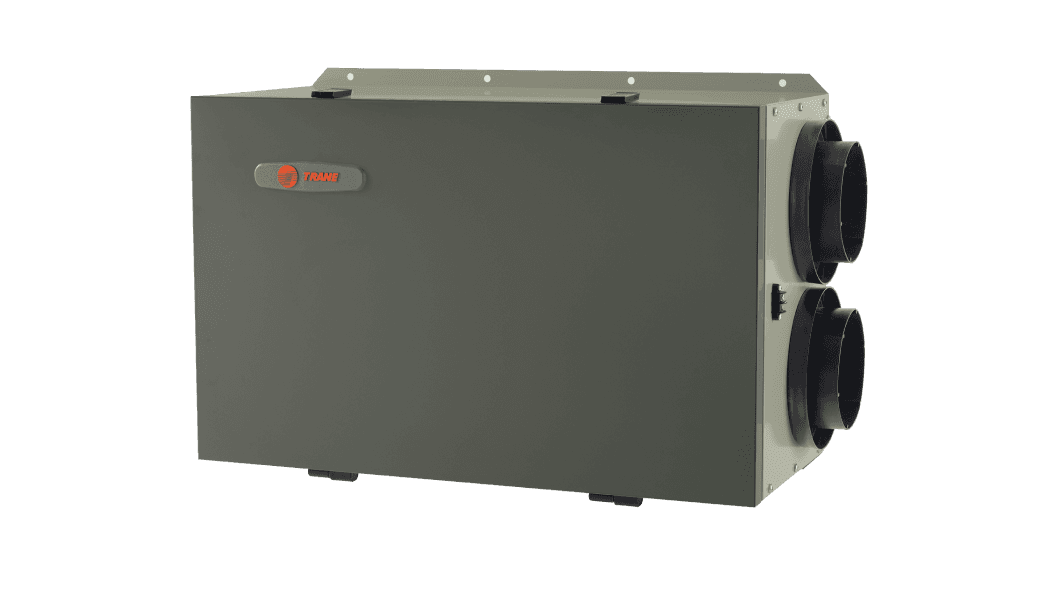
Trane ventilators are whole-home HVAC solutions, therefore the right one for you depends on factors such as home size, number of occupants, and more. Your local independent Trane dealer can help you determine the right one for your home.



Contact a local dealer
Dealers can answer questions, help you find the right products for your home, and repair your system.
We’re here to help
Connect with our Customer Care team about your products, warranties, and dealer concerns.
Available Monday – Friday from 7am to 5pm CST
A phone