Gas Furnace Maintenance
Learn best practices for taking care of your system, so you can avoid costly repairs.
Gas Furnace Maintenance 101 for Homeowners
By Anne Fonda with expert review by a Trane Residential HVAC Training Manager
You don’t have to be an HVAC expert to maintain your gas furnace. Follow these tips to keep your system running smoothly and catch small problems before they become a big (and costly) headache.
The biggest thing you can do to maintain your furnace and help it run more efficiently is to change the air filter regularly.
Why should I change my air filter?
Your HVAC air filter captures dust, dirt, pet hair, and other particulates. Excessive accumulation can block the airflow, forcing your furnace to work harder to maintain a constant temperature. The harder your unit has to work, the more energy it uses.
How often to change a furnace filter
The easy answer is to change your filter when it gets dirty. For every home and homeowner, how quickly your filter gets dirty depends on several factors like home size, pets, and others. But here are a few guidelines to follow:
- Home with no pets: every 30-90 days.
- Home with one pet: every 30-60 days.
- Home with more than one pet or people with allergies/asthma: every 20-45 days
Higher quality, thicker filters may need to be changed less often than thinner 1” filters. Your thermostat may alert you when you should change the filter, but you can also set a reminder in your phone.
Because the furnace acts as the air handler for your heat pump or air conditioning system in the warmer months, you need to change the furnace filter year-round.
How do I change my air filter?
First, find out where the filter is located in your system and then follow these steps. It may be next to the furnace or behind a wall or ceiling vent. If you have any questions, contact your local Trane Dealer.
- Turn off your furnace.
- Remove old filter.
- Insert correctly sized new filter (make sure you follow the air flow arrows).
- Turn the furnace back on.
For more details on how to choose the right furnace filter, check out our blog on Furnace Filters 101.
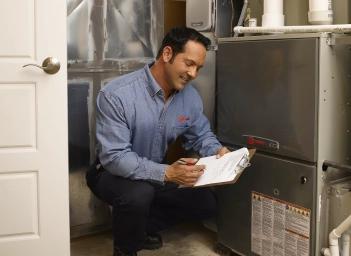
Schedule a preventative maintenance checkup with your local dealer every fall before heating season arrives. Here’s what your dealer will do during annual furnace maintenance.
- Confirm all flue product carrying areas external to the furnace (flue pipe, chimney, vent connector), condensing furnace intake and exhaust lines are clear and free of obstruction.
- Confirm vent connector is in place, slopes upward and is physically sound without holes or excessive corrosion.
- Confirm intake and exhaust lines for a condensing furnace are physically sound.
- Check condensate drain line and drain pan for cracks or clogs.
- Check return air duct connection(s). Should be physically sound, sealed to the furnace and ends outside the space containing the furnace.
- Check furnace support structure. Should be without sagging, cracks or gaps around the base.
- Confirm the burner flames are in good adjustment without erratic flames.
- Check thermostat operation
- Run the furnace in heating mode and assess that the heating output is within the manufacturer’s specifications
- In the combustion chamber, check and clean the furnace burners and flame sensor
- Check and adjust the gas valve, check gas pressures and adjust if necessary
- On older furnaces, evaluate, clean, and tune the pilot light system
- Check the heat exchanger and check for cracks, holes, or leaks
- Inspect and clean the blower and blower motor
With yearly furnace maintenance, your furnace can last 15-20 years or more. With maintenance and a few repairs, a furnace can last 25+ years, depending on the quality of the unit and how often it runs.
A yearly furnace tune-up can cost anywhere from $70 to around $200. Your cost will depend on where you live, the condition of your furnace, and more. Consider signing up for an HVAC maintenance plan to save money and for added benefits.
- Look - Look at the flames in the burner. You should see a steady blue flame. If you see yellow or orange flickering, call an HVAC specialist to resolve the issue and help ensure safe operation.
- Listen - Listen for questionable noises or vibrations while the furnace is on. If you hear any unusual sounds, ask your technician for guidance.
- Smell - Smell for any gas leaks. If you smell gas or rotten eggs, do not try to light any appliance. Do not touch any electrical switch. Do not use a landline phone or cell phone in your home. An electrical spark could cause the gas to ignite. Immediately call a gas supplier from your neighbor’s yard. Carbon monoxide detectors are recommended and should be installed according to all local laws and regulations.
- Alert - In the event that electrical, fuel or mechanical failures occur, immediately turn the gas supply off at the manual gas valve on the gas pipe before turning off electrical power to the furnace. Contact a qualified service agency as soon as possible.
 Do not use this unit if any part has been underwater. A flood-damaged unit is extremely dangerous. Attempts to use the furnace can result in fire or explosion.
Here a few common problems and quick fixes to try if your furnace isn’t working properly.
Problem: Gas furnace won’t turn on.
Solution: Check that your thermostat is set to heat (especially if it’s the first time using it).
Problem: Hot upstairs. Cold downstairs.
Solution: Create climate zones to heat the rooms you want.
Problem: Gas bill rising without a rate increase or colder temperatures.
Solution: Your heating system may be running too much. Set your thermostat lower or invest in a more energy-efficient furnace. If you have a gas water heater, check it for problems, as well.
For more information, check our Gas furnace troubleshooting guide.
How to extend the life of your gas furnace
In general, a gas furnace can last 15-20 years, but can last much longer. By following these tips, you can help extend the life of your furnace while maintaining comfort.
- Replace your air filter every 30-90 days year-round.
- Schedule annual furnace maintenance with your HVAC company.
- Open blinds or drapes to let sunlight in during the day. Close them at night.
- Install a programmable thermostat or smart thermostat.
For specific tips and details about how to maintain and service your particular furnace, visit our Owner's Guides page. You’ll find details and helpful information for all our furnace models.
If you have an oil furnace, please see our oil furnace maintenance tips.
Anne Fonda
Content Writer, Trane Technologies
A Content Writer with Trane Technologies, Anne Fonda researches topics and writes for Trane® and associated residential HVAC brands. She works in collaboration with Trane Technologies subject matter experts, offering easy-to-understand, informative content on complex topics. Her goal is to help consumers make informed decisions on the products and services they need.
She has written for HVAC and other service provider websites for over 16 years. Before transitioning to web content writing, Anne had a 14-year stint as an award-winning journalist. She graduated cum laude from the University of Missouri-Columbia School of Journalism.
When she’s not working, Anne enjoys playing word games, reading, gardening, spending time with family, and visiting gardens and museums.
Related Articles
Warranty & Registration
After getting a new system, be sure to protect it with a warranty.
Owner’s Manual
Learn more about your product, like its technical specs and innovative technology.
Contact a local dealer
Dealers can answer questions, help you find the right products for your home, and repair your system.
We’re here to help
Connect with our Customer Care team about your products, warranties, and dealer concerns.
Available Monday – Friday from 7am to 5pm CST
A phone