There are no products that meet this criteria; please broaden your filters to see products
We use cookies to enhance your experience on our website. By clicking '' or by continuing to use our website, you are agreeing to our use of cookies. You can change your cookie settings at any time.
Furnaces
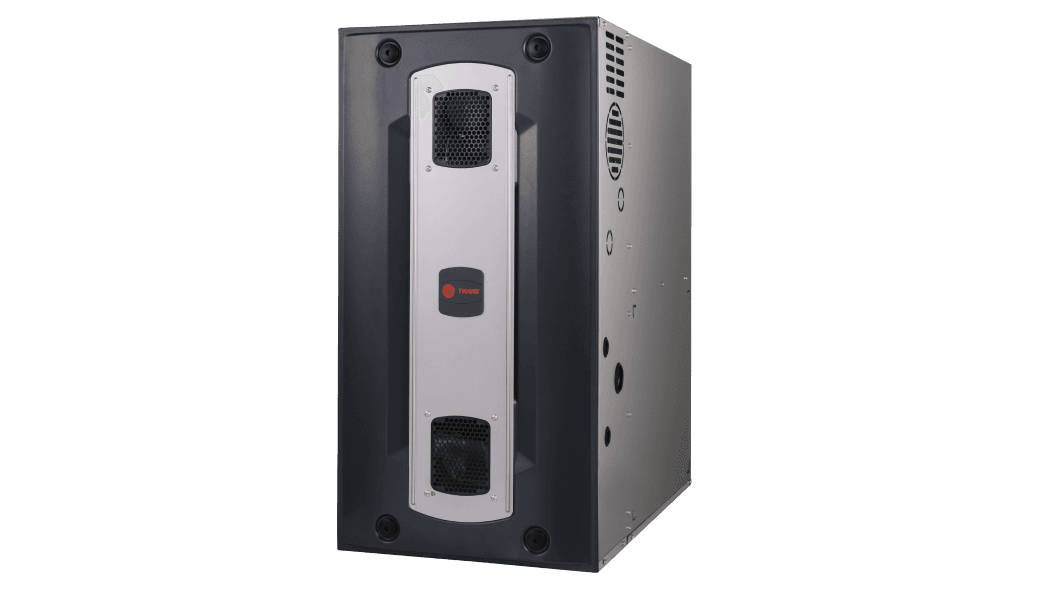
Stay warm with furnaces that use natural gas and liquid propane to heat your home. Furnaces are ideal for homeowners who experience extremely cold winters. They can be paired with an air conditioner or heat pump to cool your home in the summer.
What to look for: Energy efficiency, cost, heating stages, ENERGY STAR®
Showing results for
Support Resources
Find guides to help you set up and use your smart thermostat and Trane Home account.
Getting Started Guide
Learn helpful HVAC tips and tricks before you purchase your system.
Owner’s Manuals
Learn more about your product, like its technical specs and innovative technology.
Get helpful HVAC tips in our newsletter
Sign up for our email newsletter to learn helpful HVAC tips and tricks before your purchase your system.Why choose a Trane furnace
Trane is one of the most trusted names in the heating, ventilation, and air conditioning (HVAC) industry. Over the years, we’ve developed a reputation for innovative technology that results in highly energy-efficient HVAC equipment, including forced air gas furnaces.
Wide selection of gas furnaces
We have a wide variety of natural gas furnaces to fit your needs and budget. If you don’t have natural gas available in your neighborhood, certain furnaces can use propane if your dealer installs a conversion kit.
Two-stage furnaces and single-stage furnaces can both keep your home comfortable in the wintertime. Your Trane dealer can answer specific questions you may have about which furnace is right for your home and climate.
High-efficiency furnaces
High-efficiency furnaces are condensing furnaces, with two heat exchangers to help ensure fuel efficiency. A furnace with an Annual Fuel Utilization Efficiency (AFUE) of 90 or higher qualifies as high efficiency. Our 96 Modulating Variable Speed Gas Furnace with an AFUE of up to 97.3% is our most efficient furnace.
“A high-efficiency furnace makes sense in regions with colder climates and higher utility costs. These furnaces use less gas to produce the same amount of heat, which translates to lower energy bills for homeowners.”
-Amy Gulas, Furnace Product Manager
Compatible with a dual-fuel heat pump system
In addition to the traditional furnace and air conditioner combination, Trane furnaces are suitable for pairing with a heat pump in a hybrid heating system. The heat pump acts as an air conditioner in the summer and then heats your home until the temperature drops to near freezing. When it gets too cold for the heat pump to heat efficiently, the furnace takes over. This system offers you optimal energy efficiency and comfort.
Reliability
Trane HVAC equipment is built to last and undergoes 5 years of wear and tear in just a few months to ensure durability. With stainless steel heat exchangers, highly reliable hot surface igniters, and automotive-grade gaskets, when well-maintained, a Trane furnace can last 20+ years.
Learn more about furnaces
- What Is a Condensing Furnace?
- Furnace vs Boiler: What You Need to Know
- What Is AFUE?
- Homeowner's Guide to Furnace Repair
- 5 Warning Signs It’s Time for Furnace Replacement
- Furnace Replacement: A Buying Guide
- Understanding HVAC Efficiency Metrics
- What Is a Hybrid Heating System?
- Trane’s Best Furnaces
- How to Make the Most of Your HVAC Service Visit
- Average Furnace Repair Cost
- What Is a Furnace Tune-Up?
- Furnace Maintenance Tips
- Furnace Troubleshooting
FAQs
As part of a central heating and cooling system, a furnace converts fuel (gas or oil) into heat, and then uses a blower to circulate warm air throughout your house. In summer, a furnace works with your heat pump or air conditioner to deliver cooled air throughout your home. The main components of a furnace include burners, a heat exchanger, a blower motor, and controls.
AFUE stands for annual fuel utilization efficiency. This industry rating measures the annual efficiency of a furnace. A higher AFUE means your heating system is more energy efficient. You can learn more about AFUE here.
Use our Repair or Replace tool to help you make this decision. The answer will be different for every homeowner. We recommend replacing your furnace if it’s 15 years old or more, has an AFUE of less than 80%, needs frequent repairs, is declining in performance or your energy costs are rising. If you do need to replace your furnace, consider the AFUE rating, heating stages, and cost of your new unit.
The higher the AFUE, the less fuel you'll need to keep your home comfortable. Trane furnaces with 90 or higher AFUE measurements deliver at least 90% of the heat they create to your home, which exceeds the government’s minimum standard of 80 AFUE for new furnaces.
If you have a furnace that is at least 10 years old, it probably has an AFUE between 60 – 70, meaning you could be losing 40 cents of every dollar you spend on heating energy.
A gas furnace uses natural gas for fuel and distributes heat to your home. Oil furnaces convert oil into heat energy that is then distributed to your home.
Your total furnace replacement cost will vary based on several factors, including heating capacity, heating stages, fuel type, and cost. Our pricing guide and individual furnace model pages can give you additional information.
An average gas furnace will last 15-20 years. Some furnaces can last longer depending on furnace maintenance and they are quality units to begin with. Some units may not last as long if they are not properly maintained, if you use them 6 or more months out of the year, or if they are a lower-quality unit. Get some maintenance tips to prolong the life of your furnace.
Schedule furnace service today.
Read more about furnaces



Contact a local dealer
Dealers can answer questions, help you find the right products for your home, and repair your system.
We’re here to help
Connect with our Customer Care team about your products, warranties, and dealer concerns.
Available Monday – Friday from 7am to 5pm CST
A phone